
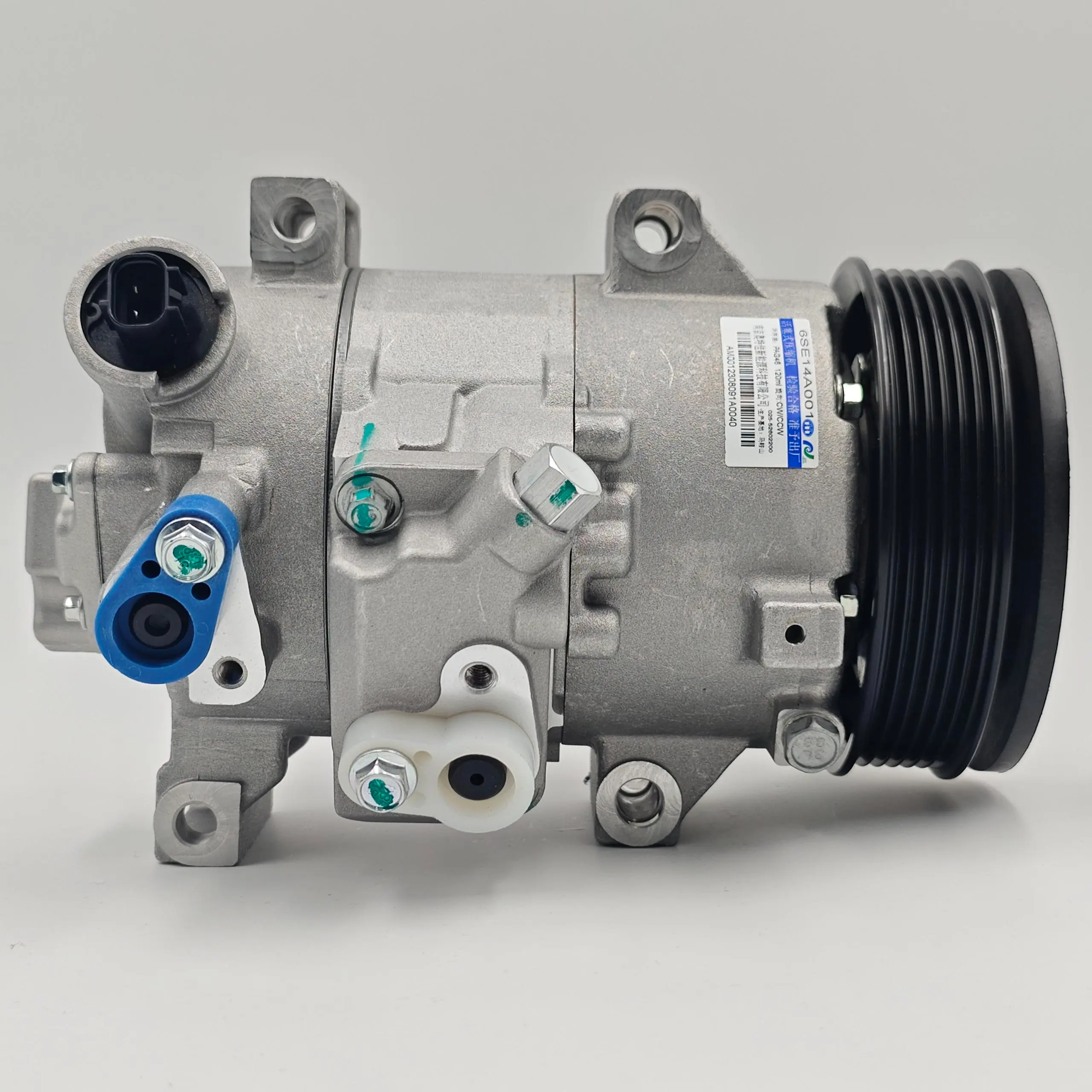
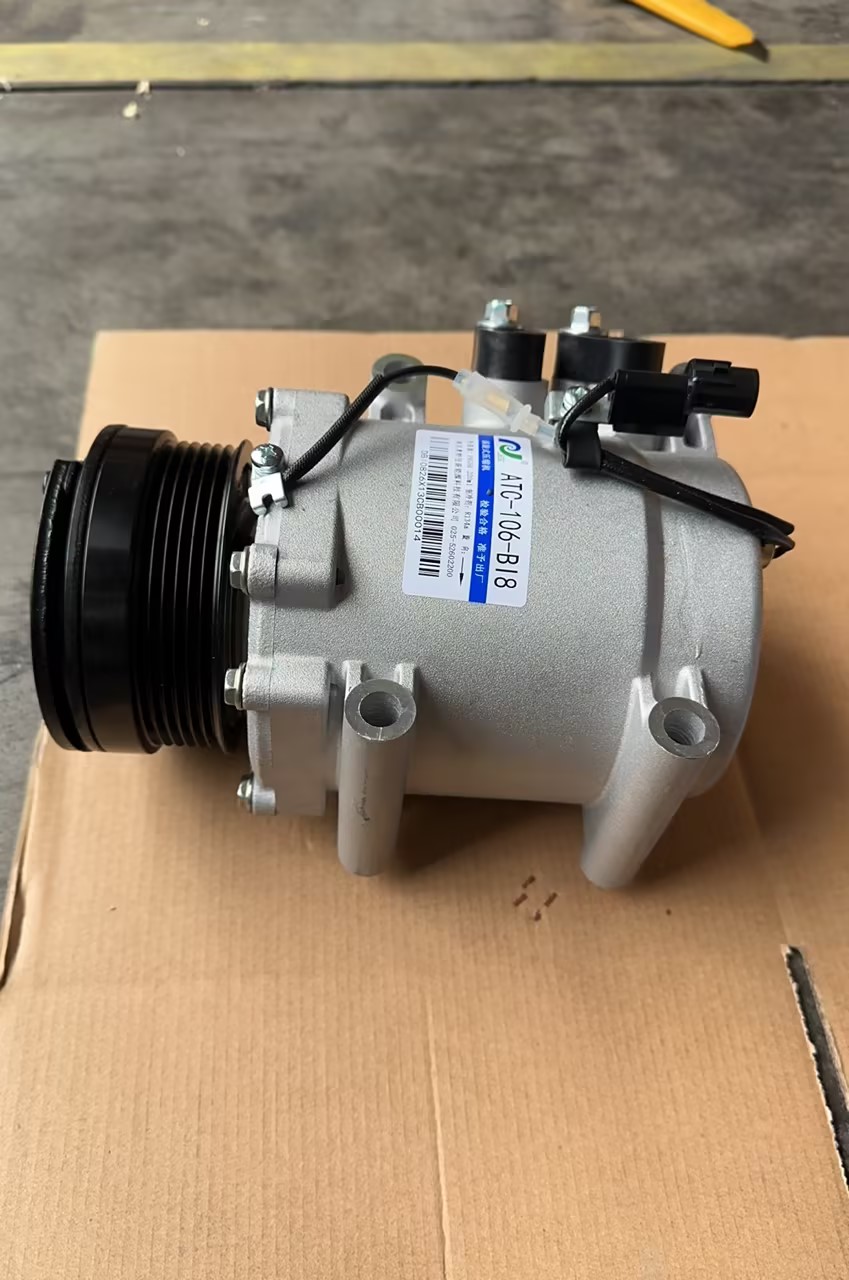
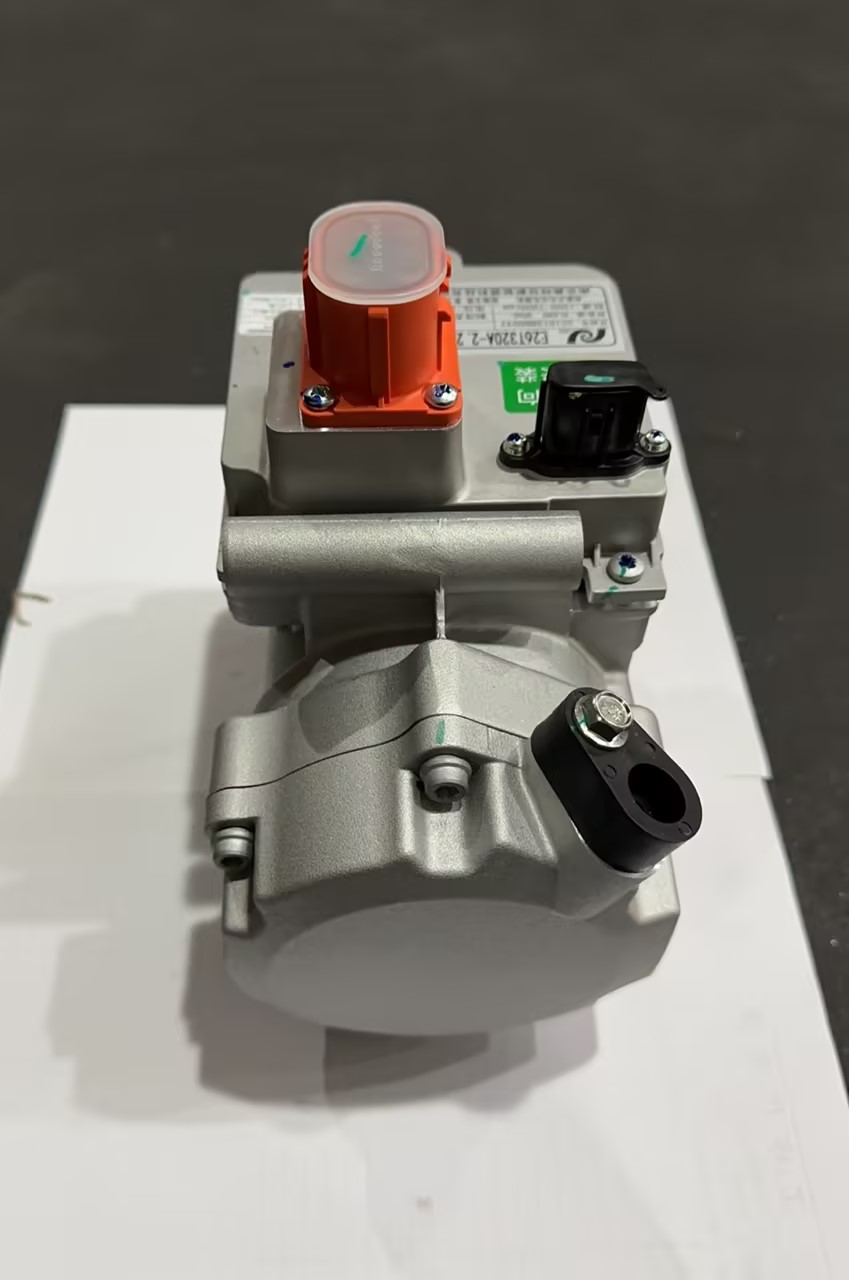
In most stationary industrial applications, an electric compressor is the better choice as it offers higher drive efficiency, lower maintenance costs, quieter operation, and no direct combustion emissions at the installation site. However, a gas compressor is a more attractive option when electrical power is unavailable, unreliable, or expensive to provide, particularly for remote oil and gas, construction, pipeline, and field operations.
According to the U.S. Department of Energy (DOE), electric motor-driven compressors avoid the combustion-related losses and maintenance requirements of engine-driven systems. DOE and EPA materials also identify power availability, emissions, operating conditions, and total system efficiency as important selection factors.
Gas Compressor vs. Electric Compressor: What Is the Actual Difference?
Before comparing the two, it is important to clarify the terminology. In this article, ‘electric compressor’ refers to a compressor whose compression mechanism is driven by an electric motor, while ‘gas compressor’ refers to a compressor driven by a combustion engine using a fuel such as natural gas, gasoline, or diesel. The compressor itself may be reciprocating, rotary screw, centrifugal, or another design; the key difference is the prime mover rather than the compression principle.
Ultimately, both systems perform the same basic function of converting input energy into mechanical work that raises the pressure of air or another gas. The major difference occurs before that mechanical energy reaches the compressor. An electric system converts electrical energy via a motor, whereas a gas-driven system converts chemical energy via combustion and an internal combustion engine or gas turbine.
The DOE recognises both electric motor-driven and engine-driven compressors as established configurations. Its technical analysis also demonstrates why it is misleading to claim that one is universally superior, as compressor efficiency, driver efficiency, operating load, fuel or electricity price, and site conditions all impact the final economics.
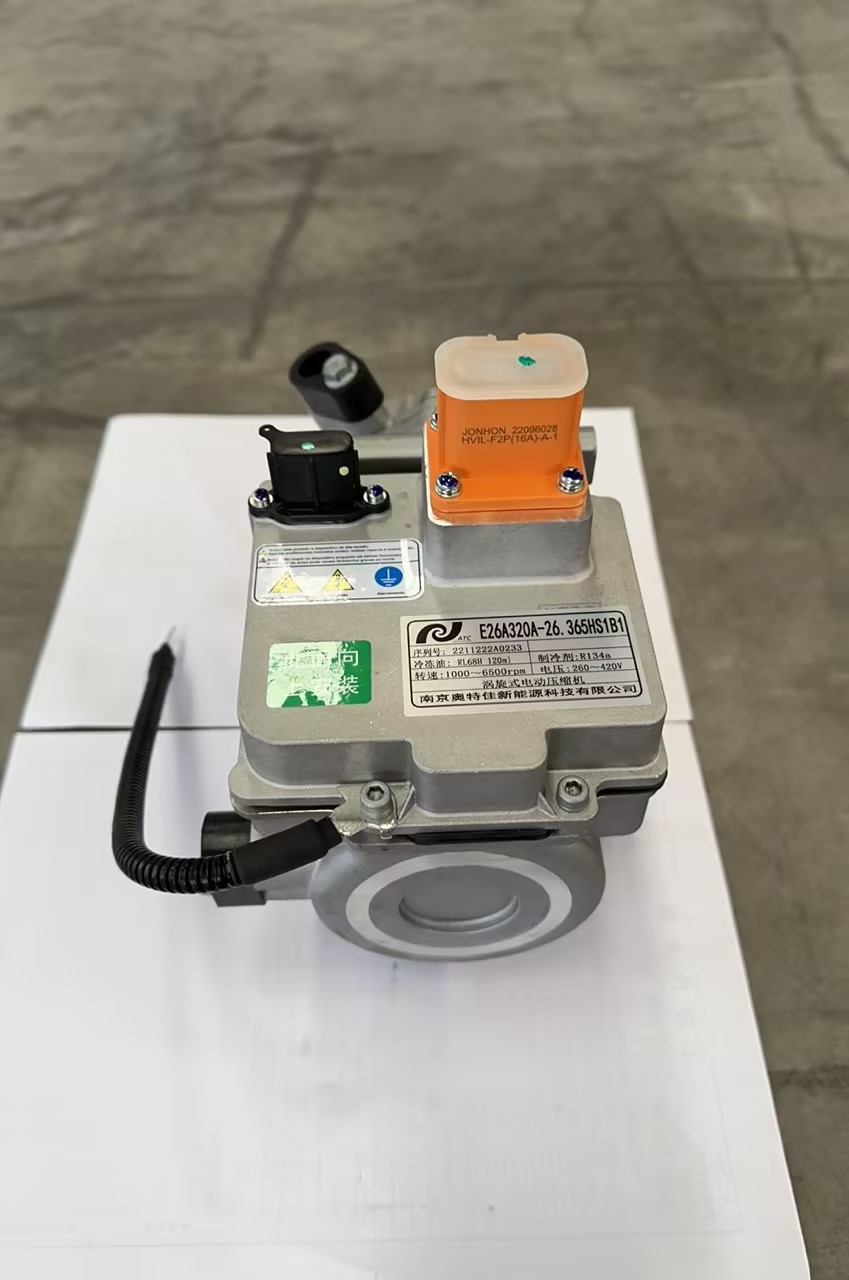
Electric Compressor: Why It Is Usually Preferred for Fixed Installations
An electric compressor is most effective in facilities with stable electrical infrastructure and long operating hours. Electric motors can efficiently convert electrical input into mechanical power, and the system avoids the combustion losses associated with exhaust heat, engine cooling, and other engine processes.
For a manufacturing plant operating a compressor over multiple shifts, these savings can become substantial over the equipment’s service life. The DOE’s analysis of natural gas compressors indicates that large electric motor drives can achieve high motor efficiency, although the overall result still depends on the electricity generation and transmission system. In other words, the absence of a combustion engine in an electric compressor does not automatically mean that it has zero total environmental impact; the source of the electricity matters.
Another major advantage is maintenance. An electric compressor does not require engine oil changes, spark-ignition components, exhaust-system maintenance, or fuel-system servicing, all of which are associated with a combustion engine. While the compressor itself still requires appropriate lubrication, filtration, cooling, inspection and preventive maintenance, the driver typically has fewer combustion-related maintenance tasks.
Electric compressors also work particularly well with modern control systems. Variable-speed drives, pressure controls, sequencing systems, and plant-wide compressor management can adjust compressor output in response to changing demand. This is important because compressor efficiency should be evaluated based on the actual operating profile and not just the rated full load.
DOE’s compressed-air guidance emphasizes that system controls, pressure management, leak reduction, storage, and proper equipment selection can produce significant energy savings. A highly efficient compressor can still become an expensive asset if it spends much of its operating time unloaded or if the plant continuously generates more compressed air than the process requires.
Gas Compressor: Where Its Advantages Become More Important
The primary advantage of a gas compressor is not necessarily greater efficiency. Rather, it is energy independence and operational flexibility.
Consider, for example, a pipeline construction project in a remote area. Establishing a sufficiently large electrical connection may require transformers, cables, generators, and infrastructure construction, as well as taking a significant amount of time for installation. In contrast, a gas-driven compressor can operate using an available fuel supply, thereby reducing dependence on the electrical grid.
This is a particularly relevant characteristic in oil and gas production, pipeline operations, mining, construction, emergency services, and other outdoor applications. Portable gas-powered air compressors are also widely used to power tools on building sites where electricity is unavailable.
Therefore, a gas compressor can make economic sense even if its prime-mover efficiency is lower. If the alternative is to build expensive electrical infrastructure or rely on an unreliable grid, the practical value of fuel-driven equipment can outweigh its efficiency disadvantage.
However, this advantage comes with trade-offs. Combustion engines introduce fuel consumption, exhaust emissions, engine noise, additional heat, and maintenance requirements. The EPA specifically states that replacing gas-driven compressor engines with electric motors can reduce local noise and allow for greater operational flexibility, as fuel-quality gas would not need to be used for engine operation.
Electric Compressor vs. Gas Compressor: Key Differences
The most useful comparison is therefore not simply “which compressor is stronger?” Instead, buyers should evaluate the complete operating environment.
| Factor | Electric Compressor | Gas Compressor |
| Primary energy source | Electricity | Natural gas, gasoline, or other fuel |
| Drive efficiency | Generally high | Generally lower because of combustion losses |
| On-site exhaust | None from the electric motor | Yes |
| Noise | Usually lower | Usually higher |
| Maintenance | Generally simpler | More engine-related maintenance |
| Mobility | Best for fixed installations | Strong advantage for mobile applications |
| Electrical infrastructure | Required | Not necessarily required |
| Long operating hours | Usually advantageous | Depends strongly on fuel economics |
| Indoor operation | Generally suitable | Often unsuitable because of exhaust |
| Remote operation | Limited by power availability | Strong advantage |
| Automation | Easy integration with electronic controls | Possible, but engine controls add complexity |
| Typical applications | Factories, workshops, plants, buildings | Construction, oil fields, pipelines, remote sites |
This table also highlights an important misconception: gas-driven compressors are not inherently “more powerful” than electric compressors. The compressor capacity is determined by the compressor design, displacement or aerodynamic characteristics, pressure ratio, speed, cooling arrangement, and driver rating. A properly sized electric motor can drive a compressor at the same required mechanical power as a gas engine.
Which One Has the Lower Operating Cost?
Operating costs are more complicated than simply comparing electricity and fuel prices. To be meaningful, a calculation should include energy consumption, demand charges where applicable, maintenance, downtime, cooling, emissions compliance, infrastructure, and expected operating hours.
For instance, a factory with inexpensive, reliable electricity might find that an electric compressor is significantly more economical over several years. In contrast, a remote gas facility may have access to low-cost fuel, but face substantial costs when installing an electrical connection.
A 2025/26 regulatory filing from Southern California Gas illustrates why local energy prices matter. In a specific 1,900 hp comparison using assumed 2024 natural gas pricing and Southern California electricity rates, the modelled 24-hour energy cost of the electric compressor was substantially higher than the modelled fuel cost of the gas compressor. However, this was a site- and tariff-specific calculation rather than a universal efficiency conclusion.
Therefore, buyers should avoid statements such as ‘electric is always cheaper’ or ‘gas is always cheaper’. The correct question is: what is the cost of delivering the required compressed-gas output at the required pressure over the actual duty cycle?
This calculation should include both energy and non-energy costs.
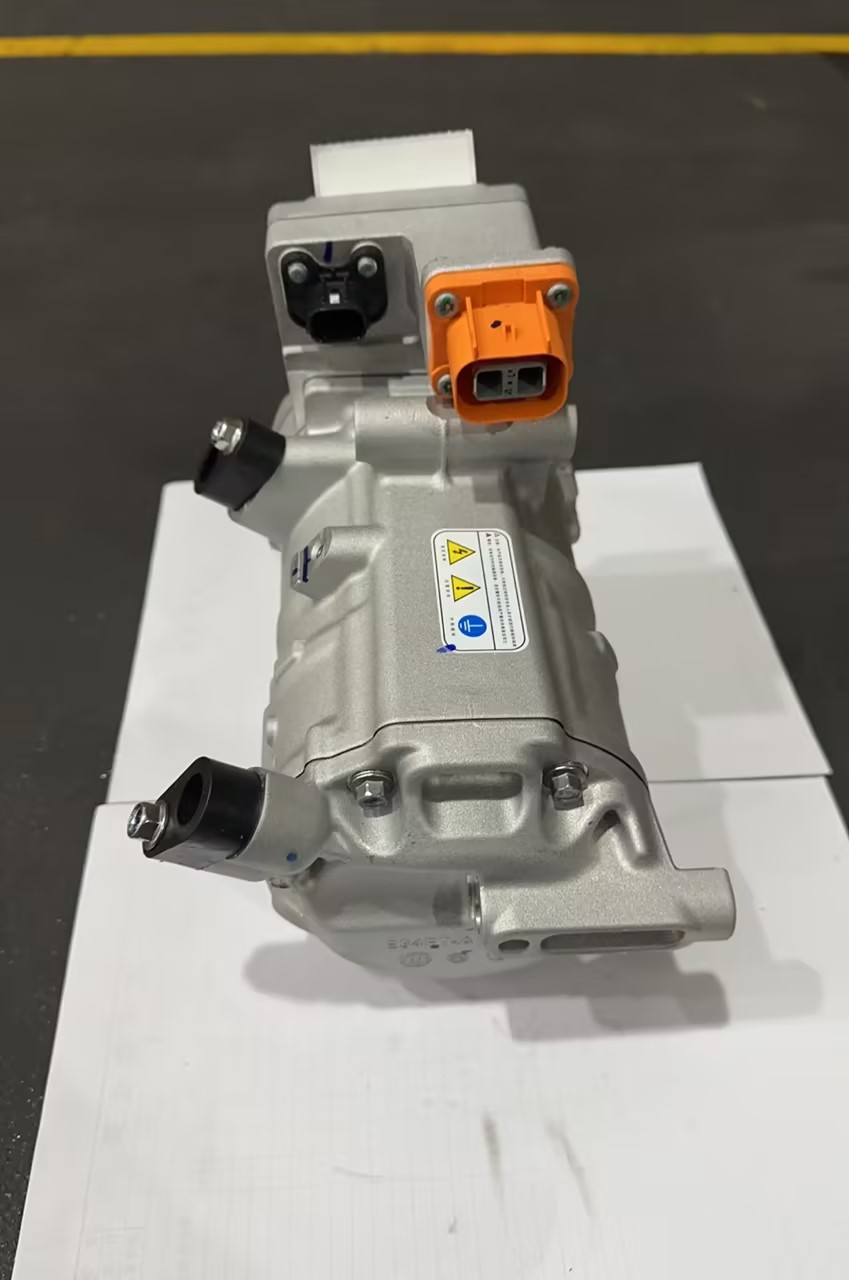
Efficiency Depends on More Than the Driver
One of the most commonly overlooked issues when selecting a compressor is that the driver is only one part of the system. The compressor type, pressure ratio, capacity control, inlet conditions, cooling, air leaks, piping losses, and operating pressure can all have a significant impact on energy consumption.
The DOE’s research into compressed air emphasises that compressed air itself is an energy-intensive utility and that system optimisation should address demand, pressure, storage, controls, leaks and equipment selection together. In industrial plants, replacing one compressor with another without addressing system demand may prevent substantial energy savings.
For instance, if a factory requires 6 bar pressure but operates its system at a significantly higher pressure, the compressor may consume unnecessary energy. Likewise, if a compressor frequently unloads because the actual demand is far below its rated capacity, installing a larger machine could exacerbate the issue.
This is why specific power, actual flow, operating pressure, load profile, and annual operating hours are often more meaningful purchasing metrics than horsepower alone.
Environmental Considerations: Electric Does Not Automatically Mean Zero Carbon
Electric compressors have an obvious environmental advantage at the point of use: the motor itself produces no exhaust fumes. This makes them ideal for enclosed spaces such as factories, laboratories, food processing areas, and hospitals, where local air emissions are important.
However, electricity generation has an environmental footprint. If the electricity is generated primarily from fossil fuels, some of the emissions are transferred from the compressor site to the power generation system. The DOE’s compressor analysis explicitly states that while electric motor site efficiency can be high, total efficiency depends on the source of the electricity and associated transmission losses.
By contrast, gas compressors generate emissions directly at the installation site through fuel combustion. In natural gas applications, environmental evaluations may also need to consider methane-related emissions, engine efficiency, fuel composition, and regulatory requirements.
A 2023 study in the Journal of Cleaner Production examining compressor-driver choices in Canadian natural gas transmission systems found that the greenhouse gas implications of replacing natural gas-powered drivers with electric ones depend on regional electricity grid emissions. This reinforces the important principle that compressor electrification should be assessed based on the actual energy mix, rather than assuming that every electric installation has the same environmental benefits.
Which Compressor Is Better for Different Applications?
Application conditions often provide a faster answer than comparing specifications.
For a permanent manufacturing facility, an electric compressor is normally the logical starting point. It can operate continuously, integrate with plant controls, avoid combustion exhaust, and generally require less driver-related maintenance.
For construction sites, the answer may reverse. If equipment must move between locations and reliable three-phase electrical power is unavailable, a gas-powered compressor can be considerably more practical.
Oil and gas operations require a more detailed engineering evaluation because the compressor may be part of a much larger gas-processing or pipeline system. In these cases, electric motors, gas engines, and gas turbines may all be viable depending on power availability, pressure ratio, throughput, emissions requirements, fuel economics, and station design. DOE data demonstrate that different prime-mover technologies can have substantially different efficiency and partial-load characteristics.
| Application | Usually Better Starting Point | Main Reason |
| Manufacturing plant | Electric compressor | Stable power and long duty cycles |
| Indoor workshop | Electric compressor | Lower noise and no combustion exhaust |
| Food or pharmaceutical facility | Electric compressor | Cleaner local operating environment |
| Construction site | Gas compressor | Mobility and power independence |
| Remote mining operation | Gas compressor | Reduced dependence on grid infrastructure |
| Pipeline field operation | Gas or electric, site dependent | Depends on grid access and station economics |
| Oil and gas processing plant | Electric or gas | Requires project-specific energy analysis |
| Emergency/mobile service | Gas compressor | Can operate away from electrical infrastructure |
| 24/7 industrial production | Usually electric | Efficient continuous operation and automation |
| Off-grid location | Gas compressor | Independent fuel-powered operation |
How to Choose the Right Compressor?
A practical selection process should begin with the application rather than the compressor catalog.
- Confirm the required pressure and flow. Determine the actual working pressure and required flow rate, preferably from measured demand rather than estimates. Oversizing creates unnecessary energy consumption, while undersizing can cause pressure instability and excessive loading.
- Establish the duty cycle. A compressor running two hours per day has a very different economic profile from one running continuously. Annual operating hours should be included in the total-cost calculation.
- Check power availability. If reliable electrical capacity already exists, an electric compressor becomes much easier to justify. If installing the necessary electrical infrastructure would be expensive or impractical, gas power may have a strong economic advantage.
- Calculate total cost of ownership. Include purchase price, installation, electricity or fuel, routine maintenance, replacement parts, downtime, cooling, emissions compliance, and expected service life.
- Evaluate environmental and workplace requirements. Indoor applications generally favor electric equipment because combustion exhaust and engine noise can create operational problems. Outdoor applications provide greater flexibility.
- Compare real operating data, not brochure maximums. Look at delivered flow, specific power, efficiency at actual load, pressure stability, turndown capability, start/stop behavior, and maintenance intervals.
This approach is consistent with DOE’s broader compressed-air philosophy: the best result comes from optimizing the entire compressed-air system, rather than selecting equipment based on a single specification.
Final Verdict: Gas or Electric Compressor?
So, which is better: a gas or electric compressor? For most stationary factories, workshops, and commercial facilities with reliable electrical power, as well as long-hour industrial applications, the electric compressor is usually the better choice overall because of its efficient electric drive, lower maintenance costs, quieter operation, easier automation, and the absence of direct combustion emissions.
A gas compressor is the better solution when mobility, remote operation, or a lack of electrical infrastructure are the main considerations. Its value lies in its independence from the electrical grid rather than in the assumption that combustion engines are inherently more efficient.
Therefore, the most professional way to make the decision is to compare the total cost of ownership, actual duty cycle, energy availability, environmental requirements, maintenance, and site conditions. A compressor that appears more expensive at the point of purchase can easily become the lower-cost solution over its operating life if it is correctly matched to the application.
FAQ: Electric Compressor vs. Gas Compressor
- Is an electric compressor better than a gas compressor?
For stationary industrial applications, an electric compressor is usually the better choice because it is efficient, quiet, and easier to maintain. A gas compressor is often better for remote or mobile applications where electricity is unavailable.
- Are gas compressors more powerful than electric compressors?
Gas compressors are not inherently more powerful than electric compressors. The available compression capacity depends on the compressor design and the power rating of its driver.
- Which compressor is cheaper to operate?
An electric compressor is often cheaper to operate where electricity is reliable and competitively priced. A gas compressor can be cheaper where fuel is inexpensive and electrical infrastructure is unavailable or costly.
- Which compressor requires less maintenance?
Electric compressors generally require less driver-related maintenance because they do not have combustion-engine components. Gas compressors require additional servicing for engine oil, fuel systems, ignition or combustion components, cooling, and exhaust systems.
- Can a gas compressor be used indoors?
Gas-powered compressors are generally unsuitable for enclosed spaces unless the installation has been specifically engineered for safe combustion and exhaust management. Electric compressors are normally more appropriate for indoor applications because they do not produce combustion exhaust at the operating location.
- What should I consider when choosing an electric or gas compressor?
Start with required pressure, flow, operating hours, power availability, mobility, installation conditions, and total cost of ownership. The best choice is the compressor that delivers the required performance at the lowest practical lifetime cost, not necessarily the lowest purchase price.
Conclusion
Opt for an electric compressor if you have access to reliable power and require efficient, quiet, and low-maintenance continuous operation. Opt for a gas compressor if mobility, off-grid capability or remote operation are more important than maximum drive efficiency. Ultimately, the decision should be based on measured demand, operating conditions, energy prices, infrastructure costs, and the compressor’s complete lifecycle economics.