
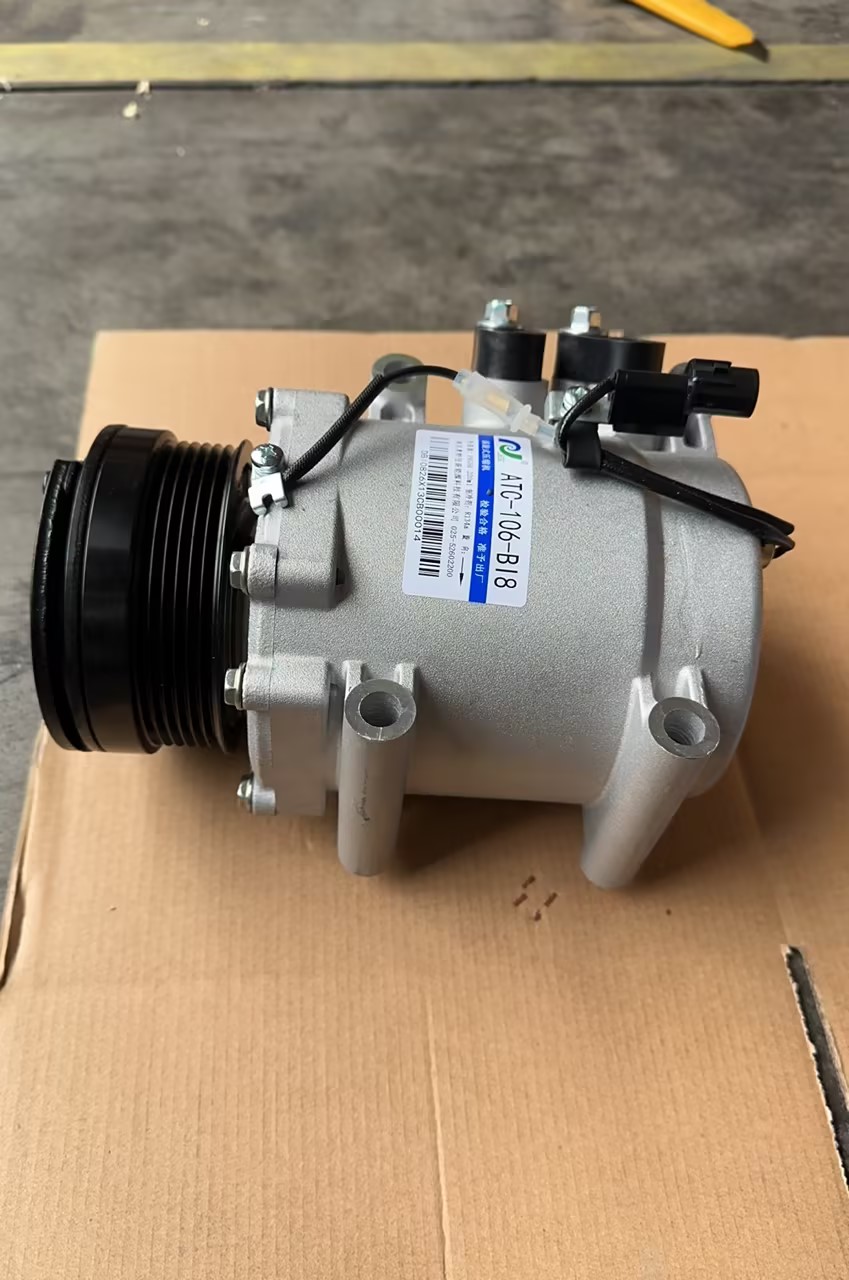
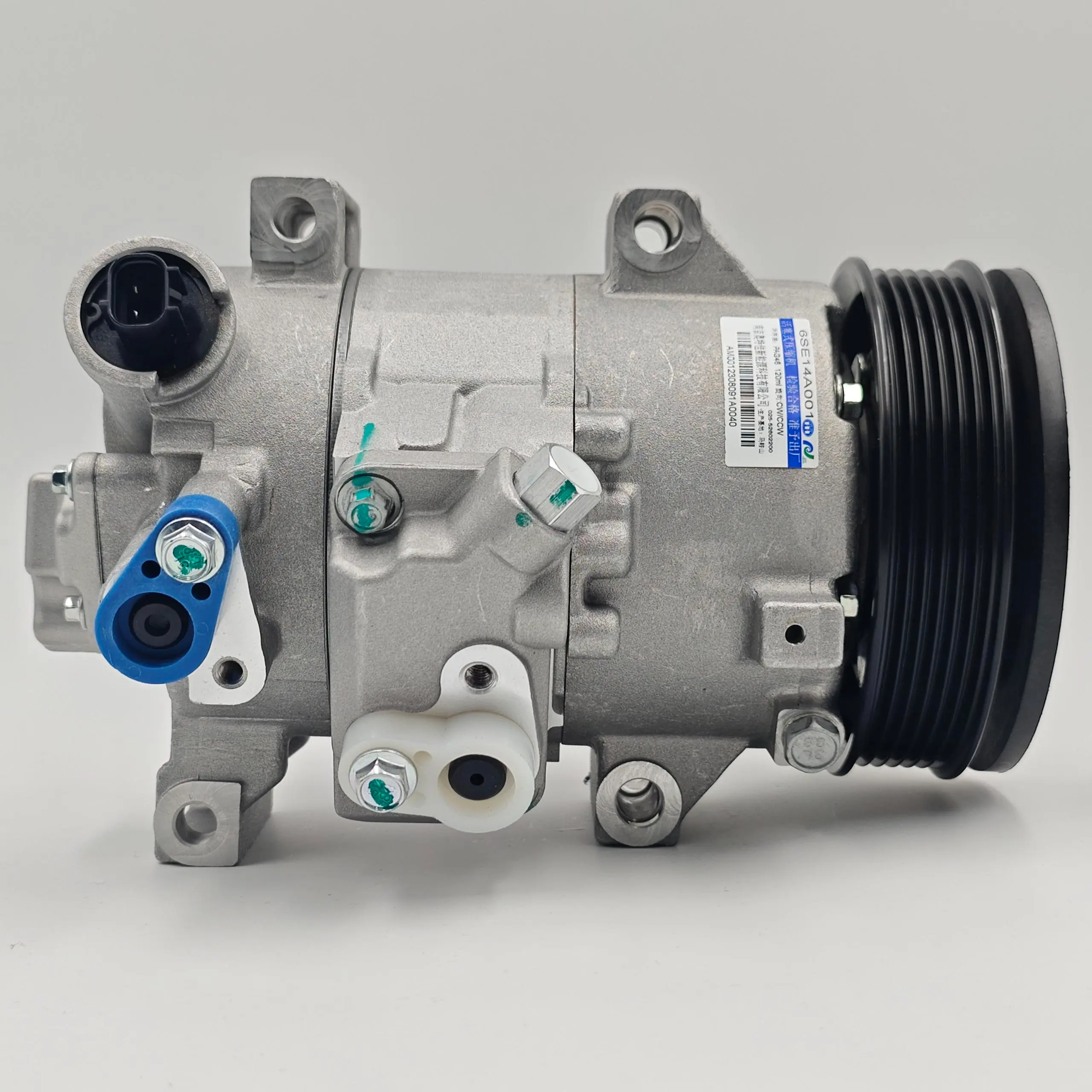
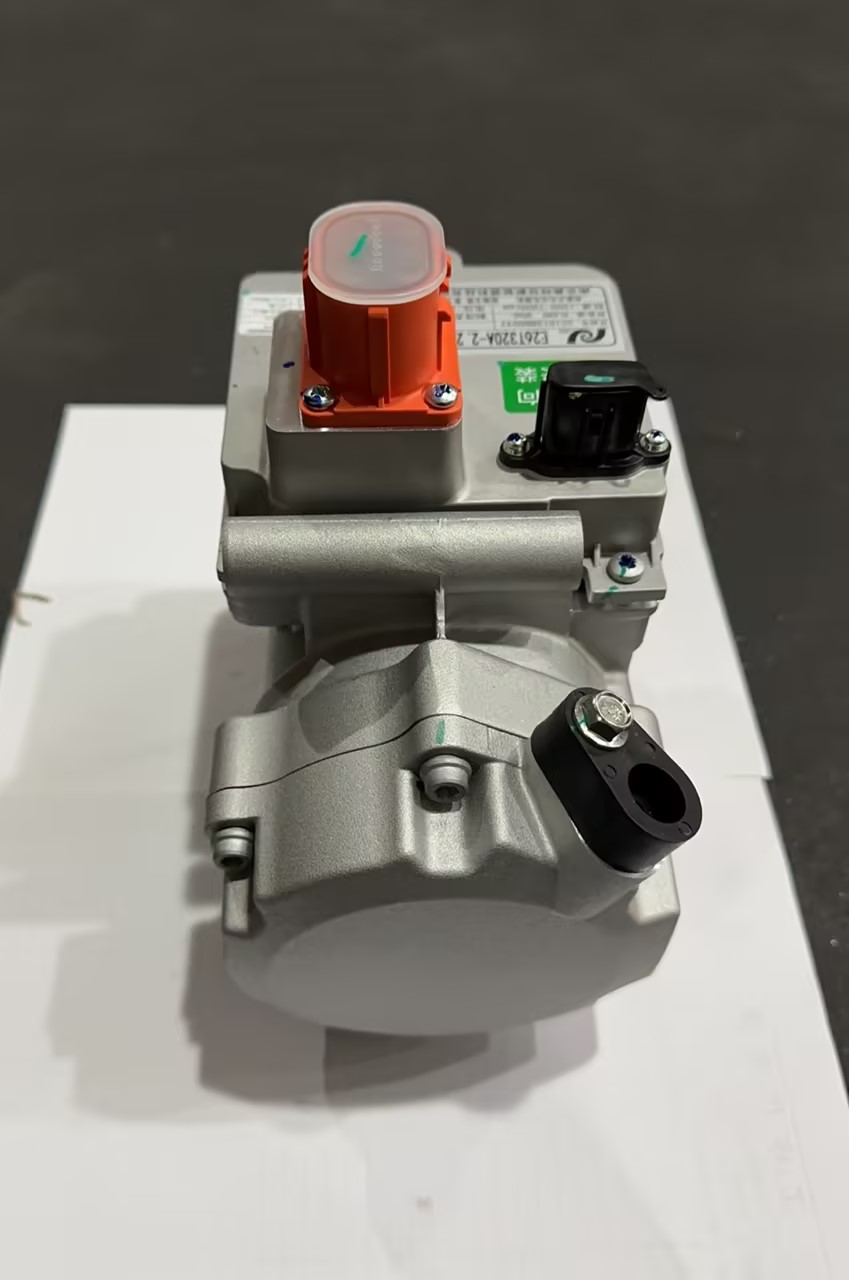
A scroll compressor uses two spiral-shaped scrolls to compress refrigerant or gas via continuous orbital motion. One scroll remains fixed while the other moves in an orbiting pattern, creating a series of sealed pockets that gradually reduce the volume of the gas and increase its pressure.
According to the principles of positive displacement compression described in the ASHRAE Handbook: HVAC Systems and Equipment and in Cengel and Boles’s Thermodynamics: An Engineering Approach, scroll compressors achieve efficient compression by reducing clearance volume, minimising mechanical losses, and maintaining a continuous compression process.
Introduction to Scroll Compressor
The compressor is at the heart of many refrigeration, air conditioning, heat pump, and industrial gas systems. Of the various compressor technologies available, the scroll compressor has become increasingly popular due to its high efficiency, low vibration levels, compact design, and reliable performance. It is widely used in residential air conditioners, commercial HVAC equipment, heat pumps, medical refrigeration systems, and electric vehicle thermal management systems.
Unlike traditional reciprocating compressors, which rely on pistons moving back and forth inside cylinders, scroll compressors use a unique spiral compression mechanism. This design enables continuous gas compression rather than compression occurring through repeated suction and discharge cycles. Consequently, scroll compressors can operate more smoothly, have fewer moving parts, and be more energy efficient.
Understanding how a scroll compressor works is important for engineers, HVAC professionals, equipment designers, and buyers who need to select an efficient compression technology. This article explains the working principle of scroll compressors step by step, explores their internal components, and compares their advantages with those of other compressor technologies.
What Is a Scroll Compressor?
A scroll compressor is a type of positive displacement compressor that uses two interleaving, spiral-shaped scroll elements to compress refrigerant or gas. These two scrolls are known as the fixed scroll and the orbiting scroll.
While the fixed scroll remains stationary, the orbiting scroll moves in a controlled circular motion without rotating around its own axis. This creates multiple crescent-shaped compression chambers between the two scrolls.
As the orbiting scroll moves, gas enters from the outer edge of the scroll assembly. The trapped gas pockets gradually move towards the centre as their volume decreases. This reduction in volume increases the gas pressure until it reaches the discharge port located near the centre.
The scroll design eliminates many of the limitations found in conventional compressors. Since compression occurs through smooth orbital movement rather than rapid piston reversal, the process results in less vibration, lower noise, and reduced mechanical stress.
How Does a Scroll Compressor Work Step by Step?
The working process of a scroll compressor can be divided into several key stages.
Step 1: Suction of Refrigerant Gas
The compression cycle begins when low-pressure refrigerant gas enters the compressor through the suction inlet. The gas flows into the outer area of the scroll assembly, where the openings between the fixed and orbiting scrolls allow refrigerant to enter.
At this stage, the refrigerant remains at low pressure and low temperature. The compressor motor provides the mechanical energy required to move the orbiting scroll.
Unlike piston compressors that require valves to control suction and discharge flow, scroll compressors use continuous movement of the scroll elements, resulting in smoother gas intake.
Step 2: Trapping Gas Between Scrolls
As the orbiting scroll begins its movement, it forms sealed pockets of refrigerant between the spiral walls of the two scroll elements.
These pockets prevent the gas from escaping backward and isolate specific amounts of refrigerant inside the compression chambers.
The sealing efficiency of these chambers is critical to compressor performance. Modern scroll compressors use advanced machining techniques and precision manufacturing to maintain extremely small clearances between moving components.
Step 3: Compression Through Orbital Motion
During continued orbital movement, the trapped gas pockets travel toward the center of the scroll assembly.
Because the spiral chambers become progressively smaller, the refrigerant volume decreases while pressure increases. This is the core compression process of a scroll compressor.
The compression occurs continuously through multiple chambers at different stages. While one pocket is completing compression, another pocket is beginning suction, creating a smooth and nearly continuous flow of compressed gas.
This continuous compression process is one of the main reasons scroll compressors achieve high efficiency compared with many conventional compressor designs.
Step 4: Discharge of High-Pressure Gas
When the compressed refrigerant reaches the center of the scroll assembly, it exits through the discharge port.
The high-pressure gas then flows into the refrigeration or HVAC system, where it releases heat through the condenser before returning to the compressor to repeat the cycle.
Because the discharge process is smooth and does not involve sudden valve opening and closing, scroll compressors experience lower pressure pulsation compared with reciprocating compressors.
Key Components of a Scroll Compressor
Although scroll compressors have a relatively simple structure compared to other types of compressors, each component plays an important role in ensuring the unit operates efficiently and reliably.
The main components are the fixed scroll, the orbiting scroll, the motor, the crankshaft, the bearings, and the sealing mechanisms.
The fixed scroll provides the stationary compression surface, while the orbiting scroll creates the movement required to compress the gas. The precise spiral geometry of these components determines the compressor’s displacement, pressure ratio, and overall performance.
The electric motor generates the rotational power that is transferred via the crankshaft to create orbital movement. High-quality bearings support smooth operation and reduce friction during continuous use.
Modern scroll compressors may also feature advanced components such as variable-speed drives, electronic protection systems, oil management technology, and digital control functions, which improve efficiency under changing operating conditions.
Main Components and Functions of a Scroll Compressor
| Component | Function | Importance |
| Fixed Scroll | Provides a stationary spiral compression surface | Creates compression chambers |
| Orbiting Scroll | Moves in orbital motion to compress the gas | Controls the compression process |
| Motor | Converts electrical energy into mechanical movement | Drives compressor operation |
| Crank Mechanism | Converts rotation into orbital motion | Enables scroll movement |
| Bearings | Reduce friction between moving parts | Improve reliability and lifespan |
| Suction Port | Allows low-pressure gas entry | Starts compression cycle |
| Discharge Port | Releases compressed gas | Transfers high-pressure gas |
Advantages of Scroll Compressor Technology
The growing adoption of scroll compressors is mainly driven by their efficiency and operational advantages.
-
High Energy Efficiency
One of the biggest advantages of scroll compressors is their ability to achieve high volumetric efficiency. Because they have minimal clearance volume compared with reciprocating compressors, less compressed gas remains trapped after each cycle.
This improves energy utilization and reduces power consumption, making scroll compressors especially attractive for modern energy-efficient HVAC systems.
-
Low Noise and Vibration
The continuous orbital movement of scroll components creates fewer mechanical impacts compared with piston-based compression systems. As a result, scroll compressors operate more quietly and generate less vibration.
This makes them suitable for applications where acoustic performance is important, including residential air conditioning, hospitals, offices, and commercial buildings.
-
Fewer Moving Parts
Scroll compressors generally contain fewer major moving components than reciprocating compressors. The simplified structure reduces wear points and decreases maintenance requirements.
Fewer moving parts also contribute to improved reliability and longer operating life when the compressor is properly selected and maintained.
Scroll Compressor vs. Other Compressor Types
Although scroll compressors are now the preferred solution for many modern HVAC and refrigeration systems, they are not the only compression technology available. Depending on operating conditions, capacity requirements, and application environments, reciprocating, rotary, and screw compressors each have their own advantages.
Understanding the differences between these technologies helps engineers and buyers to select the most suitable option for their equipment design.
A reciprocating compressor uses pistons moving inside cylinders to compress refrigerant. This design can provide high pressure ratios and is suitable for applications requiring strong compression capability. However, the repeated movement of the pistons creates more vibration, noise, and mechanical wear than scroll technology.
A rotary compressor uses rotating mechanisms, such as rollers or vanes, to compress gas. These compressors are compact and are commonly found in small air conditioning units and refrigeration systems. However, they may experience efficiency losses at larger capacities.
A screw compressor uses two interlocking helical rotors to continuously compress gas. They are excellent for large industrial refrigeration and high-capacity HVAC systems, but they usually require more complex structures and a higher initial investment.
Scroll compressors strike an excellent balance between efficiency, reliability, compact size, and operating noise, making them particularly well-suited to small and medium-capacity applications.
Scroll Compressor Comparison with Other Compressor Technologies
| Tipo de Compressor | Working Principle | Vantagens | Limitations | Common Applications |
| Compressor Scroll | Two spiral scrolls compress gas through orbital motion | High efficiency, low noise, fewer moving parts | Limited capacity range compared with large screw compressors | HVAC, heat pumps, refrigeration |
| Reciprocating Compressor | Pistons compress gas inside cylinders | High-pressure capability, proven technology | Higher vibration and maintenance requirements | Industrial refrigeration, small systems |
| Rotary Compressor | Rotating elements compress refrigerant | Compact size, simple design | Lower efficiency at larger capacities | Residential air conditioners |
| Screw Compressor | Twin rotors compress gas continuously | Excellent for large capacity systems | Higher cost and complex maintenance | Industrial cooling, large HVAC |
Common Applications of Scroll Compressors
The application range of scroll compressors continues to expand as industries demand more efficient and environmentally friendly cooling technologies.
-
Residential Air Conditioning
Residential air conditioning is one of the most common applications for scroll compressors. Their low operating noise and energy efficiency make them suitable for homes where comfort and acoustic performance are important.
Modern variable-speed scroll compressors can adjust operating capacity according to cooling demand. Instead of frequently starting and stopping, the compressor can operate at different speeds, improving energy efficiency and maintaining more stable indoor temperatures.
-
Commercial HVAC Systems
Commercial buildings such as offices, hotels, shopping centers, and healthcare facilities require reliable cooling systems that operate efficiently for long periods.
Scroll compressors are widely used in rooftop units, packaged air conditioners, chillers, and heat pump systems because they provide stable performance with relatively low maintenance requirements.
Their compact design also allows manufacturers to develop smaller and more flexible HVAC equipment layouts.
-
Heat Pump Systems
The increasing adoption of heat pump technology has created significant demand for high-efficiency compressors.
Scroll compressors are particularly suitable for heat pumps because they can efficiently handle both heating and cooling cycles. Advanced scroll designs can operate effectively under different pressure conditions, making them valuable for modern energy-saving systems.
They are widely used in:
- Air-source heat pumps
- Ground-source heat pumps
- Water heating systems
- Renewable energy HVAC solutions
-
Refrigeration Equipment
Commercial refrigeration systems, including food storage, supermarkets, and cold chain equipment, require compressors that can operate reliably under continuous loads.
Scroll compressors provide stable compression performance and reduced mechanical stress, making them suitable for medium-temperature and low-temperature refrigeration applications.
Factors Affecting Scroll Compressor Performance
Although scroll compressors are known for efficiency and reliability, their actual performance depends on several operating and design factors.
-
Refrigerant Selection
The choice of refrigerant has a significant impact on compressor efficiency, operating pressure, and environmental performance.
Modern scroll compressors are designed to work with newer refrigerants that meet environmental regulations, including refrigerants with lower global warming potential (GWP).
The compatibility between compressor materials, lubricants, and refrigerants must be carefully considered to ensure long-term reliability.
-
Operating Conditions
A scroll compressor’s efficiency depends on operating conditions such as:
- Suction pressure
- Discharge pressure
- Evaporation temperature
- Condensing temperature
- Refrigerant flow rate
Operating outside the recommended range can reduce efficiency and increase mechanical stress.
-
Proper Lubrication
Although scroll compressors have fewer moving parts than many other compressor types, lubrication remains essential.
Oil circulation reduces friction between moving components, improves sealing performance, and helps remove heat generated during operation.
Insufficient lubrication can increase wear and shorten compressor service life.
-
System Design Quality
The compressor is only one part of a refrigeration or HVAC system. Poor system design, incorrect refrigerant charging, inadequate airflow, or improper control settings can negatively affect compressor performance.
A properly designed system ensures that the scroll compressor operates within its optimal performance range.
How to Select the Right Scroll Compressor?
Choosing the correct scroll compressor requires evaluating technical requirements rather than selecting based only on brand or price.
-
Determine Required Cooling Capacity
The first step is calculating the required cooling or heating capacity. Selecting a compressor that is too small may cause continuous operation and reduced performance, while an oversized compressor may result in inefficient cycling.
Important parameters include:
- Capacidade de resfriamento
- Capacidade de aquecimento
- Refrigerant type
- Operating temperature range
- System load profile
-
Consider Fixed-Speed or Variable-Speed Technology
Fixed-speed scroll compressors operate at a constant speed and are suitable for systems with relatively stable loads.
Variable-speed scroll compressors use inverter technology to adjust compressor speed according to demand. They provide:
- Better energy efficiency
- Improved temperature control
- Reduced startup current
- Lower operating noise
For modern energy-efficient HVAC systems, variable-speed scroll technology is increasingly becoming the preferred choice.
-
Evaluate Reliability Features
Industrial and commercial users should consider additional features such as:
- Thermal protection
- Overload protection
- Advanced lubrication systems
- Oil return management
- Digital monitoring capability
These features help extend compressor lifespan and improve system reliability.
-
Match Compressor Design to Application
Different applications require different compressor characteristics.
For example:
- Residential air conditioning prioritizes low noise and efficiency.
- Commercial systems require reliability and flexible operation.
- Industrial refrigeration requires continuous-duty performance.
Selecting the right compressor design ensures better energy efficiency and lower lifecycle costs.
Frequently Asked Questions (FAQ)
- What is a scroll compressor used for?
A scroll compressor is mainly used for air conditioning, refrigeration, heat pumps, and industrial cooling systems. It provides efficient and reliable compression of refrigerant gases through orbital scroll movement.
- Como funciona um compressor scroll?
A scroll compressor works by using two spiral-shaped scrolls. One scroll remains fixed while the other orbits around it, trapping gas pockets and gradually reducing their volume to increase pressure.
- Are scroll compressors better than reciprocating compressors?
In many HVAC applications, scroll compressors offer advantages such as lower noise, higher efficiency, and fewer moving parts. However, reciprocating compressors may still be preferred for applications requiring very high pressure ratios or specific operating conditions.
- What are the advantages of a scroll compressor?
The main advantages include:
- High energy efficiency
- Quiet operation
- Low vibration
- Compact structure
- Reduced maintenance requirements
- Long service life
- Quanto tempo dura um compressor de rolo?
A properly installed and maintained scroll compressor can typically operate for many years. Actual lifespan depends on operating conditions, maintenance quality, refrigerant management, and system design.
- Can a scroll compressor handle variable loads?
Yes. Many modern scroll compressors use inverter-driven technology to adjust operating speed according to system demand. This improves efficiency and provides more stable temperature control.
Conclusion
A scroll compressor operates using a simple yet highly effective compression principle. Two spiral scroll elements create compression chambers that move continuously, gradually reducing the volume of gas and increasing the pressure. This unique design enables scroll compressors to operate reliably and efficiently while producing low noise levels, offering significant advantages over many traditional compressor technologies.
Due to these advantages, scroll compressors have become a key technology in modern HVAC systems, refrigeration equipment, and heat pump applications. Their compact structure, reduced vibration, and ability to integrate with variable-speed control systems make them particularly well-suited to industries seeking to improve energy efficiency and reduce operating costs.
When selecting a scroll compressor, engineers should consider cooling capacity, refrigerant compatibility, operating conditions, system requirements, and long-term reliability. When properly selected and maintained, a scroll compressor can provide stable performance for many years, supporting the growing demand for efficient, environmentally responsible cooling solutions.