
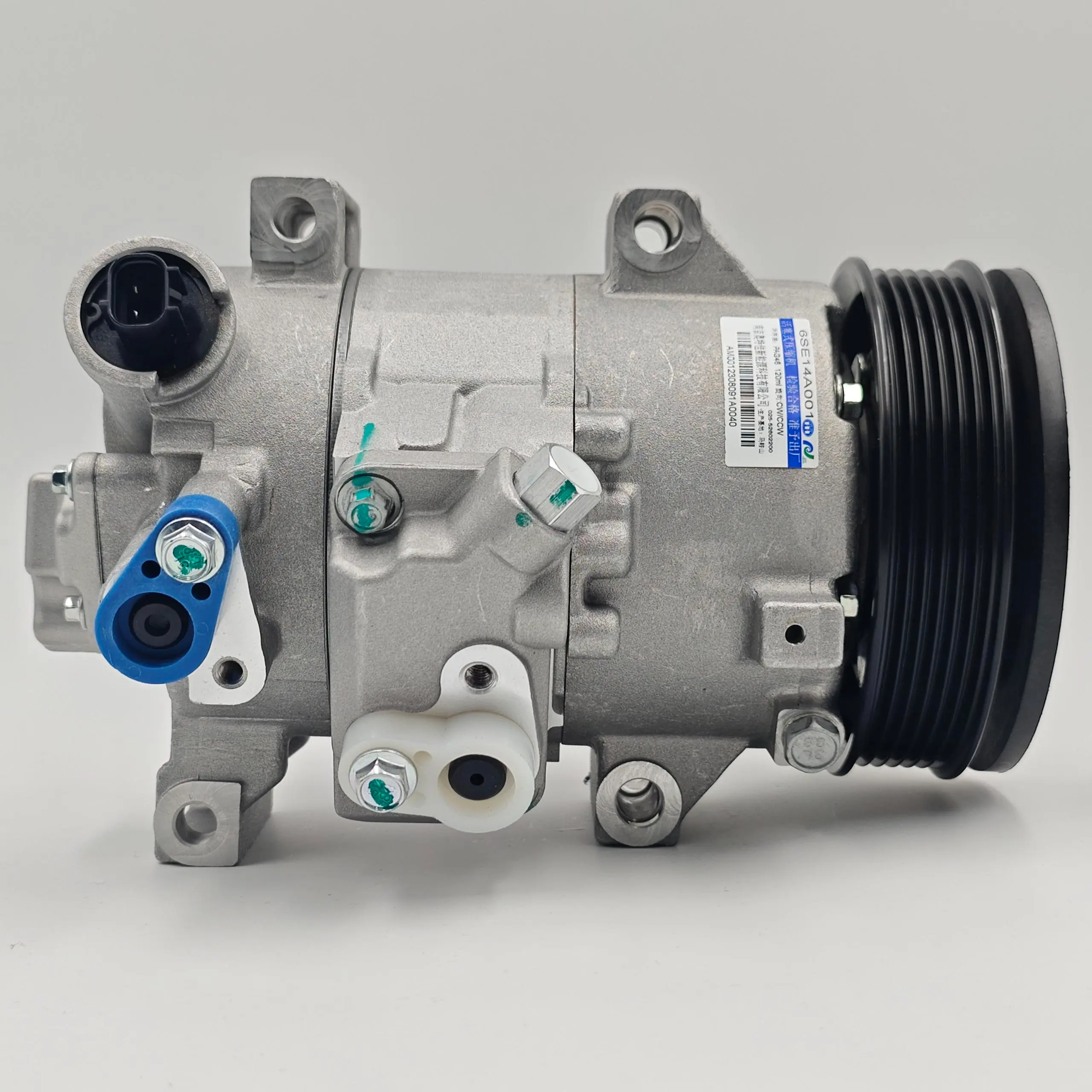
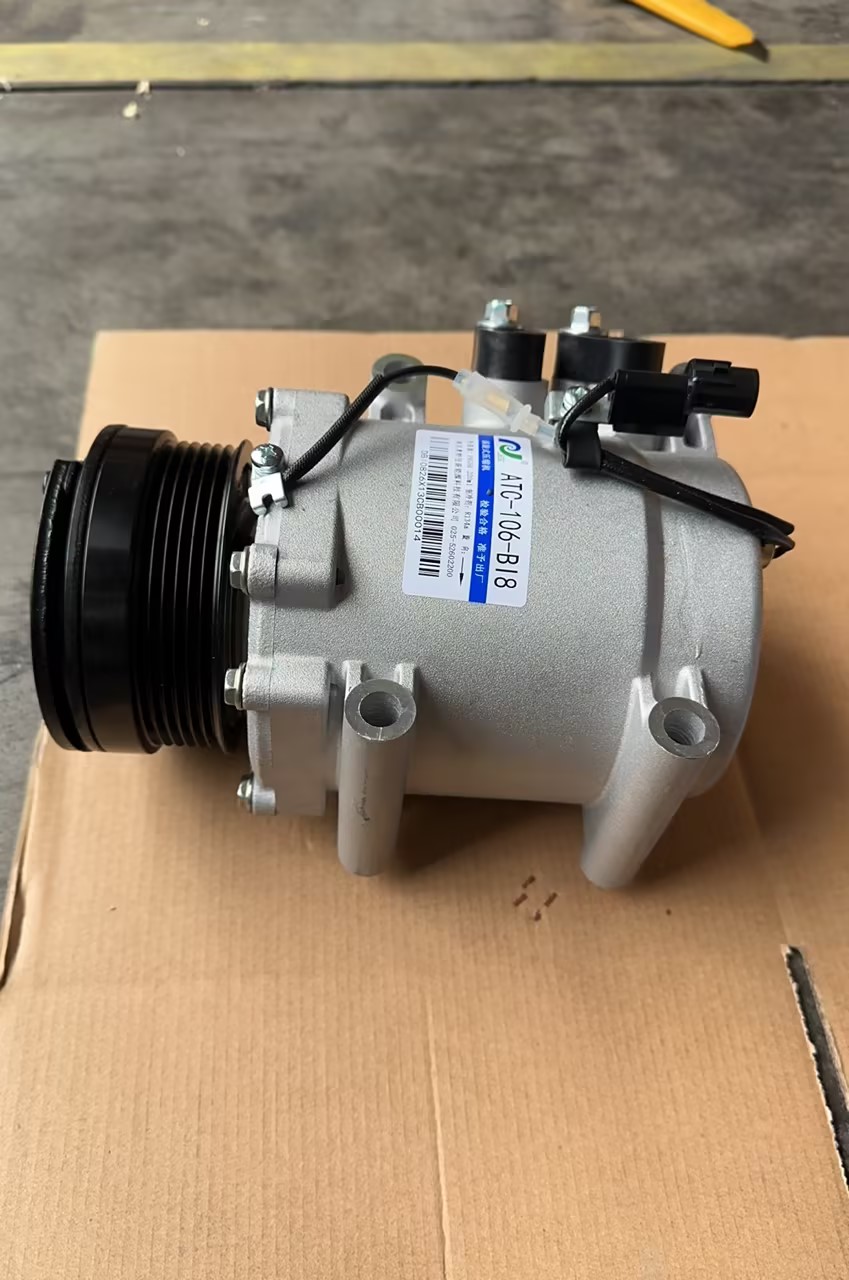
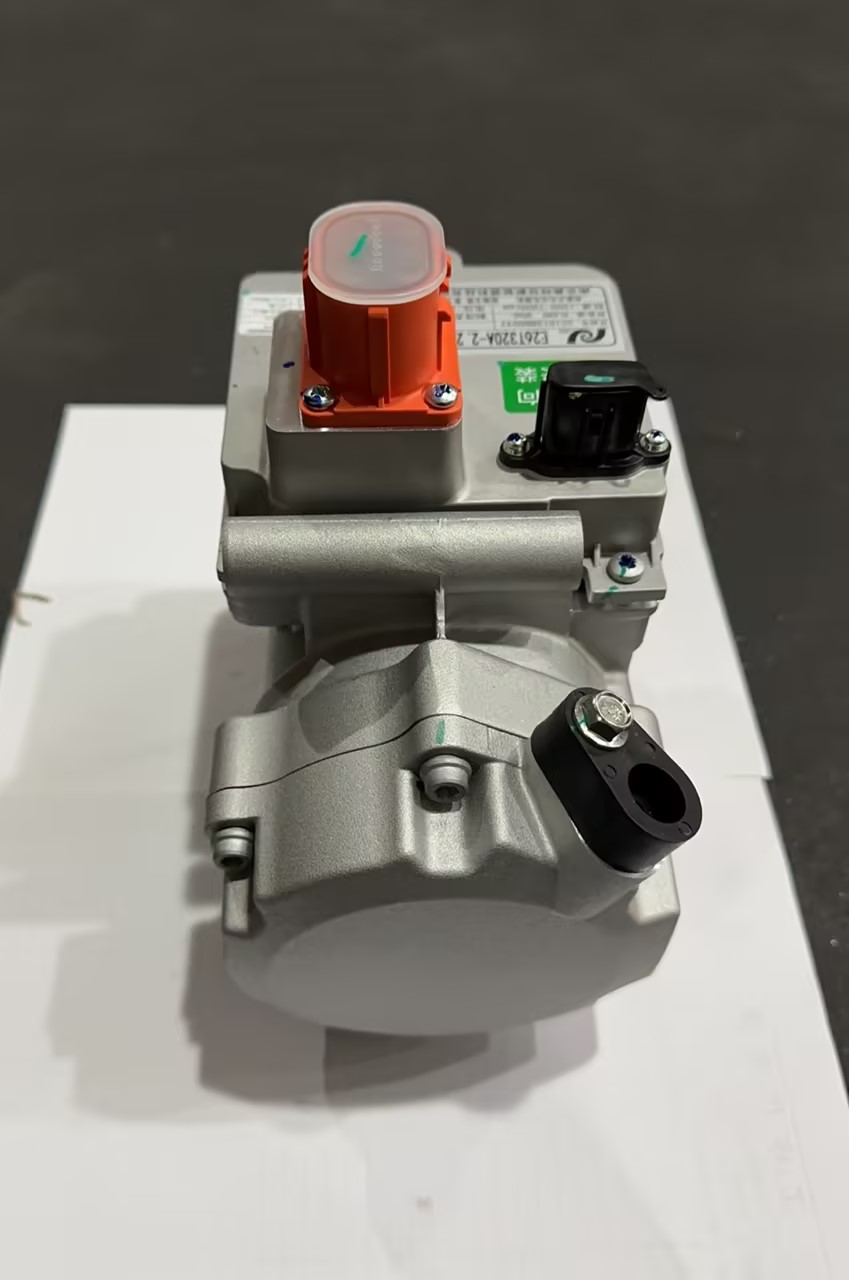
The scroll compressor is a high-efficiency positive displacement compressor with two interleaving spiral scrolls, one fixed and one orbiting, that continuously compress refrigerant or gas.
Unlike piston compressors, scroll compressors are quieter, more energy efficient, and more reliable. Scroll compressors are used in HVAC, refrigeration, air conditioning, and other industries such as automotive and building materials.
According to Atlas Copco and LG Electronics, scroll compressor technology compresses gas by gradually shrinking crescent-shaped pockets between two spiral scroll elements. The chambers can be used continuously with less pulsation and mechanical losses.
Introduction: Why Scroll Compressors Have Become the Preferred Choice in Modern HVAC and Refrigeration
Over the past two decades, the global HVAC and refrigeration industry has undergone a significant technological shift towards greater efficiency, reduced noise levels, enhanced reliability, and smarter energy management. At the heart of this transformation is the scroll compressor. Once considered a premium solution reserved for commercial systems, scroll compressors are now widely used in residential air conditioners, heat pumps, VRF systems, refrigeration equipment, automotive climate control systems, medical devices, and industrial compressed air applications.
The growing adoption of scroll compressor technology is no coincidence. Engineers and manufacturers increasingly prefer scroll designs because they overcome many of the limitations associated with older reciprocating compressors. Traditional piston compressors rely on repetitive up-and-down mechanical movement, which creates vibration, energy loss, and higher wear rates. By contrast, scroll compressors use continuous orbital motion to enable smoother compression, lower operating noise, fewer moving parts, and higher volumetric efficiency.
As energy regulations become stricter worldwide and consumers demand quieter, more durable HVAC systems, the importance of scroll compressors is growing rapidly. Modern inverter-driven air conditioning systems, particularly in residential and commercial buildings, are becoming increasingly dependent on advanced scroll compressor technologies to meet efficiency standards and environmental goals.
Today, scroll compressors are widely recognized for:
- High energy efficiency
- Low operating noise
- Compact structural design
- Reduced maintenance requirements
- Excellent reliability
- Smooth refrigerant compression
- Strong compatibility with inverter systems
- Better performance under variable loads
This comprehensive guide explains exactly what a scroll compressor is, how it works, its internal components, applications, advantages, disadvantages, operating principles, maintenance requirements, and future technological trends.
What Is a Scroll Compressor?
A scroll compressor is a type of positive displacement compressor that uses two spiral-shaped scroll elements to compress gas or refrigerant. One scroll remains stationary while the other moves along an orbital path without completing a full rotation. This motion traps the gas between the scrolls, progressively compressing it towards the centre discharge port.
Due to their spiral geometry, scroll compressors are also known as:
- Spiral compressors
- Scroll pumps
- Orbiting compressors
- Vortex compressors
The core operating principle involves continuous volume reduction. As the refrigerant gas moves inwards through the shrinking pockets formed between the scrolls, the pressure steadily increases until the compressed gas exits through the discharge outlet.
Unlike piston compressors, which compress refrigerant in intermittent cycles, scroll compressors deliver continuous compression flow. This significantly reduces vibration, pulsation, and mechanical stress.
According to technical descriptions from Atlas Copco and HVAC engineering references, the orbiting scroll moves eccentrically around the fixed scroll while maintaining constant contact geometry. This allows for efficient internal gas compression with minimal leakage.
Basic Structure of a Scroll Compressor
Although scroll compressors may appear complex externally, their internal design is relatively elegant and mechanically efficient.
The major components include:
| Component | Function |
| Fixed Scroll | Stationary spiral element forming compression chambers |
| Orbiting Scroll | Moves in orbital motion to compress refrigerant |
| Electric Motor | Drives orbital movement |
| Crankshaft/Eccentric Shaft | Converts motor rotation into orbital motion |
| Oldham Coupling | Prevents rotation while allowing orbital movement |
| Suction Port | Allows low-pressure refrigerant entry |
| Discharge Port | Releases compressed high-pressure gas |
| Bearings | Support moving mechanical parts |
| Compressor Housing | Seals and protects internal components |
| Cooling System | Controls operating temperature |
The scroll wraps themselves are typically manufactured from:
- High-strength cast iron
- Aluminum alloys
- Hardened steel
- Precision-machined composite materials
Modern scroll compressors often integrate advanced coatings and surface treatments to minimize friction and extend operational lifespan.
How Does a Scroll Compressor Work?
A scroll compressor works based on the interaction between two spiral-shaped scrolls.
One scroll remains fixed. The second scroll orbits around the fixed scroll in a precise circular motion. During this process, multiple crescent-shaped pockets of refrigerant become trapped between the scroll walls.
These pockets gradually move towards the centre while decreasing in volume. As the volume shrinks, the refrigerant pressure increases until the compressed gas exits through the central discharge port.
This process occurs continuously rather than intermittently.
According to HVAC engineering resources and compressor manufacturers, the scroll compressor cycle includes three primary stages: suction, compression, and discharge.
Step-by-Step Scroll Compressor Working Process
- Suction phase
Low-pressure refrigerant gas enters the compressor via the suction inlet, which is located near the outer edge of the scroll assembly.
As the orbiting scroll moves, open pockets are formed between the fixed and moving scrolls. These expanding pockets draw the refrigerant gas inwards.
This process resembles a continuous suction mechanism, as opposed to the abrupt intake cycles found in reciprocating compressors.
- Compression phase
As the orbital motion continues, the refrigerant-trapped pockets move towards the centre of the compressor.
The volume of the pockets gradually decreases during this movement. As the refrigerant occupies less space, the pressure and temperature increase progressively.
This gradual compression process is one reason why scroll compressors operate more quietly and efficiently than piston-based designs.
Multiple compression pockets exist simultaneously, enabling continuous gas compression.
- Discharge phase
Once the refrigerant reaches the centre of the scroll assembly, the pressure reaches the discharge level.
The compressed, high-pressure gas then exits through the central discharge port and flows into the refrigeration or HVAC system.
As compression is continuous, discharge pulsation is significantly lower than in reciprocating compressors.
Why Are Scroll Compressors More Efficient Than Reciprocating Compressors?
One of the main reasons for the widespread adoption of scroll compressors is their efficiency.
Traditional piston compressors suffer energy losses due to valve resistance, mechanical vibration, dead space, pulsating compression, and multiple friction points. Scroll compressors minimise many of these inefficiencies.
Continuous compression
Unlike piston compressors, which repeatedly stop and restart compression cycles, scroll compressors compress refrigerant continuously.
This reduces energy waste and improves volumetric efficiency.
Fewer moving parts
Scroll compressors contain fewer moving mechanical components than reciprocating compressors.
This results in:
- Lower friction losses
- Reduced wear
- Higher reliability
- Lower maintenance frequency
- Minimal leakage
The involute geometry of the scrolls creates highly efficient seals between compression chambers.
This improves compression efficiency while reducing refrigerant leakage.
Reduced mechanical vibration
Because orbital motion is smoother than piston motion, vibration levels are substantially lower.
This contributes to:
- Quieter operation
- Longer component lifespan
- Improved user comfort
Main Types of Scroll Compressors
Depending on application requirements, scroll compressors are available in multiple configurations.
Hermetic scroll compressors
In hermetic designs, the compressor and motor are sealed within a welded housing.
Advantages include:
- Leak prevention
- Compact design
- Lower maintenance
- Quiet operation
These are widely used in:
- Residential air conditioners
- Refrigerators
- Heat pumps
Semihermetic scroll compressors
Semihermetic units allow partial disassembly for servicing and repair.
These are common in:
- Commercial refrigeration
- Industrial HVAC systems
- Process cooling systems
Digital scroll compressors can modulate cooling capacity by temporarily separating the scrolls.
This improves:
- Energy efficiency
- Load control
- Temperature stability
Digital scroll technology is especially useful in modern variable-load HVAC systems.
Variable-speed scroll compressors
Variable-speed compressors integrate inverter technology to dynamically adjust motor speed.
Benefits include:
- Reduced energy consumption
- Better humidity control
- Improved seasonal efficiency
- Lower startup current
These are becoming increasingly common in high-efficiency HVAC systems.
Scroll Compressor vs Reciprocating Compressor
The comparison between scroll and reciprocating compressors remains one of the most common topics of discussion in the industry.
| Caratteristica | Compressore a spirale | Reciprocating Compressor |
| Motion Type | Orbital | Piston movement |
| Noise Level | Low | Higher |
| Vibration | Minimal | Significant |
| Efficiency | Higher | Moderate |
| Maintenance | Lower | Higher |
| Moving Parts | Fewer | More |
| Compression Flow | Continuous | Pulsating |
| Reliability | Excellent | Good |
| Energy Consumption | Lower | Higher |
| Initial Cost | Higher | Lower |
In most modern HVAC applications, scroll compressors are considered the superior longterm solution despite higher upfront cost.
Scroll Compressor vs Screw Compressor
Although both technologies are highly efficient, they serve different capacity ranges.
| Caratteristica | Compressore a spirale | Screw Compressor |
| Capacity Range | Small to medium | Medium to very large |
| Complexity | Moderate | High |
| Noise | Low | Moderate |
| Maintenance | Low | Moderate |
| Cost | Lower | Higher |
| Common Applications | HVAC, heat pumps | Industrial chillers |
Scroll compressors dominate residential and light commercial systems, while screw compressors excel in heavy industrial environments.
Major Applications of Scroll Compressors
- Residential air conditioning
Modern split air conditioners rely heavily on scroll compressors due to their quiet operation and energy efficiency.
Benefits include:
- Reduced electricity consumption
- Lower indoor noise
- Better inverter compatibility
- Heat Pump Systems
Heat pumps require compressors that can operate efficiently under varying thermal loads.
Scroll compressors perform especially well in:
- Air-source heat pumps
- Groundsource heat pumps
- Cold-climate systems
- Commercial HVAC systems
Large commercial buildings often use tandem or multiscroll compressor systems to improve load management and redundancy.
Applications include:
- Shopping malls
- Hotels
- Office buildings
- Hospitals
Refrigeration systems
Scroll compressors are widely used in:
- Cold rooms
- Supermarkets
- Food processing
- Medical refrigeration
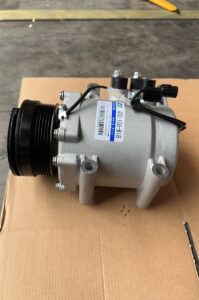
- Automotive air conditioning
Certain modern electric and hybrid vehicles utilise compact scroll compressors for efficient cabin cooling.
- Medical and laboratory equipment
Oil-free scroll compressors are highly valued in:
- Dental clinics
- Medical laboratories
- Pharmaceutical manufacturing
- Semiconductor production
Clean air quality is critical in these environments
Advantages of Scroll Compressors
- Extremely quiet operation
One of the most recognised benefits is the low noise output.
As scroll compressors avoid abrupt piston movement, they operate with reduced vibration, lower sound levels, and minimal pulsation. This makes them ideal for residential and indoor environments.
- Reduced vibration
- Lower sound levels
- Minimal pulsation
This makes them ideal for residential and indoor environments.
- High energy efficiency
Continuous compression and reduced leakage significantly improve overall system efficiency.
Modern inverter scroll compressors can achieve exceptionally high seasonal efficiency ratings.
- Long service life
Fewer moving parts mean reduced wear and tear.
Many properly maintained scroll compressors operate reliably for 15–20 years or more.
Reddit HVAC professionals often describe scroll compressors as being highly durable when used continuously.
- Better liquid refrigerant tolerance
Scroll compressors generally tolerate limited liquid refrigerant return better than reciprocating compressors.
This reduces the risk of catastrophic damage from the occasional floodback event.
- Compact design
Scroll compressors offer high compression efficiency within relatively compact dimensions.
This allows for smaller HVAC equipment footprints.
Scroll Compressor Failure Causes
Technicians and buyers need to understand the common causes of failure.
- Overheating
Causes:
- High superheat
- Dirty condensers
- Refrigerant imbalance
- Poor airflow
- Oil starvation
Insufficient lubrication can damage bearings and scroll surfaces.
- Refrigerant floodback
Excess liquid refrigerant entering the compressor can create severe internal stress.
- Electrical failure
Motor winding failure may result from:
- Voltage imbalance
- Overcurrent
- Poor electrical connections
- Contamination
Debris and moisture can cause:
- Scroll wear
- Acid formation
- Bearing damage
How to Maintain a Scroll Compressor?
Proper maintenance can significantly extend the lifespan of a compressor.
- Regular refrigerant checks
An incorrect refrigerant charge can reduce efficiency and damage components.
- Monitor superheat and subcooling.
Professional HVAC technicians routinely analyse:
- Suction pressure
- Discharge pressure
- Superheat
- Subcooling
To evaluate compressor health.
Experienced HVAC professionals online have discussed how these measurements provide much more reliable diagnostics than visual assumptions.
Clean Condenser Coils
Dirty coils increase the operating temperature and the workload of the compressor.
- Use proper lubrication.
The correct oil type and quantity are essential.
- Prevent moisture contamination
Moisture can create acids inside refrigeration systems that damage the compressor internals.
Scroll Compressor Efficiency Trends in 2026
The HVAC industry is continuing to push forward with compressor technology.
- Inverter integration
Variable-speed scroll compressors now dominate premium HVAC systems.
Benefits include:
- Lower energy consumption
- Reduced cycling
- Better comfort control
- LowGWP refrigerant compatibility
Manufacturers are increasingly optimising scroll compressors for environmentally friendly refrigerants, such as:
R32, R454B, R290 and CO2based systems.
- Smart monitoring systems
Advanced compressors now integrate:
- IoT sensors
- Predictive maintenance
- Real-time diagnostics
- Cloud monitoring
- Oil-free scroll technology
Oil-free systems are becoming increasingly important in clean air industries.
FAQ: Scroll Compressor Questions People Commonly Search
- What is the main purpose of a scroll compressor?
A scroll compressor compresses refrigerant or gas efficiently for HVAC, refrigeration, and industrial systems using two spiral scroll elements.
- Why are scroll compressors quieter?
Scroll compressors use smooth orbital motion rather than piston impact movement, greatly reducing vibration and noise.
- Are scroll compressors better than reciprocating compressors?
In many HVAC applications, yes. Scroll compressors generally offer higher efficiency, lower noise, fewer moving parts, and better reliability.
- Quanto dura un compressore a spirale?
A properly maintained scroll compressor can often operate for 15–20 years or more depending on system conditions and usage.
- Can a scroll compressor be repaired?
Some semihermetic models can be repaired, but many hermetic scroll compressors are usually replaced after major internal failure.
- What industries use scroll compressors?
Scroll compressors are widely used in residential HVAC, commercial refrigeration, heat pumps, automotive air conditioning, medical equipment, and industrial compressed air systems.
Conclusion
The scroll compressor is one of the most important technologies in modern HVAC and refrigeration engineering. By replacing the piston-based compression system with a smooth orbital motion system, scroll compressors achieve an effective balance of energy efficiency, reliability, quiet operation, a compact design, and operational stability.
Their ability to provide continuous compression with fewer moving parts makes them particularly valuable in today’s energy-conscious, environmentally regulated market. Used in residential air conditioners, commercial chillers, refrigeration systems, heat pumps, and industrial applications, scroll compressors continue to set new performance and durability standards.
With the growing importance of variable-speed systems, smart controls and low-GWP refrigerants, scroll compressor technology is expected to remain at the forefront of next-generation HVAC innovation for many years to come.