
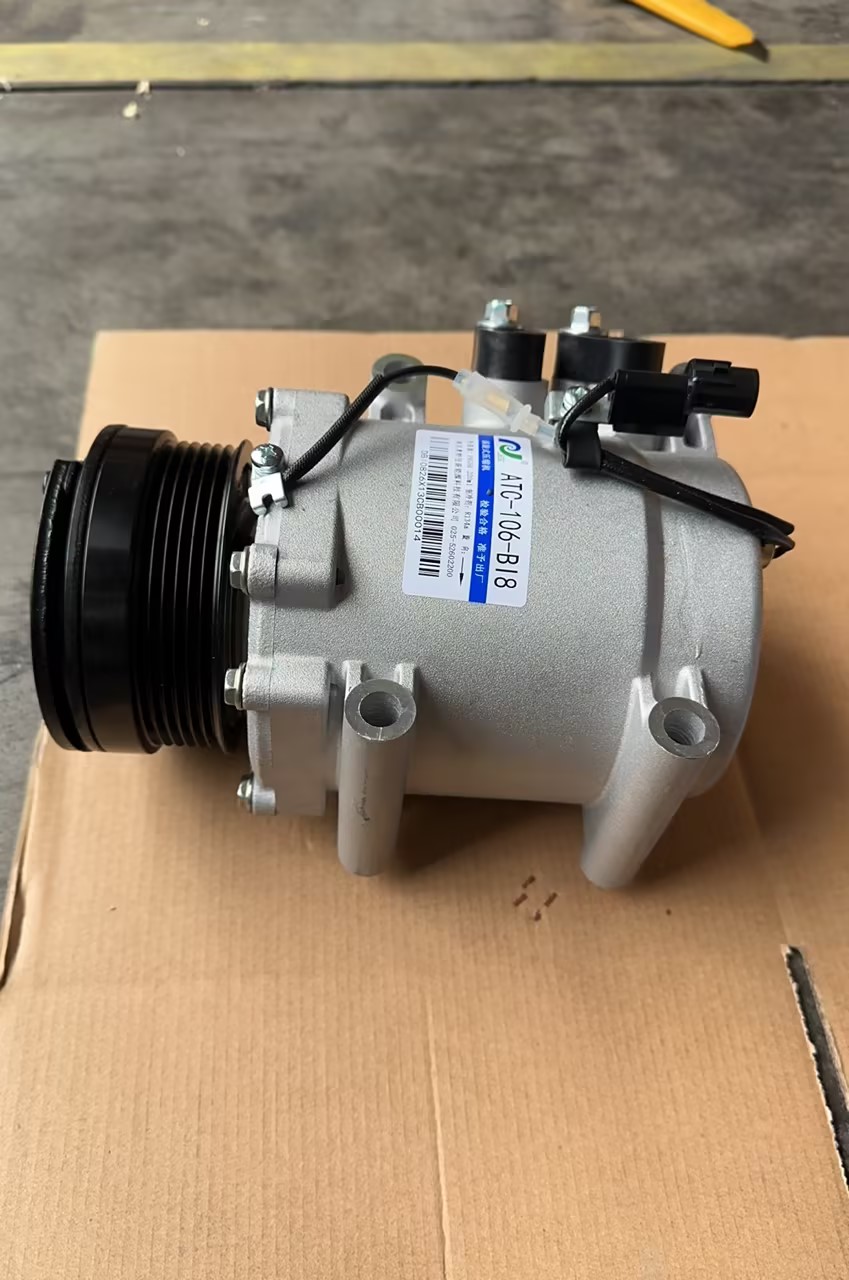
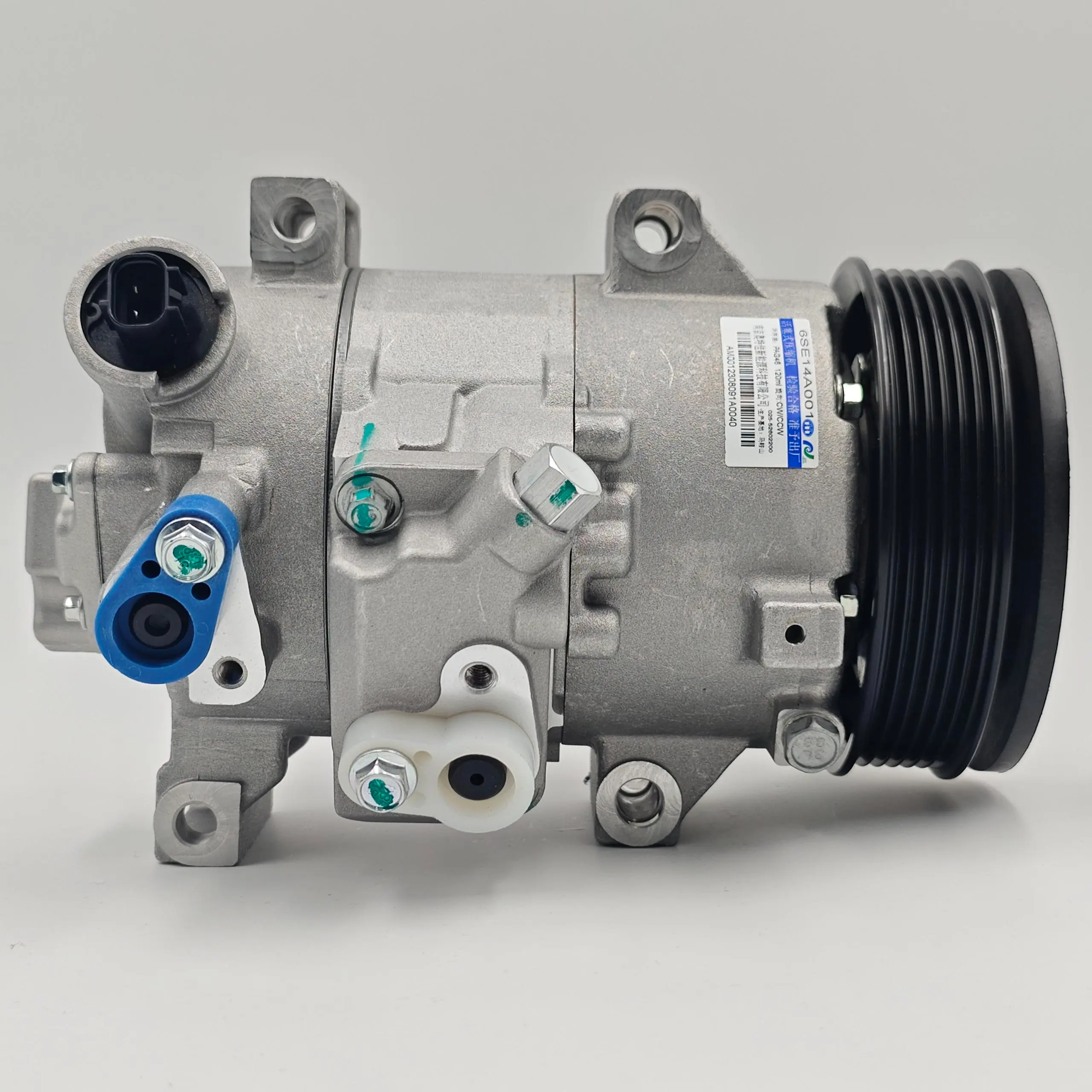
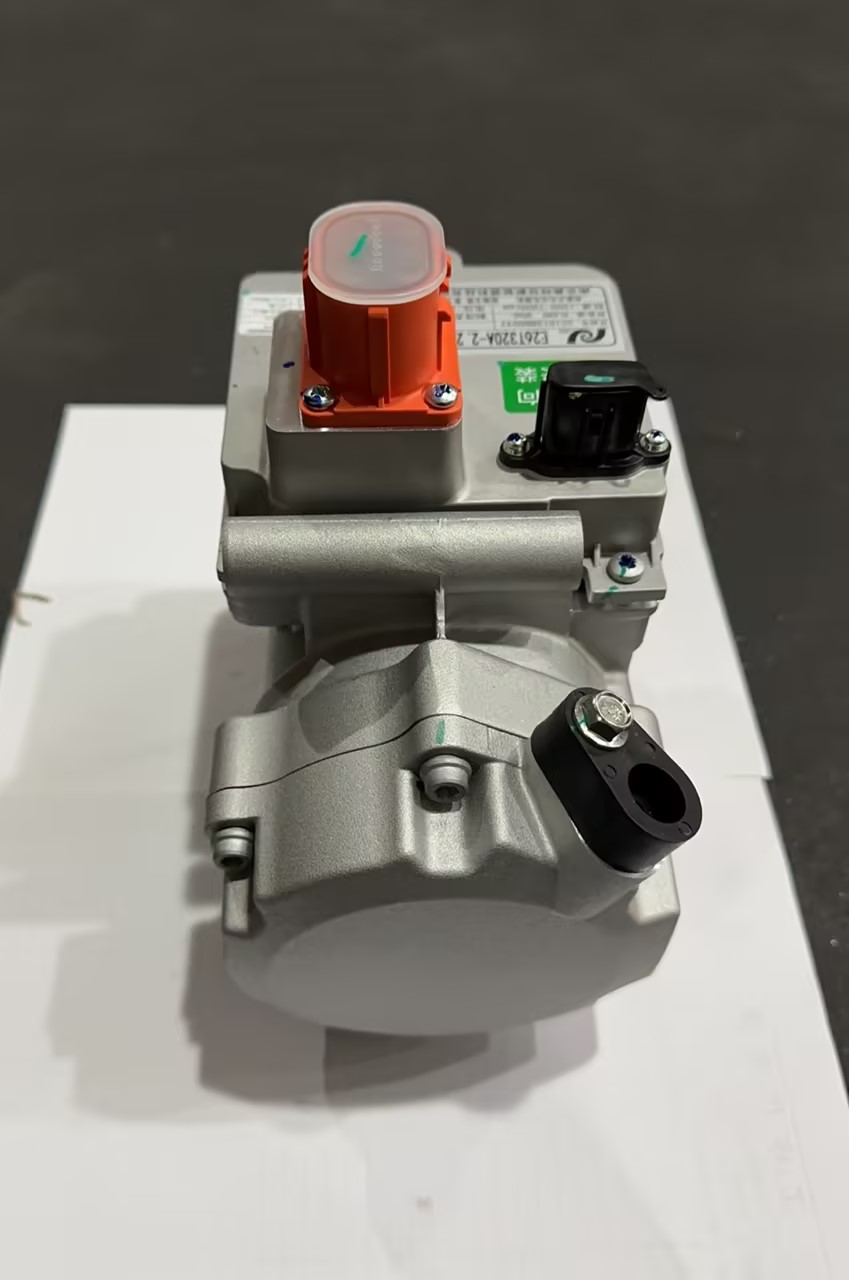
An automotive AC compressor drives the circulation of refrigerant through a vehicle’s air conditioning system. It does this by drawing in low-pressure refrigerant vapour and compressing it into a high-pressure, high-temperature vapour for the condenser. In practical terms, the compressor provides the pressure difference that enables the refrigerant to absorb heat from the passenger compartment at the evaporator and release it outside the vehicle. According to SAE J639, the compressor is the component that increases the pressure and temperature of refrigerant vapour within a motor vehicle’s vapour compression system.
DENSO describes the automotive AC compressor similarly, as the key element that transports heat from the evaporator to the condenser. A 2023 SAE technical paper also explains that compressor performance is closely related to the quantity of refrigerant and oil, as well as operating conditions.
What Is an Automotive AC Compressor?
An automotive air conditioning (AC) compressor is a mechanical or electric pump at the heart of a vehicle’s vapour-compression refrigeration cycle. Rather than directly creating cold air, its function is to alter the pressure and state of the refrigerant, enabling the rest of the air-conditioning system to continuously transfer heat from inside the cabin to the outside environment.
A conventional automotive air conditioning system typically comprises four main refrigeration components: the compressor, condenser, expansion device, and evaporator. DENSO explains that the evaporator absorbs heat from the vehicle interior while the compressor circulates the refrigerant. The condenser rejects heat to the outside, and the expansion device reduces the refrigerant pressure before it enters the evaporator.
This makes the compressor fundamentally different from a simple air pump. It must handle refrigerant vapour, operate at varying engine speeds, maintain the required pressure relationship between the low and high sides of the system, and work with specific lubricants and refrigerant charges. In modern vehicles, compressor design is also important for energy efficiency, as air conditioning can consume a significant amount of available engine or electrical power.
What Does an Automotive AC Compressor Actually Do?
The compressor performs several connected functions rather than one isolated task.
First, it draws low-pressure refrigerant vapor from the evaporator. After passing through the evaporator, the refrigerant has absorbed heat from cabin air and is generally in a gaseous state. The compressor receives this relatively low-pressure vapor through the suction side.
Second, it compresses the refrigerant vapor. Reducing the vapor’s volume increases its pressure and also raises its temperature. SAE J639 describes this as the compressor drawing low-temperature, low-pressure refrigerant vapor from the evaporator or internal heat exchanger and compressing it into high-temperature, high-pressure vapor for the condenser.
Third, the compressor discharges the high-pressure vapor toward the condenser. The condenser can then reject the refrigerant’s heat to ambient air and condense the refrigerant into a high-pressure liquid or liquid-dominant state, depending on the system design.
Finally, the compressor maintains continuous refrigerant circulation. Without this circulation and pressure difference, the evaporator could not continuously absorb cabin heat and the condenser could not continuously reject it.
This is why DENSO describes the compressor as the “heart” of the automotive AC system: its role connects the low-pressure evaporator side with the high-pressure condenser side and keeps the refrigeration cycle moving.
How Does an Automotive AC Compressor Work?
The simplest way to understand compressor operation is to follow the refrigerant around the complete cycle.
Step 1: Refrigerant Leaves the Evaporator
Warm cabin air passes over the evaporator. Heat moves from the cabin air into the colder refrigerant, causing the refrigerant to evaporate.
At this point, the refrigerant returning toward the compressor is generally a low-pressure vapor. The compressor must receive vapor rather than a substantial quantity of liquid because the compression mechanism is designed around vapor compression.
Step 2: The Compressor Draws in Refrigerant
The compressor creates the pressure conditions that allow refrigerant to move from the suction line into the compressor. Depending on the compressor design, pistons, scrolls, vanes, or another compression mechanism reduce the refrigerant’s effective volume.
Step 3: Refrigerant Is Compressed
The compressor raises refrigerant pressure and temperature. The result is a high-pressure, high-temperature vapor that contains the heat transported from the cabin plus the heat associated with the compression process.
Step 4: Hot Refrigerant Enters the Condenser
The compressed refrigerant flows into the condenser, usually positioned near the front of the vehicle where airflow can remove heat efficiently. The condenser transfers heat from the refrigerant to ambient air and changes the refrigerant toward a liquid state.
Step 5: The Cycle Repeats
After passing through the expansion device, refrigerant pressure drops and its temperature decreases. The cold, low-pressure refrigerant then enters the evaporator and absorbs more heat from the cabin.
The compressor receives the resulting vapor and starts the cycle again. DENSO’s technical description of automotive AC systems follows this same four-component vapor-compression sequence.
Automotive AC Compressor and the Refrigeration Cycle
The compressor is easiest to understand when its role is compared with the other three principal components.
| Component | Refrigerant condition | Main function |
| Compressor | Low-pressure vapor → high-pressure vapor | Compresses and circulates refrigerant |
| Condenser | High-pressure hot vapor → high-pressure liquid | Rejects heat to ambient air |
| Expansion device | High-pressure liquid → low-pressure cold mixture | Reduces pressure and controls refrigerant flow |
| Evaporador | Low-pressure cold mixture → vapor | Absorbs heat from cabin air |
The compressor therefore does not perform the actual cabin heat absorption. That happens primarily at the evaporator. Its contribution is to establish the pressure and circulation conditions that make that heat transfer possible.
This distinction is important when diagnosing a vehicle with poor cooling. A warm cabin does not automatically mean the compressor itself has failed. Insufficient refrigerant, a restricted expansion device, poor condenser airflow, an evaporator problem, incorrect compressor control, electrical faults, or contaminated refrigerant can all affect system performance.
MACS specifically notes that different compressor architectures can behave differently during diagnosis, particularly fixed-displacement and variable-displacement systems.
How Is a Car AC Compressor Powered?
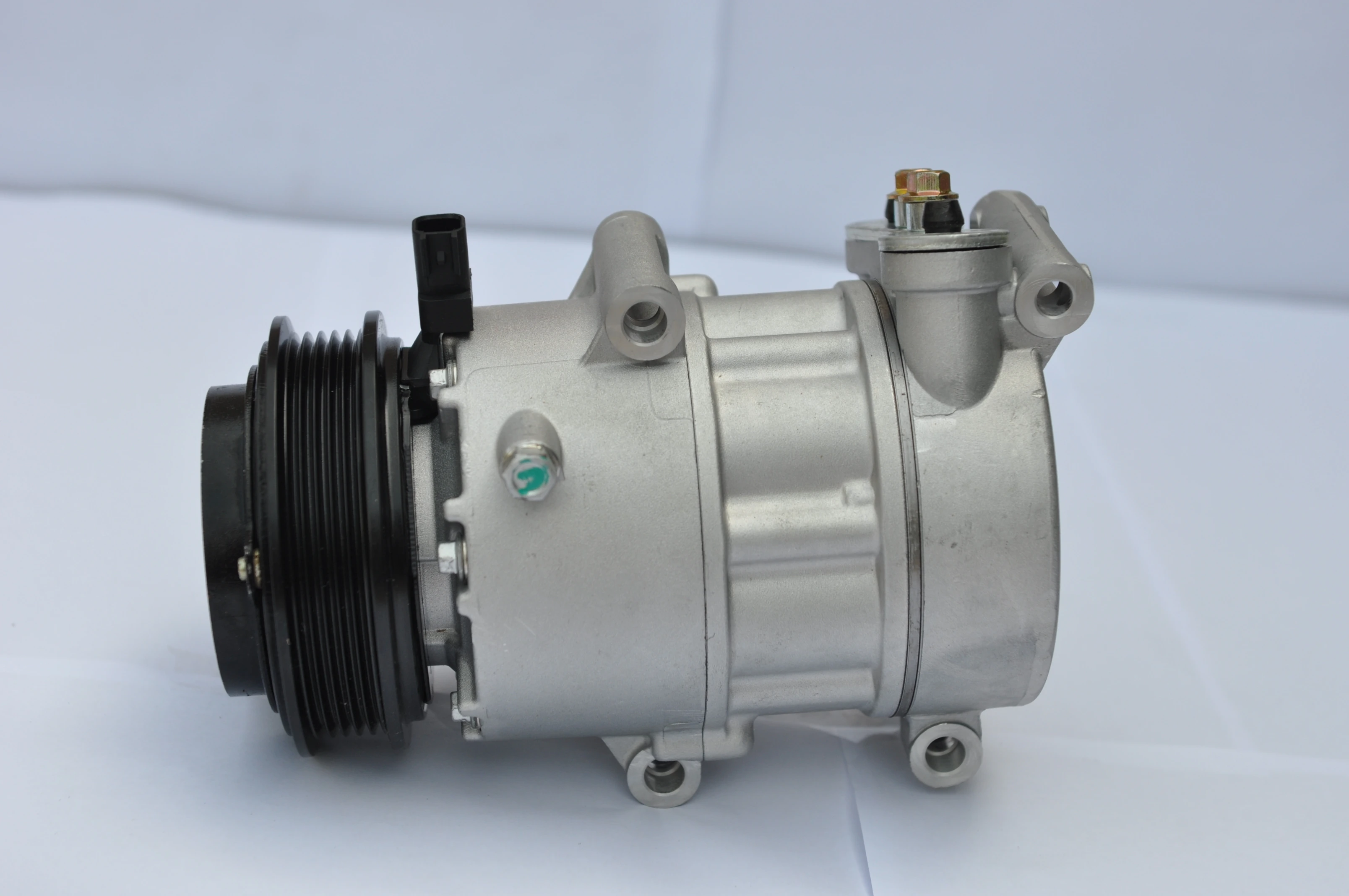
Traditional automotive air conditioning (AC) compressors are typically mechanically powered by the engine. A belt connected to the crankshaft drives the compressor pulley, and a clutch or other power transmission arrangement determines when and how the compressor operates.
In a conventional fixed-displacement system with an electromagnetic clutch, the pulley rotates with the engine and the clutch engages the compressor when air conditioning is requested. DENSO explains that its magnetic clutch transfers engine power to the compressor and consists of a stator, rotor, and hub assembly.
Modern vehicles increasingly use variable-displacement compressors, which can adjust their output rather than operating at full displacement whenever engaged. MACS notes that electronically controlled variable-displacement compressors use an electronic control valve to adjust the compressor’s displacement according to the system’s requirements.
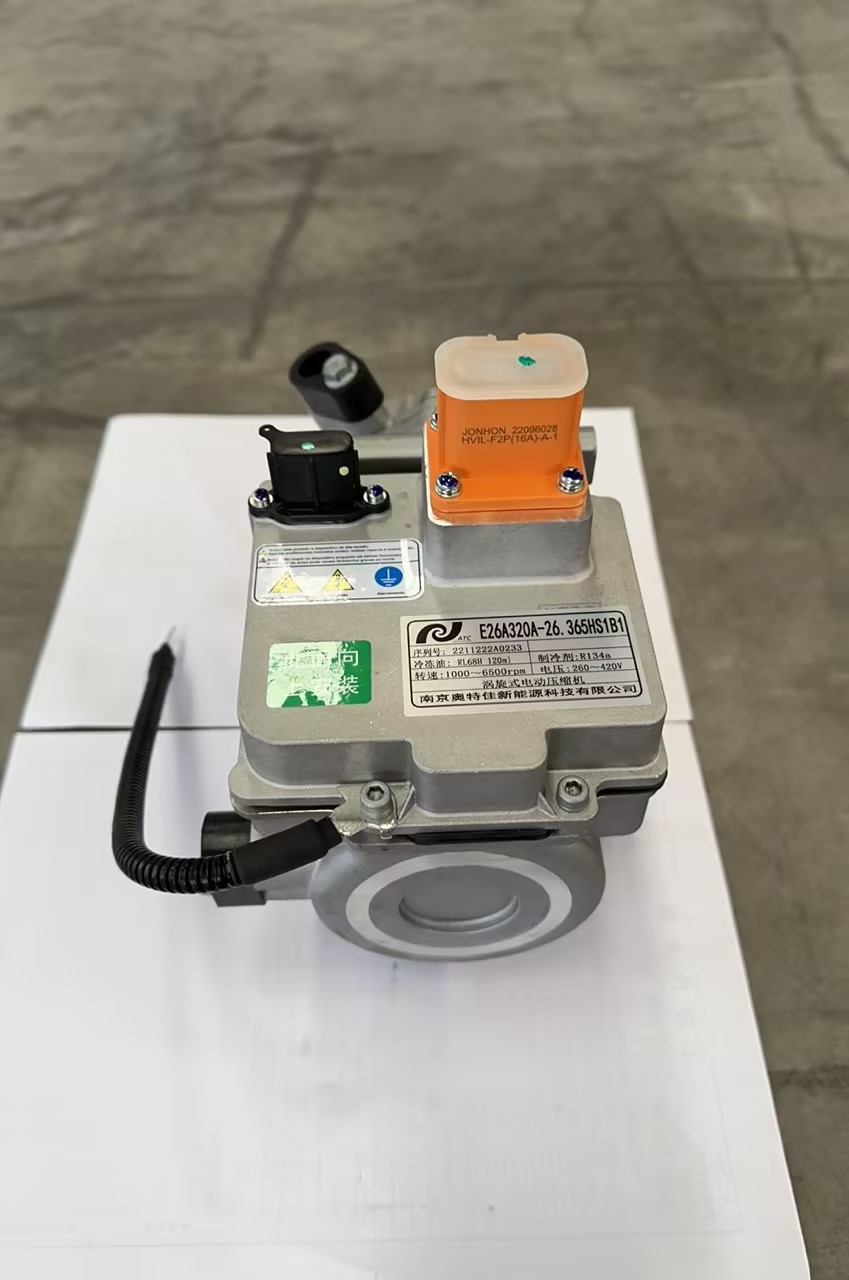
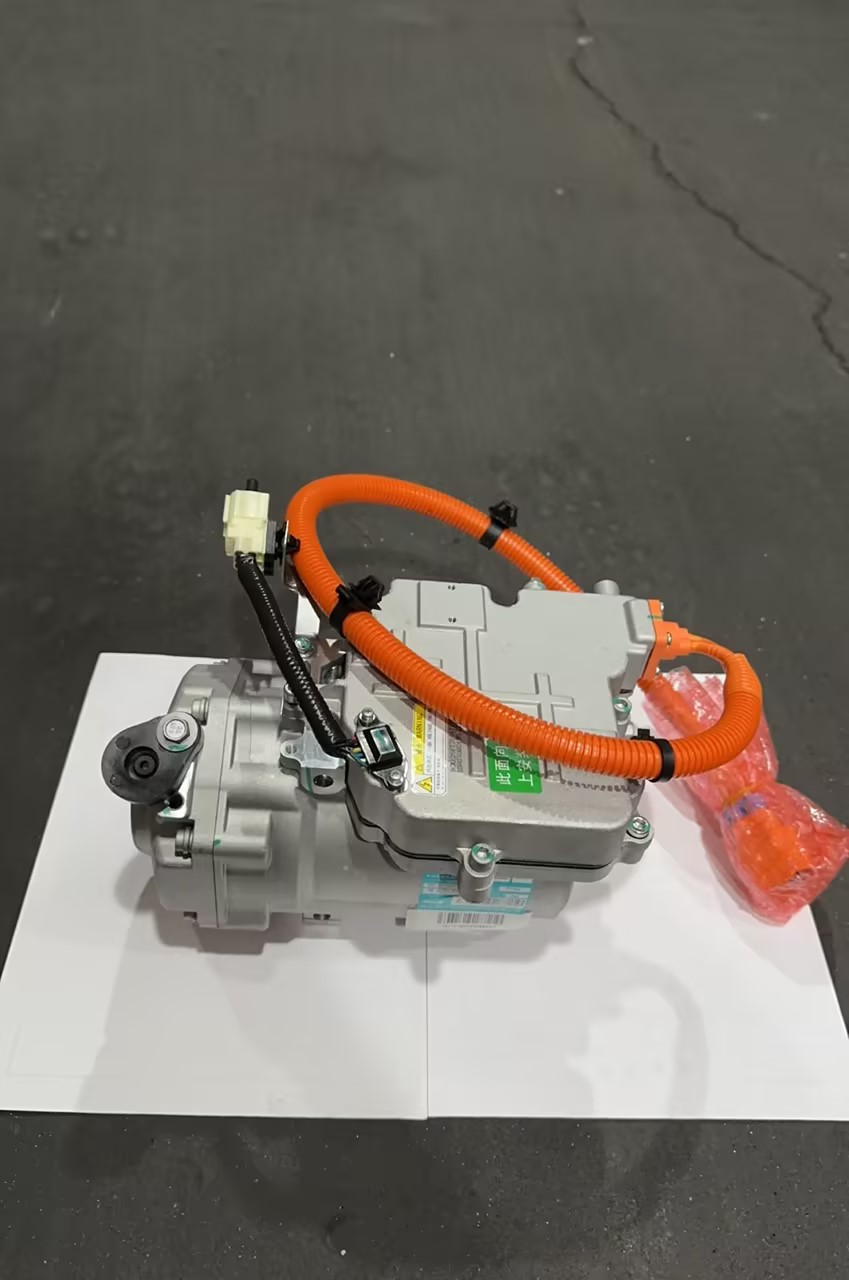
However, electric vehicles require a different arrangement as there is no conventional engine belt to drive the compressor. An electric automotive AC compressor often uses a scroll mechanism and incorporates an electric motor and associated electronics, enabling refrigerant compression to be controlled independently of engine speed. DENSO’s eCompressor architecture combines a scroll compressor section, a brushless motor, and an inverter, for example.
Fixed-Displacement vs. Variable-Displacement Compressors
One of the most significant developments in automotive air conditioning (AC) compressor technology has been the shift from fixed-displacement systems to variable-displacement and electronically controlled designs.
A fixed-displacement compressor has a relatively constant displacement per revolution. As the compressor rotates, it pumps a consistent volume of refrigerant; however, the actual mass flow and system behaviour vary depending on the operating conditions. Therefore, system controls have to manage cooling capacity through other mechanisms, including clutch cycling or pressure and temperature control.
In contrast, a variable-displacement compressor can alter its effective displacement. This enables the refrigeration system to produce different levels of cooling capacity, rather than simply turning the compressor on or off completely. MACS notes that variable-displacement technology has become increasingly common in mobile air-conditioning systems, with electronically controlled units adjusting displacement via an electronic control valve.
This distinction is important for diagnosis, as a variable-displacement compressor may not behave like a fixed-displacement unit during testing. MACS specifically warns that technicians should identify the compressor type before interpreting pressure readings or evaluating compressor behaviour manually.
What Types of Automotive AC Compressors Are Used?
Automotive compressors are available in a variety of mechanical configurations. The most common types are reciprocating piston, swash-plate piston, wobble-plate piston, rotary vane, and scroll compressors. The exact design varies by manufacturer and vehicle generation.
Reciprocating designs use pistons to draw in and compress refrigerant. These designs have been widely used in mobile air conditioning systems due to their ability to be engineered for vehicle applications.
Rotary compressors use rotating elements rather than conventional reciprocating pistons. Scroll compressors use two spiral-shaped elements to progressively compress the refrigerant as it moves towards the discharge area.
The shift towards electric vehicles has made scroll-type electric compressors particularly significant. DENSO describes electric compressors as having a scroll compressor section driven by a three-phase electric motor, and the development of scroll compressor technology for automotive applications has been documented in SAE literature for decades.
An important purchasing or servicing consideration is that the compressor’s design must match the vehicle’s refrigerant, lubricant, control system, and electrical or mechanical drive requirements. A compressor should never be selected solely based on a similar physical mounting position.
Why Does Compressor Oil Matter?
An automotive air conditioning (AC) compressor does not work with refrigerant alone. Compressor oil is needed to lubricate moving components, and it travels through the refrigeration system in controlled quantities alongside the refrigerant.
Using the correct type and quantity of oil is important because excessive or insufficient oil can both cause problems. A 2023 SAE technical study found that the quantity of compressor oil and the refrigerant charge both affect the performance of automotive AC, noting that excessive oil can reduce thermal performance, while inadequate or inappropriate operating conditions can affect the life of the compressor and its cooling capacity.
Oil selection is also linked to compressor and refrigerant technology. Different compressor designs and refrigerants may require different lubricant specifications, and mixing incompatible oils can damage system performance or compressor components.
For this reason, replacing a compressor is not simply a mechanical swap. Service procedures must account for oil quantity, refrigerant type, system contamination, replacement component specifications, and the amount of oil remaining in other components.
What Happens When an Automotive AC Compressor Fails?
Because the automotive AC compressor performs both mechanical and refrigeration system functions, a failing compressor can produce several different symptoms.
One common symptom is insufficient cooling of the cabin. If the compressor is unable to generate the necessary pressure difference or circulate sufficient refrigerant, the evaporator may not reach the required operating conditions.
Another symptom can be unusual noise. Grinding, rattling, knocking, or abnormal belt-related sounds can be caused by bearing wear, internal mechanical damage, inadequate lubrication, or other mechanical problems. However, noise alone does not prove that the compressor is defective, as similar sounds can also be generated by belt tensioners, pulleys, clutch bearings and other components.
A compressor may also exhibit abnormal pressure behaviour. However, pressure readings should be interpreted according to the specific compressor design and system architecture. MACS emphasises that fixed-displacement and variable-displacement compressors can exhibit different diagnostic behaviour, meaning that applying a generic rule to pressure readings can lead to an incorrect diagnosis.
In severe cases, internal compressor failure can introduce debris into the refrigeration circuit. In such cases, simply replacing the compressor may not be sufficient; the extent of the contamination and the manufacturer’s prescribed repair procedure must be evaluated.
Does a Bad AC Compressor Affect Engine Performance?
Yes, a mechanically driven compressor can influence engine load because the engine must supply the power required to compress refrigerant.
When the compressor engages, the engine experiences additional mechanical load. Modern engine management systems compensate for changing loads, but the compressor still consumes power that otherwise could be available for vehicle propulsion.
This is one reason variable-displacement technology has become important. MACS explains that variable displacement allows compressor output to be reduced when full cooling capacity is unnecessary, reducing unnecessary engine load.
The relationship is even more significant in electric vehicles. An electric compressor draws energy from the vehicle’s high-voltage electrical system, so compressor efficiency can directly affect available battery energy and, in some operating conditions, driving range. DENSO identifies electric compressors as part of modern vehicle thermal-management systems and notes their role in both cabin climate control and battery thermal management.
Why Is Refrigerant Charge Important to Compressor Operation?
The compressor and the refrigerant charge must be considered together. The compressor is designed to circulate a specific refrigerant within a defined operating range. The amount of refrigerant affects suction and discharge conditions, as well as mass flow and heat transfer performance.
Insufficient refrigerant can reduce cooling capacity and alter compressor operating conditions. Conversely, too much refrigerant can increase pressures and compressor work, potentially reducing system performance. SAE research has specifically found that the quantity of refrigerant affects suction and discharge pressures, compressor work, and vehicle cooling performance.
Therefore, simply adding refrigerant whenever the air conditioning feels warm is not a reliable repair strategy. Rather than repeatedly compensating for a refrigerant leak with additional charge, it should be identified and repaired.
EPA guidance for servicing MVAC systems also emphasises locating and repairing leaks, and avoiding the unnecessary addition of refrigerant. When servicing requires its removal, refrigerant must be recovered using appropriate certified equipment.
Automotive AC Compressor Maintenance and Service Considerations
An automotive AC compressor is not normally maintained by opening the compressor at regular service intervals. Instead, its operating environment is protected by maintaining the overall refrigeration system correctly.
Technicians should verify the correct refrigerant type, maintain the specified charge, use the correct compressor oil, inspect drive components where applicable, and address leaks promptly. The condenser, evaporator, expansion device, accumulator or receiver-drier, and refrigerant lines also need to be considered because a compressor operates as part of the complete circuit.
Refrigerant handling is particularly important. Under U.S. EPA Section 609 requirements, technicians who service MVAC systems for payment must be trained and certified, and certified refrigerant-handling equipment must be used when refrigerant is removed.
This is not merely an environmental requirement. Incorrect refrigerant handling can introduce air, moisture, incompatible refrigerant, or contaminants into the system, potentially affecting compressor lubrication, expansion-device operation, and long-term reliability.
Automotive AC Compressor vs. Other AC Components
| Component | What it does | What happens if it has a problem? |
| Automotive AC compressor | Compresses and circulates refrigerant | Poor cooling, abnormal pressure, noise, possible system contamination |
| Condenser | Rejects heat from refrigerant | High-side pressure problems, poor cooling |
| Expansion valve/orifice device | Controls expansion and refrigerant flow | Incorrect evaporator feeding, unstable cooling |
| Evaporador | Absorbs heat from cabin air | Warm air, icing, or reduced heat transfer |
| Receiver-drier/accumulator | Manages refrigerant and moisture depending on system design | Moisture or refrigerant-management problems |
| AC clutch/control valve | Controls compressor engagement or displacement | Compressor may not engage, or capacity may be incorrect |
| Cabin blower | Moves cabin air across evaporator | Weak airflow despite a functioning refrigeration circuit |
| Condenser fan | Provides airflow across condenser | High pressures and reduced cooling, especially at low vehicle speed |
This comparison explains why replacing an automotive AC compressor should not be the first response to every air-conditioning complaint. A vehicle can have a perfectly functional compressor and still produce warm cabin air because another component is preventing the refrigeration cycle from operating correctly.
Frequently Asked Questions About Automotive AC Compressors
- ¿Qué hace un compresor de aire acondicionado para automóviles?
An automotive AC compressor draws low-pressure refrigerant vapor from the evaporator and compresses it into high-pressure, high-temperature vapor. It also provides the circulation and pressure difference required for the refrigeration cycle to continuously transfer cabin heat outside the vehicle.
- How does a car AC compressor work?
The compressor receives low-pressure refrigerant vapor, mechanically or electrically compresses it, and sends the resulting high-pressure vapor to the condenser. The refrigerant then continues through the condenser, expansion device, and evaporator before returning to the compressor.
- What are the symptoms of a bad automotive AC compressor?
Common symptoms can include insufficient cooling, unusual compressor or belt-area noise, abnormal system pressures, and visible mechanical or refrigerant-system problems. Because similar symptoms can come from other AC components, proper diagnosis should identify the compressor type and evaluate the complete system.
- How long does an automotive AC compressor last?
There is no universal service life because compressor durability depends on vehicle design, lubrication, refrigerant condition, operating environment, maintenance, and system contamination. A correctly maintained compressor can provide long service, while inadequate lubrication or contaminated refrigerant can shorten its life.
- Can a car AC compressor be repaired?
Some compressor components can be serviced or rebuilt, but the appropriate repair depends on the compressor design, failure mode, vehicle manufacturer’s procedure, and contamination level. In many repair situations, replacing the complete compressor assembly is more practical than rebuilding it in the vehicle.
- What is the difference between a fixed and variable AC compressor?
A fixed-displacement compressor provides a relatively constant displacement per revolution, while a variable-displacement compressor can adjust its effective displacement to match cooling demand. Variable-displacement designs can reduce unnecessary compressor work when full cooling capacity is not required.
Conclusion
The automotive air conditioning (AC) compressor is the component that enables continuous, refrigerant-based cooling of the cabin. Its primary function is to take low-pressure refrigerant vapour from the evaporator, compress it into high-pressure, high-temperature vapour and direct it towards the condenser. This establishes the pressure and circulation conditions required for the complete refrigeration cycle.
This explains why compressor technology has evolved beyond the traditional belt-driven fixed-displacement design. Modern vehicles increasingly use variable-displacement compressors to better match cooling demand, while electric vehicles use electrically driven compressors that operate independently of engine speed. DENSO’s current product information reflects the shift towards electric compressor systems integrated with broader vehicle thermal management, away from conventional mechanically driven compressors.
When it comes to diagnostics, it is important not to condemn the compressor based on just one symptom. Refrigerant charge, oil quantity, condenser airflow, expansion device operation, electrical control, compressor displacement, and system contamination all influence air conditioning (AC) performance. Both SAE technical work and MACS training materials demonstrate why compressor type and operating conditions must be considered before interpreting pressure readings or deciding that a compressor has failed.
In simple terms, the refrigeration cycle can be remembered as:
Evaporator absorbs cabin heat → compressor raises refrigerant pressure → condenser rejects heat → expansion device reduces pressure → evaporator absorbs heat again.
The compressor is therefore not the part that “makes cold” by itself. It is the pressure-generating and refrigerant-circulating component that allows the rest of the automotive air-conditioning system to move heat from the cabin to the outside environment.