
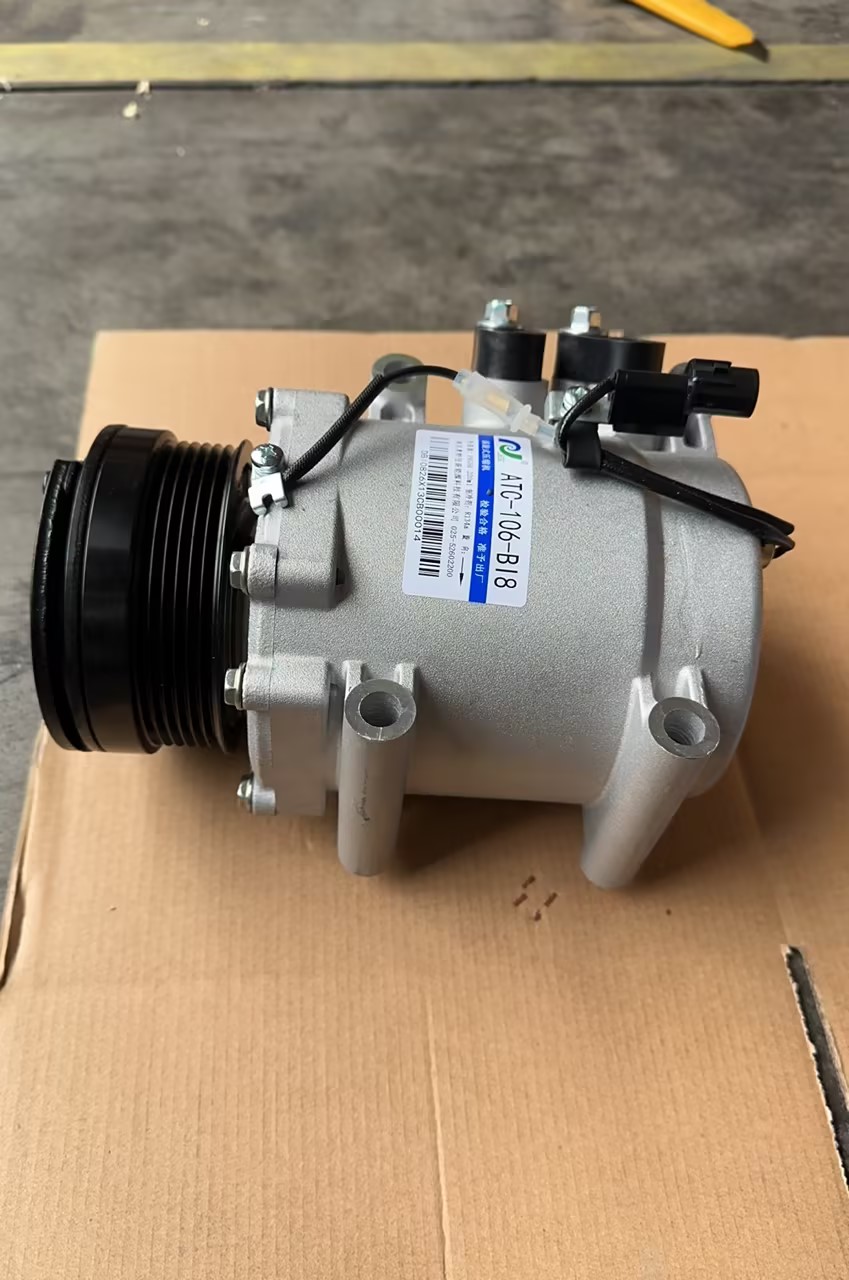
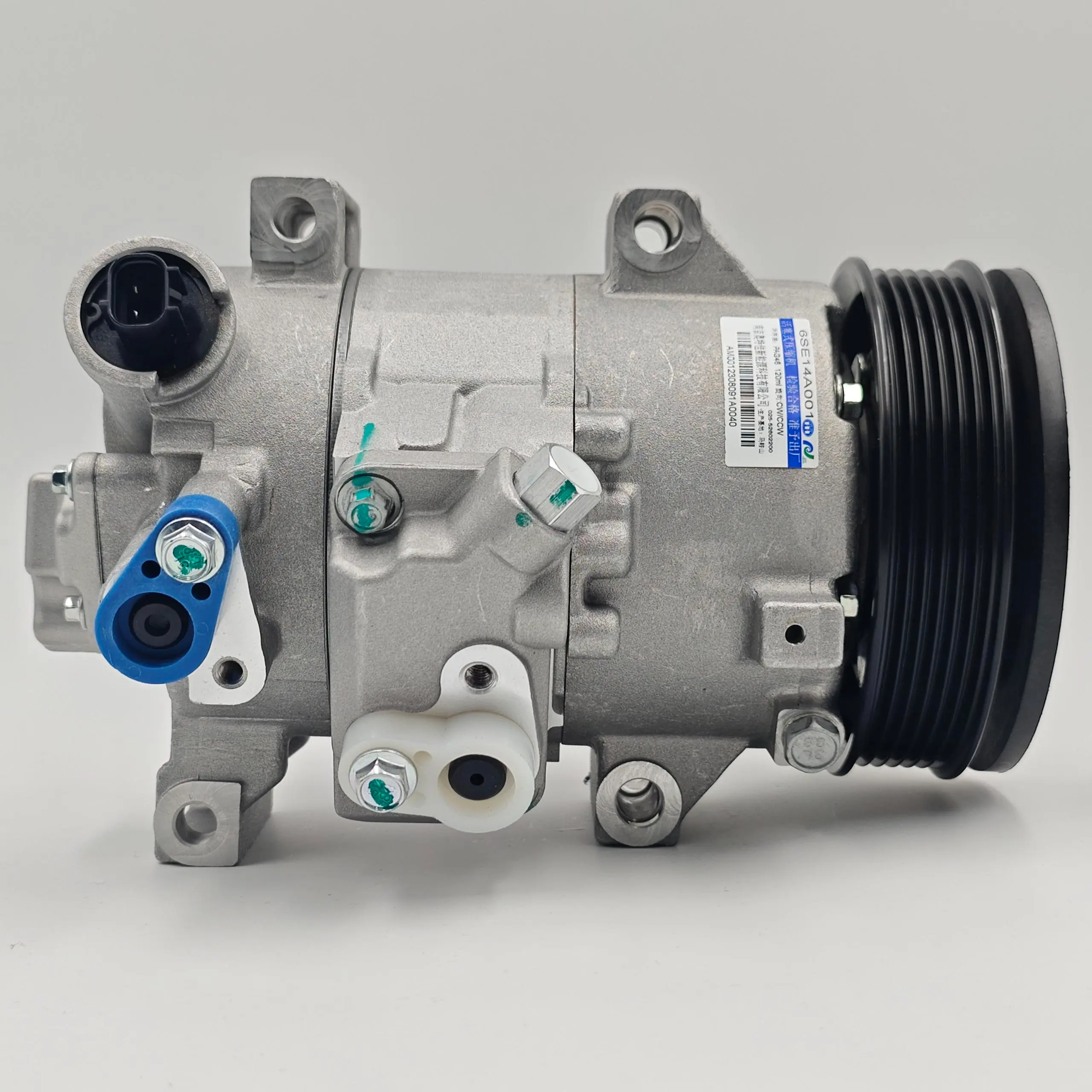
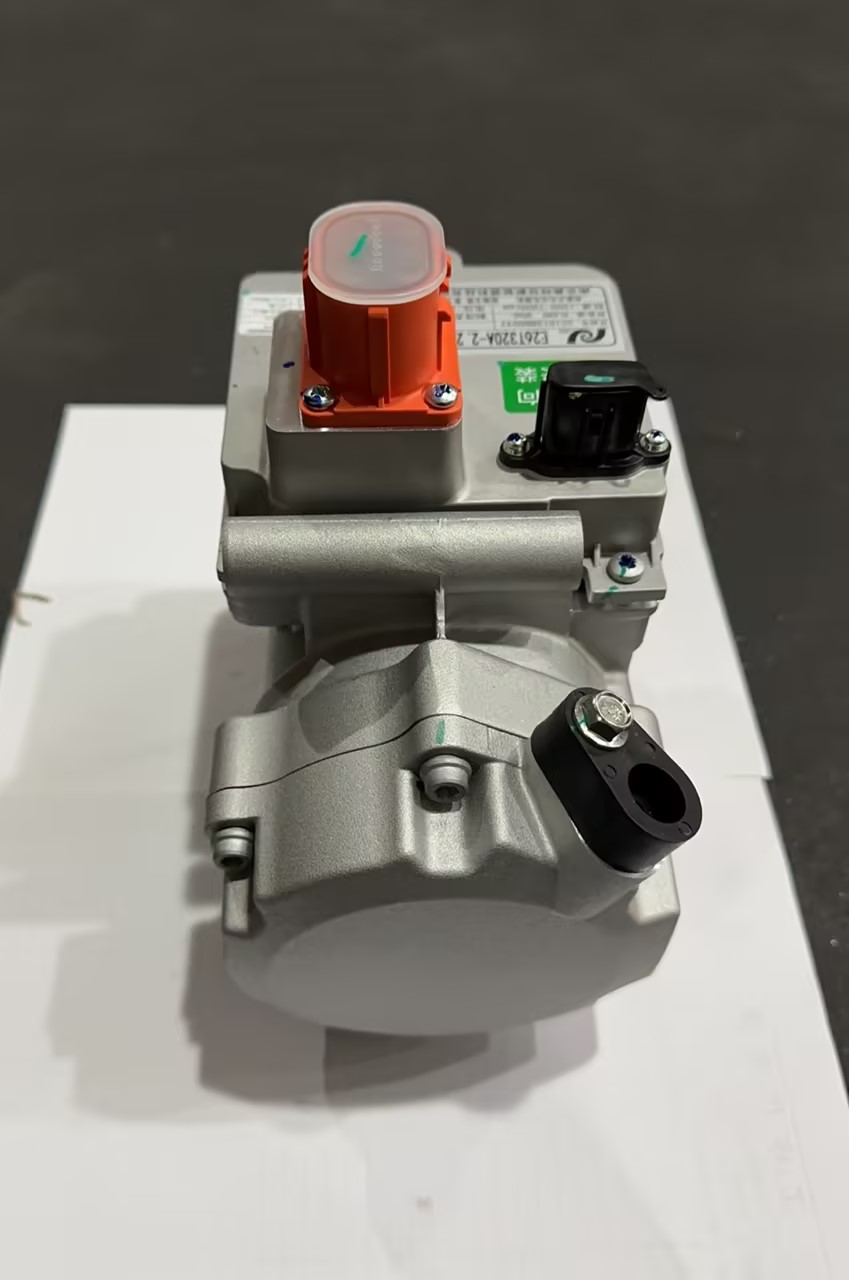
Scroll compressors generally outperform rotary compressors in terms of efficiency, reliability, and long-term durability for medium to large HVAC and refrigeration applications. However, rotary compressors are more cost-effective and compact for small-capacity systems. ASHRAE Handbook: HVAC Systems and Equipment (2024) and U.S. Department of Energy (DOE) efficiency studies on residential air conditioning systems indicate that scroll technology delivers 10–15% higher energy efficiency and significantly lower vibration levels than conventional rotary designs. However, rotary compressors still dominate low-capacity and budget-sensitive applications due to their simpler structure and lower manufacturing cost.
These conclusions are consistent with those published in the International Journal of Refrigeration (Elsevier, 2022), which highlights the superior isentropic efficiency and lower mechanical wear of scroll compressors under partial-load conditions.
Introduction: Why This Comparison Matters
The debate between scroll and rotary compressors is not merely a matter of technical preference; it has a direct impact on energy consumption, system reliability, maintenance cycles, and lifecycle costs in HVAC, refrigeration, and industrial cooling systems.
According to DOE efficiency benchmarks, compressors are responsible for 30–50% of total energy consumption in air conditioning systems in modern engineering design. Therefore, selecting the right compressor type is a critical engineering decision rather than a secondary specification detail.
Scroll and rotary compressors are both widely used in residential air conditioners, heat pumps, commercial chillers, and refrigeration systems. However, their fundamentally different mechanical principles lead to meaningful differences in performance, efficiency, and application suitability.
Fundamental Working Principles
How a Scroll Compressor Works?
A scroll compressor operates using two spiral-shaped scroll elements:
One fixed scroll (stationary) and one orbiting scroll (which moves eccentrically).
As the orbiting scroll moves, it traps refrigerant gas in progressively smaller pockets and compresses it towards the centre discharge port.
Key characteristics:
- Continuous compression process
- Minimal pulsation
- Fewer moving parts
- High volumetric efficiency
This design results in smooth operation and reduced mechanical losses.
How does a rotary compressor work?
A rotary compressor typically uses a rotating shaft with a roller or vane inside a cylindrical housing. As the rotor spins:
- Refrigerant is drawn in and trapped between the rotor and the cylinder wall.
- The refrigerant is compressed as the volume decreases.
Key characteristics:
- Intermittent compression
- Sliding contact surfaces
- Compact structure
- Lower initial manufacturing cost
Rotary compressors are widely used in small air conditioners and household appliances.
Core Performance Comparison
Table: Scroll vs Rotary Compressor Performance Overview
| Feature | Scroll-Kompressor | Rotary Compressor |
| Energy Efficiency | High (10–15% better) | Moderate |
| Noise Level | Very Low | Moderate to High |
| Vibration | Minimal | Noticeable |
| Maintenance Requirement | Low | Medium |
| Cost | Higher | Lower |
| Lifespan | Long (10–20 years typical) | Moderate (6–12 years) |
| Load Handling | Excellent partial-load efficiency | Less efficient at partial load |
| Application Range | Medium to large systems | Small to medium systems |
Differences in energy efficiency
Scroll compressors generally achieve higher isentropic efficiency due to continuous compression and reduced leakage paths. While rotary compressors are efficient in small-scale applications, they suffer from higher internal friction and leakage losses.
According to ASHRAE performance modelling:
- Scroll systems: COP (Coefficient of Performance) improvement of 10–20%.
- Rotary systems: baseline efficiency for compact systems.
This efficiency gap becomes more significant in long operating cycles, such as those of commercial HVAC systems.
Noise and vibration behaviour
One of the most noticeable advantages of scroll compressors is noise reduction.
Scroll compressors:
- Continuous compression reduces pulsation.
- Balanced orbital motion reduces vibration.
They are suitable for indoor and commercial environments.
Rotary compressors:
- Sliding motion generates mechanical noise
- Higher vibration transfer to the housing
- Requires additional damping materials in the design
This makes scroll compressors the preferred choice for hospitals, hotels, and office buildings.
Mechanical Design and Reliability
Scroll Compressor Reliability
Scroll compressors have fewer wear points:
No suction/discharge valves
Minimal friction surfaces
Reduced mechanical stress concentration
As a result, failure rates are lower, especially under long continuous operation.
However, scroll compressors are sensitive to:
Liquid slugging
Contaminants in refrigerant
Improper lubrication
Rotary Compressor Durability
Rotary compressors use sliding vanes or rollers that continuously contact the cylinder wall, leading to:
- Higher wear over time
- Increased lubrication dependency
- More frequent maintenance in harsh conditions
However, rotary designs are robust in:
- Small systems
- Intermittent operation
- Low-cost appliances
Cost Analysis and Lifecycle Economics
Table: Lifecycle Cost Comparison
| Cost Factor | Scroll-Kompressor | Rotary Compressor |
| Initial Purchase Cost | High | Low |
| Installation Cost | Moderate | Low |
| Energy Consumption | Low | Higher |
| Maintenance Cost | Low | Medium |
| Replacement Frequency | Low | Higher |
| Total 10Year Cost | Lower in large systems | Lower in small systems |
Why is Scroll More Cost-Effective Long-Term?
Although scroll compressors cost more upfront, their higher efficiency significantly reduces electricity bills over time. In commercial buildings, energy savings can offset the initial price difference within 2–4 years.
Where Rotary Still Wins on Cost?
Rotary compressors remain dominant in:
- Entry-level air conditioners
- Portable cooling systems
- Budget-sensitive residential markets
Their simplicity makes them ideal for mass production and low-cost consumer goods.
Anwendungsszenarien
Choosing between scroll and rotary compressors depends mainly on system scale, efficiency requirements, operating conditions, and cost constraints. Each type is optimized for different HVAC and refrigeration applications.
When to Choose Scroll Compressors?
Scroll compressors are designed for high efficiency, reliability, and continuous heavy-duty operation. They use two spiral-shaped scrolls to compress refrigerant smoothly, resulting in fewer moving parts and higher performance stability.
Ideal application scenarios:
- Commercial HVAC systems
- Office buildings
- Shopping malls
- Hotels
- Large ventilation systems
Scroll compressors provide stable cooling under variable loads, making them ideal for large indoor environments.
Heat pump systems
Residential and commercial heat pumps
Heating and cooling dual-function systems
They offer high efficiency in both heating and cooling modes, especially in variable climates.
Data center cooling
Server rooms
Cloud computing infrastructure
High-density IT environments
Scroll compressors are preferred due to:
Continuous operation capability
- High reliability
- Low vibration and noise levels
- Industrial refrigeration
- Cold storage facilities
- Food processing plants
- Pharmaceutical storage
They maintain stable temperature control under long operating cycles.
High-efficiency residential systems
Premium central air conditioning
Energy-efficient home HVAC systems
They provide better energy savings compared to traditional compressor types.
Key strengths in these applications:
- High energy efficiency
- Smooth and quiet operation
- Long service life
Excellent performance under continuous load
When to Choose Rotary Compressors?
Rotary compressors are designed for compactness, cost efficiency, and moderate cooling capacity. They use a rotating mechanism (roller or piston-type) to compress refrigerant efficiently in small systems.
Ideal application scenarios:
- Small split air conditioners
- Residential bedroom AC units
- Small office cooling systems
They are widely used due to their compact size and affordability.
- Window air conditioners
- Singleroom cooling units
- Budgetfriendly installations
Rotary compressors fit well into compact housings.
Portable cooling devices
Mobile air conditioners
Temporary cooling systems
Their lightweight design supports mobility.
Low-capacity refrigeration systems
Small refrigerators
Beverage coolers
Light commercial refrigeration
They provide sufficient cooling without excessive energy consumption.
Key strengths in these applications:
- Compact design
- Lower manufacturing cost
- Energy efficiency in small-scale systems
- Simple structure and easy maintenance
Environmental and Energy Considerations
Modern HVAC systems are increasingly evaluated based on environmental impact.
Scroll compressors:
Lower energy consumption → reduced CO₂ emissions
Better compatibility with variable-speed drives (inverter systems)
Improved refrigerant efficiency
Rotary compressors:
Slightly higher energy consumption
Often used in low-cost refrigerant systems
Less optimized for large-scale energy efficiency goals
According to DOE energy efficiency trends, scroll-based systems contribute significantly to reducing building-level energy consumption in commercial infrastructure.
Technological Evolution Trends
The compressor industry is evolving toward inverter-driven and variable-speed technology.
Scroll compressors are:
Highly compatible with inverter control
Increasingly used in smart HVAC systems
Expanding into renewable energy heat pump systems
Rotary compressors are:
Improving via miniaturization
Integrating with inverter technology in residential ACs
Remaining dominant in entry-level markets
Engineering TradeOff Summary
Table: Engineering TradeOffs
| Factor | Scroll Advantage | Rotary Advantage |
| Efficiency | High | Moderate |
| Cost | Longterm savings | Low upfront cost |
| Design Complexity | Moderate | Simple |
| Maintenance | Low | Moderate |
| Scalability | High-capacity systems | Small systems |
| Noise Control | Excellent | Acceptable |
Industry Perspective (RealWorld Insight)
In real HVAC engineering practice, scroll compressors have become the default choice for premium systems. Manufacturers such as Daikin, Trane, and Carrier increasingly integrate scroll technology in commercial-grade products due to its efficiency and reliability.
Rotary compressors, however, continue to dominate the mass residential market in Asia due to cost constraints and manufacturing scalability.
This dual market structure explains why both technologies coexist rather than one replacing the other.
FAQ: Scroll vs Rotary Compressors
- What is the main difference between scroll and rotary compressors?
Scroll compressors use two spiral scrolls for continuous compression, while rotary compressors use a rotating roller inside a cylinder for intermittent compression.
- Which compressor is more energy efficient?
Scroll compressors are generally 10–15% more energy efficient than rotary compressors due to lower friction and smoother compression.
- Are scroll compressors more reliable than rotary compressors?
Yes, scroll compressors typically have fewer moving parts and lower wear rates, making them more reliable in longterm operation.
- Why are rotary compressors still widely used?
Rotary compressors are cheaper, smaller, and easier to manufacture, making them ideal for budget residential air conditioners.
- Which compressor is quieter?
Scroll compressors are significantly quieter because they produce less vibration and smoother gas flow.
- Can rotary compressors be used in large HVAC systems?
They are generally not preferred for large systems due to lower efficiency and higher wear under continuous heavy loads.
Conclusion: Which Is Better?
The answer depends entirely on the requirements of the application.
Scroll compressors offer greater efficiency, durability, and long-term cost savings.
Rotary compressors are better suited to affordability, compact design, and small-scale applications.
If performance, energy efficiency, and lifecycle costs are the most important factors, scroll compressors are the superior choice. However, if the priorities are upfront cost and compactness, rotary compressors remain highly practical.