
Quick Answer
Flushing an automotive air conditioning (AC) system is a repair procedure used to remove contaminated oil, metal particles, moisture-related residues, and other debris from the serviceable parts of the refrigerant circuit, particularly following compressor failure. It is not sufficient to simply pump solvent through the entire system; first, the refrigerant must be recovered using approved equipment. Then, non-flushable components must be isolated or replaced and serviceable components flushed using an approved method. Finally, the system must be reassembled, evacuated, recharged, and leak-tested.
What Does Flushing an Automotive AC System Actually Mean?
Flushing an automotive air conditioning (AC) system involves cleaning the internal passages of selected components in the refrigerant circuit to remove contamination before the system is returned to service. This is usually necessary when the system has been opened for major repairs, particularly if the A/C compressor has suffered internal damage and released metal debris or degraded lubricant into the refrigerant circuit.
This differs from simply evacuating the system. Evacuation involves removing air, moisture, and residual refrigerant from the system after repairs have been carried out. Flushing, on the other hand, is intended to physically remove contaminants from components that can be safely cleaned. The EPA describes recovery as the process of removing refrigerant and storing it externally. Evacuation/recharge, on the other hand, is a separate service operation in which the system is prepared for an accurate refrigerant charge.
This distinction is important because contamination can circulate through the compressor, condenser, hoses, expansion device, and evaporator. A replacement compressor installed in a contaminated circuit may be exposed to the same debris that caused the original failure. Therefore, MAHLE recommends thorough flushing when compressor damage has occurred, while also emphasising that several components must be bypassed and replaced rather than flushed.
It is also important to understand that not every automotive AC system needs to be flushed simply because the refrigerant has been removed. A routine evacuation and recharge following a minor service is not equivalent to a contamination event. The decision should be based on the reason for repair, the condition of the recovered oil and refrigerant, the type of component failure, and the vehicle or component manufacturer’s service procedure.
| Service operation | Main purpose | Does it clean contaminated components? |
| Refrigerant recovery | Remove refrigerant before opening the system | No |
| Refrigerant recycling/reclaiming | Process recovered refrigerant for reuse or specification compliance | No |
| A/C system flushing | Remove oil and contaminants from flushable components | Yes |
| Evacuation | Remove air, moisture, and residual gases after repair | No |
| Refrigerant charging | Restore the specified refrigerant quantity | No |
| Leak testing | Confirm system integrity | No |
This separation of functions is useful when diagnosing an automotive AC system because it prevents a common mistake: assuming that putting the system under vacuum automatically means the internal contamination has been removed.
When Should an Automotive AC System Be Flushed?
The main reason for flushing an automotive air conditioning (AC) system is contamination caused by compressor failure. When a compressor suffers catastrophic internal wear, seizure, or mechanical damage, metal particles can travel through the refrigerant circuit with the oil. According to MAHLE, contamination such as abrasion particles and chips can spread through the circuit, so flushing is required when replacing a defective compressor.
Other sources of contamination include degraded oil, moisture, chemical reactions, incompatible additives, rubber or elastomer particles, and foreign material introduced during previous servicing. MAHLE specifically identifies carbonised oil, rubber particles, moisture, metal swarf, aggressive acids, and other particles as possible contaminants that may need to be removed from an A/C circuit.
A contaminated system can produce symptoms beyond poor cooling. Debris may restrict an expansion device, interfere with oil circulation, contaminate a replacement compressor or cause abnormal pressure behaviour. Four Seasons notes that an expansion valve can become contaminated after compressor failure, and that receiver-driers and accumulators play an important role in trapping debris and managing moisture.
However, flushing should not be the go-to solution for every A/C problem. If the actual problem is insufficient condenser airflow, a refrigerant leak, electrical control failure, a defective pressure sensor, or a simple undercharge, flushing the refrigerant circuit will not correct the underlying fault. The EPA notes that topping up or recharging does not permanently repair leaks, so proper diagnosis is essential before deciding what service the system actually requires.
Which Automotive AC Components Can Be Flushed?
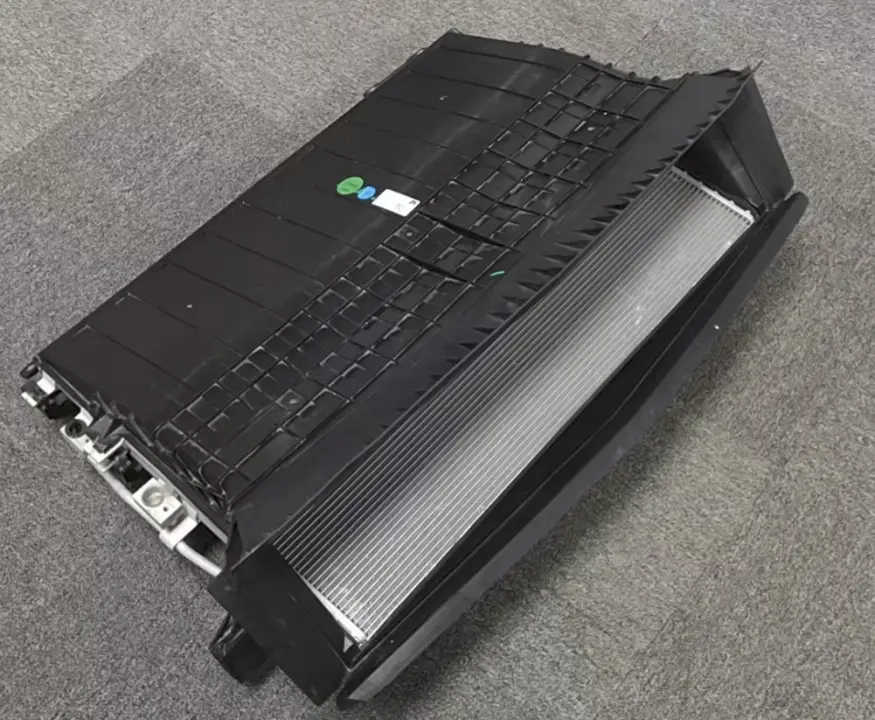
Components that can be considered for flushing are those with sufficient internal passages that can safely accept the approved flushing method. Depending on the system design, these typically include certain hoses, evaporators, and condensers. However, modern condenser construction creates important exceptions.
MAHLE’s technical procedure identifies condensers, evaporators and refrigerant lines as potential flush targets once the compressor, filter-drier/accumulator and expansion device have been removed or bypassed. Four Seasons also identifies condensers, evaporators and suitable hose assemblies as components that can be flushed.
The actual flushability of a component depends on its internal construction. Components with narrow passages, an integrated desiccant, a filter, a muffler, or a complex internal structure may retain contamination or become damaged during cleaning. Therefore, ‘Can this component be flushed?’ is a design-specific question rather than a universal rule.
Modern parallel-flow and microtube condensers are particularly important. Four Seasons explains that many newer condensers have very small internal passages that cannot be flushed successfully and recommends replacing them in the event of compressor failure.
This is why a professional repair procedure should begin with identifying the exact configuration of the vehicle’s components. A flushing procedure suitable for an older tube-and-fin condenser may be unsuitable for a modern microchannel or parallel-flow condenser.
Which Components Should Not Be Flushed?
The internal working mechanisms of several major automotive air conditioning (AC) components should generally not be flushed. These include the compressor, the expansion valve or orifice device, and the receiver-drier or accumulator. However, exact service requirements depend on the vehicle and component design.
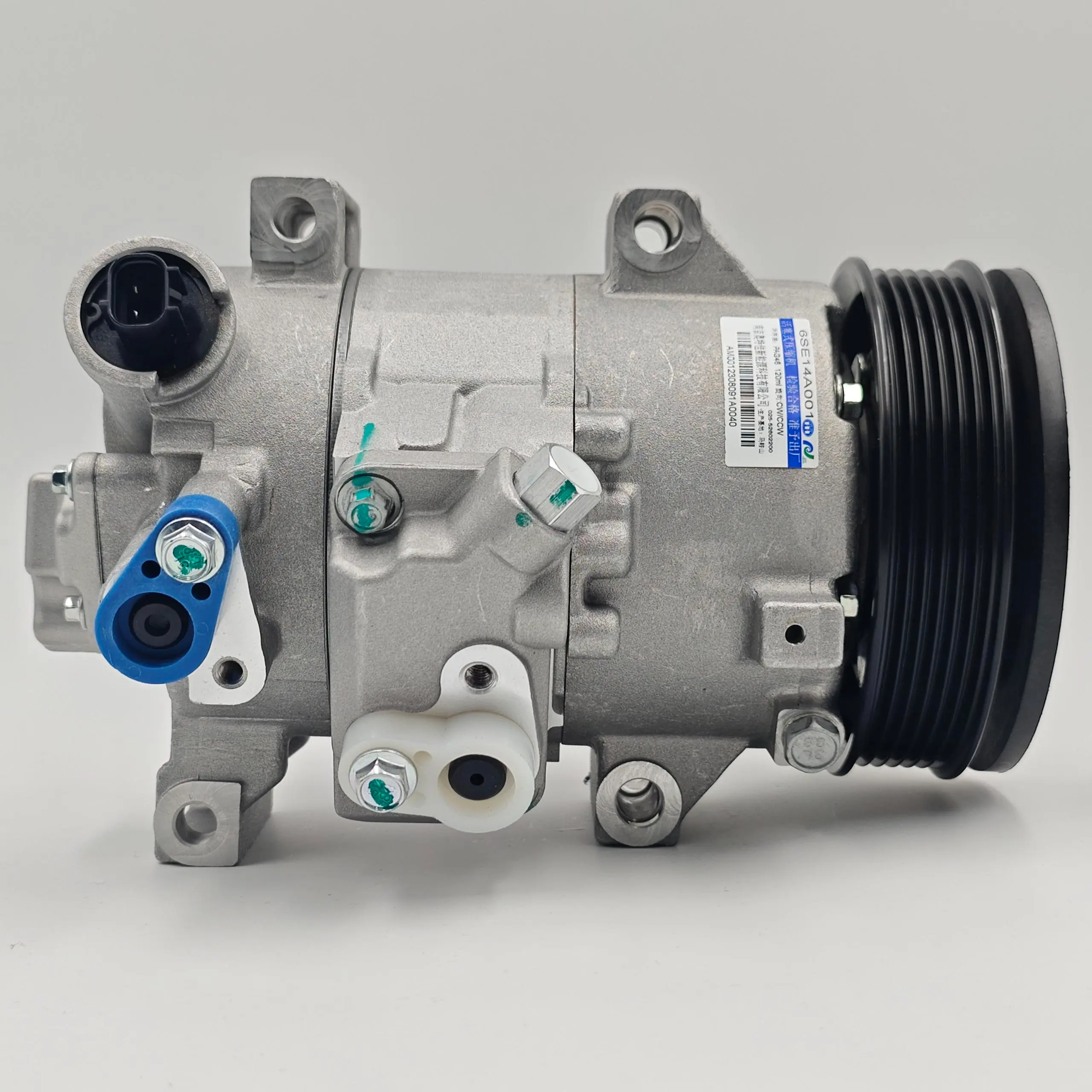
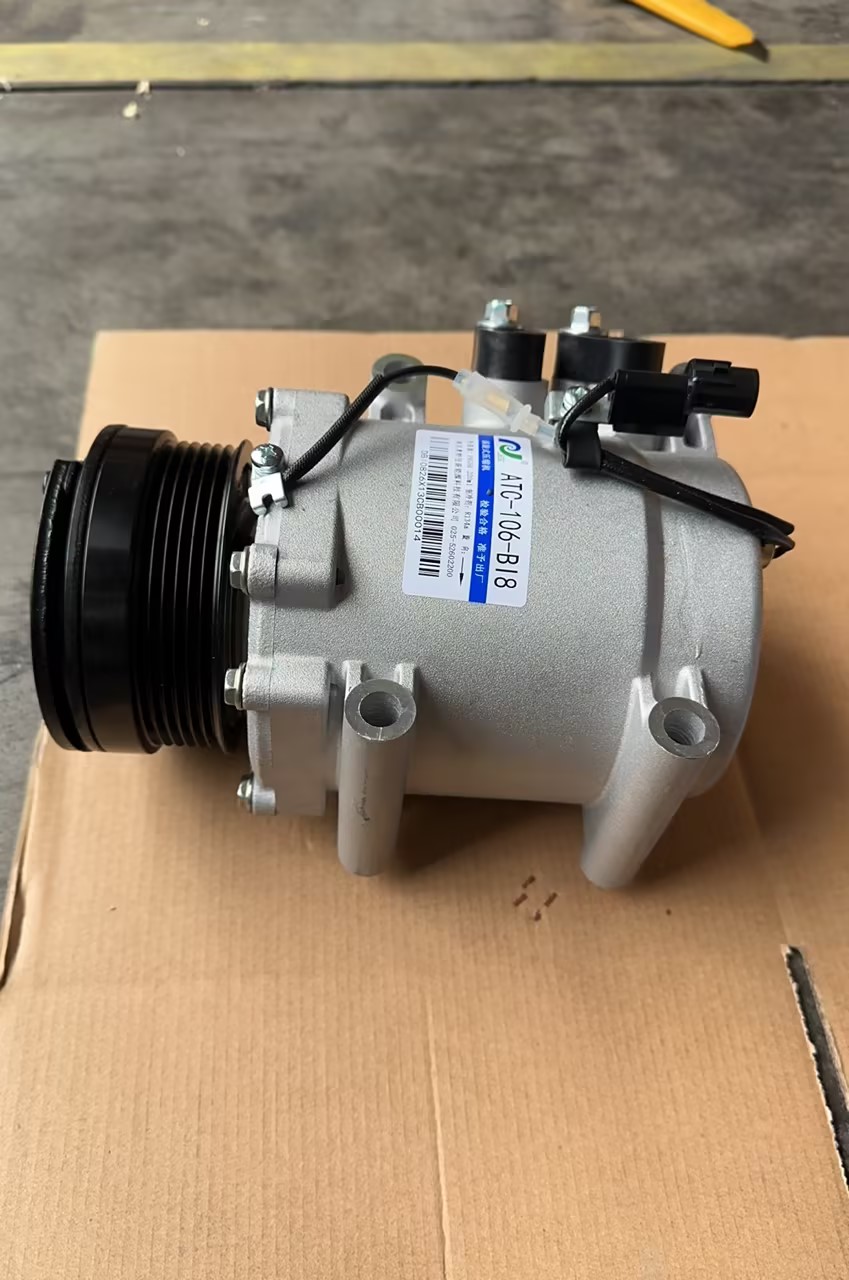
The compressor contains precision mechanical components and lubricating oil, so it should not be treated as a flushable section of the refrigerant circuit. If the compressor fails, it is usually replaced, while the remaining suitable components are cleaned to prevent debris from reaching the new compressor.
The receiver-drier and accumulator contain desiccant material. Four Seasons warns that flushing solvent can damage or disintegrate desiccant material, and therefore identifies these components as replacement items rather than items to be cleaned with solvent.
Expansion valves and orifice tubes present another problem because their small passages and metering functions make them vulnerable to contamination. Four Seasons explains that an orifice tube can become restricted by debris and that expansion valves can also become contaminated following compressor failure.
| Component | Typical action after contamination | Reason |
| Compressor | Replace | Contains precision moving parts and contaminated oil |
| Receiver-drier | Replace | Contains moisture-absorbing desiccant |
| Accumulator | Replace | Contains desiccant and collects refrigerant/oil |
| Expansion valve | Inspect/replace according to procedure | Small passages can retain debris |
| Orifice tube | Replace | Fine screen can trap compressor debris |
| المبخر | Flush if design permits | Can retain contaminated oil and particles |
| Hose without filter/muffler | May be flushed | Internal passage can generally be cleaned |
| Hose with filter/muffler | Often replace | Internal components may retain contamination |
| Condenser | Flush only if design permits | Some modern designs cannot be reliably flushed |
MAHLE similarly states that compressors, filter-driers/accumulators, and expansion or throttle valves cannot be flushed and must be bypassed during the cleaning process.
What Equipment Is Needed to Flush an Automotive AC System?
A proper flush of an automotive AC system requires more than just a can of cleaning solvent. The necessary equipment includes:
- Approved refrigerant recovery equipment
- An appropriate flushing device
- An approved flushing agent or compatible refrigerant-based flushing equipment
- Regulated dry air or nitrogen, if required by the chosen procedure
- Suitable adapters
- Collection equipment
- The correct safety equipment
The first piece of equipment is the recovery machine. Before opening the refrigerant circuit, the existing refrigerant must be recovered using equipment that is appropriate for the type of refrigerant used in the vehicle. The EPA’s MVAC rules require certified servicing equipment for regulated MVAC refrigerant handling, and the EPA specifically prohibits the intentional venting of refrigerants during servicing.
The flushing equipment must be capable of controlling the flow of cleaning agent through an isolated component. Four Seasons’ solvent-based procedure uses a flush cylinder, regulator, shut-off valve, adapter, and filtered compressed air or nitrogen. MAHLE also describes dedicated flushing equipment and filters for refrigerant-based flushing.
The choice of cleaning medium is equally important. An automotive air conditioning flushing agent should be specifically designed for the system and compatible with the materials being cleaned. Solvents, water, household cleaners, or generic degreasers that have not been designed for this purpose should not be introduced into a refrigerant circuit, as residues or chemical incompatibility could damage seals, contaminate refrigerant oil, or cause further problems.
Technicians should also ensure that they have new O-rings and all the necessary replacement components available before beginning the repair. Once the system is open, it is important to keep the work area clean and free from moisture and dirt.
How Do You Flush an Automotive AC System Step by Step?
The exact procedure should follow the vehicle manufacturer’s service information and the flushing-equipment manufacturer’s instructions, but a typical solvent-based component flushing process follows a logical sequence.
Step 1: Identify the refrigerant and diagnose the failure. Confirm the refrigerant specified for the vehicle and determine why the system is being opened. EPA recommends checking the vehicle label and notes that contaminated or unfamiliar refrigerant requires particular care because refrigerants can be mixed or misidentified.
Step 2: Recover the refrigerant. Use approved recovery equipment rather than releasing refrigerant from the service ports. EPA’s MVAC guidance requires proper recovery before service when refrigerant release can reasonably be expected.
Step 3: Disconnect and isolate the components. Remove the compressor, receiver-drier or accumulator, and expansion valve/orifice device as required by the vehicle-specific procedure. Identify which condenser, evaporator, hoses, and lines are actually suitable for flushing.
Step 4: Inspect for contamination. Examine recovered oil and accessible components for metal particles, discoloration, sludge, or other evidence of compressor damage. If the system shows extensive contamination, replacing non-flushable components is generally more appropriate than attempting to clean them.
Step 5: Connect the flushing equipment. Attach the approved adapter to the component being cleaned and make sure the solvent collection arrangement is secure. The component should be isolated so that cleaning material does not enter a new compressor, drier, expansion valve, or other component that should not be flushed.
Step 6: Flush the component according to the approved method. Four Seasons’ solvent procedure uses regulated pressure to introduce the flush agent, allows a soaking period, and then drives the remaining solvent through the component. Its published instructions specify 40 psi for the flushing stage and a subsequent higher-pressure air or nitrogen purge, but these are procedure-specific values and should not be generalized to every vehicle or flushing machine.
Step 7: Purge and dry the component. The component must be cleared of flushing agent before reassembly. The purge stage is critical because residual solvent must not remain in the refrigerant circuit.
Step 8: Repeat where necessary. If the expelled material remains visibly contaminated, the component may require another cleaning cycle or replacement. If a component cannot be reliably cleaned because of its construction, replacing it is the appropriate solution.
Step 9: Reassemble with new seals and required components. Install the replacement compressor, drier/accumulator, expansion device, O-rings, and other required parts according to the vehicle manufacturer’s procedure.
Step 10: Restore the specified oil quantity. Refrigerant oil is distributed throughout the A/C circuit, so replacing a component can remove part of the system’s oil inventory. MAHLE emphasizes that oil quantity and viscosity must be established according to the vehicle manufacturer’s specifications rather than guessed or simply added indiscriminately.
Step 11: Evacuate, charge, and test. Once the system is correctly assembled, evacuate it with appropriate service equipment, charge it with the specified refrigerant quantity, perform a leak test, and verify cooling performance. EPA explains that evacuation and recharge allow technicians to restore the precise refrigerant quantity specified by the vehicle manufacturer rather than estimating the amount remaining in the system.
What Is the Difference Between Solvent Flushing and Refrigerant Flushing?
In professional automotive air conditioning (A/C) servicing, there are two broad approaches: flushing with a dedicated cleaning agent or flushing with liquid refrigerant through a compatible service machine. The correct method depends on the available equipment, the vehicle’s system and refrigerant, the manufacturer’s instructions, and the level of contamination.
MAHLE describes a refrigerant-based method involving the circulation of liquid refrigerant through the relevant parts of the circuit using a suitable A/C service unit. The company also describes a second method involving the use of a dedicated flushing agent, followed by drying with nitrogen.
Solvent flushing provides an effective way of dissolving and removing contaminated oil and particles from compatible components. This is particularly useful when a dedicated flushing tool enables the technician to control the flow of the solvent and collect the discharged material.
Although refrigerant-based flushing can integrate more closely with specialised A/C service equipment, it still requires the correct adapters, filtration, recovery capability, and system configuration. MAHLE specifies that its refrigerant flushing approach uses a service unit and an additional flushing device containing filters and adapters.
Neither method renders every component flushable. The construction of the component remains the limiting factor, which is why professional flushing instructions emphasise the importance of removing or bypassing the compressor, filter-drier/accumulator and expansion device prior to the cleaning cycle.
How Do You Know if the Automotive AC System Has Been Flushed Properly?
The success of a flush should not be judged simply by whether liquid has passed through the component. The objective is to remove contamination without introducing new contamination, damaging components, or leaving cleaning agent residue behind.
One useful indicator is the condition of the material expelled from the component. If the initial discharge contains dark oil, metallic particles, sludge, or other visible contaminants, further cleaning may be necessary. However, visual cleanliness alone is not enough to certify a component, as microscopic particles can remain in narrow passages.
The final repair also needs to be evaluated as a complete system. After reassembly, the system should be evacuated appropriately and charged with the specified quantity of refrigerant as per the manufacturer’s instructions. It should then be checked for leaks and tested for cooling performance and pressure behaviour.
Particular attention should be given to the oil quantity. Adding too much oil can be just as problematic as adding too little, since oil occupies space in the refrigerant circuit, which can affect heat transfer and compressor operation. MAHLE explicitly advises technicians to use the total oil quantity and viscosity specified by the vehicle manufacturer.
If the original compressor failed catastrophically, it is especially important to ensure that the system is clean because even a relatively small amount of residual debris can reach the replacement compressor. Four Seasons describes catastrophic compressor debris as being capable of contaminating the rest of the refrigerant path, and emphasises the need to either replace or thoroughly flush the relevant components.
What Are the Most Common Mistakes When Flushing an Automotive AC System?
One of the most serious mistakes is flushing the wrong components. For example, pushing solvent through a receiver-drier, accumulator, expansion valve, or compressor can damage internal materials or distribute contamination rather than remove it. Both MAHLE and Four Seasons emphasise the importance of bypassing or replacing these components.
Another common error is assuming that every condenser can be cleaned. Modern parallel-flow and microchannel condensers may have extremely small passages that make complete flushing impractical. Four Seasons specifically warns that newer condenser designs may not flush successfully and recommends replacing them after compressor failure where appropriate.
A third mistake is relying on compressed air alone to clean the system. Four Seasons states that compressed shop air alone does not adequately remove contaminants and recommends using an approved A/C cleaning agent or an appropriate closed-loop flushing machine.
Technicians also sometimes overlook refrigerant identification. A vehicle may contain a different refrigerant than expected due to a previous retrofit or improper servicing. The EPA recommends checking the vehicle label, as identifying the refrigerant is an important step when contamination or an unfamiliar refrigerant is suspected.
Finally, replacing the compressor without addressing the root cause of the original failure can lead to further breakdowns. Poor condenser airflow, incorrect oil quantity, contamination, restricted expansion devices, and other faults may remain even after a new compressor has been installed. Therefore, a successful repair treats flushing as one part of a larger diagnostic process rather than an isolated cleaning operation.
FAQ About Automotive AC System
- How do you flush an automotive AC system?
First, recover the refrigerant with approved equipment, isolate the components that can be flushed, and replace components such as the compressor, drier/accumulator, and expansion device when required. Then flush suitable components with an approved method, purge them thoroughly, reassemble the system, evacuate it, recharge it to specification, and perform leak and performance tests.
- Do you need to flush an AC system when replacing the compressor?
A flush is commonly required when the compressor has failed internally, or contamination has entered the refrigerant circuit. MAHLE recommends thorough system flushing when replacing a defective compressor because metal particles and other contaminants may have circulated through the system.
- Can you flush an AC condenser?
Some condensers can be flushed, but many modern parallel-flow or microchannel condensers cannot be reliably cleaned because their internal passages are extremely small. The exact condenser design and vehicle service procedure should determine whether flushing or replacement is appropriate.
- Can you flush an AC compressor?
No, an automotive AC compressor should not be flushed as part of the refrigerant-circuit cleaning procedure. A failed or contaminated compressor is normally replaced, while the other flushable components are cleaned to protect the replacement unit.
- What solvent should be used to flush an automotive AC system?
Use only a flushing agent specifically approved for automotive A/C service and compatible with the system components. Generic solvents, water, or household cleaners can leave residues or damage materials and should not be introduced into the refrigerant circuit.
- Does flushing an automotive AC system remove all the oil?
Flushing removes contaminated oil from the components being cleaned, but it does not mean that the system should simply be refilled with an arbitrary amount of oil. The final oil quantity and viscosity should follow the vehicle manufacturer’s specifications and account for the components replaced during the repair.
Conclusion
Flushing an automotive air conditioning (AC) system is fundamentally a contamination-control procedure, not just another way of evacuating and recharging the refrigerant. This is particularly important following compressor failure or other events that introduce contaminated oil, metal particles, moisture-related residues, or foreign material into the refrigerant circuit. The central principle is straightforward: only flush components designed for flushing, replace those that cannot be safely cleaned, and restore the system according to the vehicle manufacturer’s specifications.
A professional procedure begins with refrigerant recovery and diagnosis, followed by component isolation, appropriate flushing, complete purging, replacement of non-flushable parts, correct oil management, evacuation, refrigerant charging, leak testing, and final performance verification. EPA requirements make proper refrigerant recovery particularly important, while technical guidance from MAHLE and Four Seasons demonstrates why it is essential to make flushing decisions based on the specific components involved.
The most important practical lesson is that ‘flushing the AC system’ does not mean forcing solvent through every component. Modern automotive air conditioning systems contain compressors, metering devices, driers, accumulators, microchannel condensers, hoses, and evaporators, all of which have very different internal designs. Understanding these differences is what transforms a basic cleaning operation into a technically sound automotive air conditioning repair.