
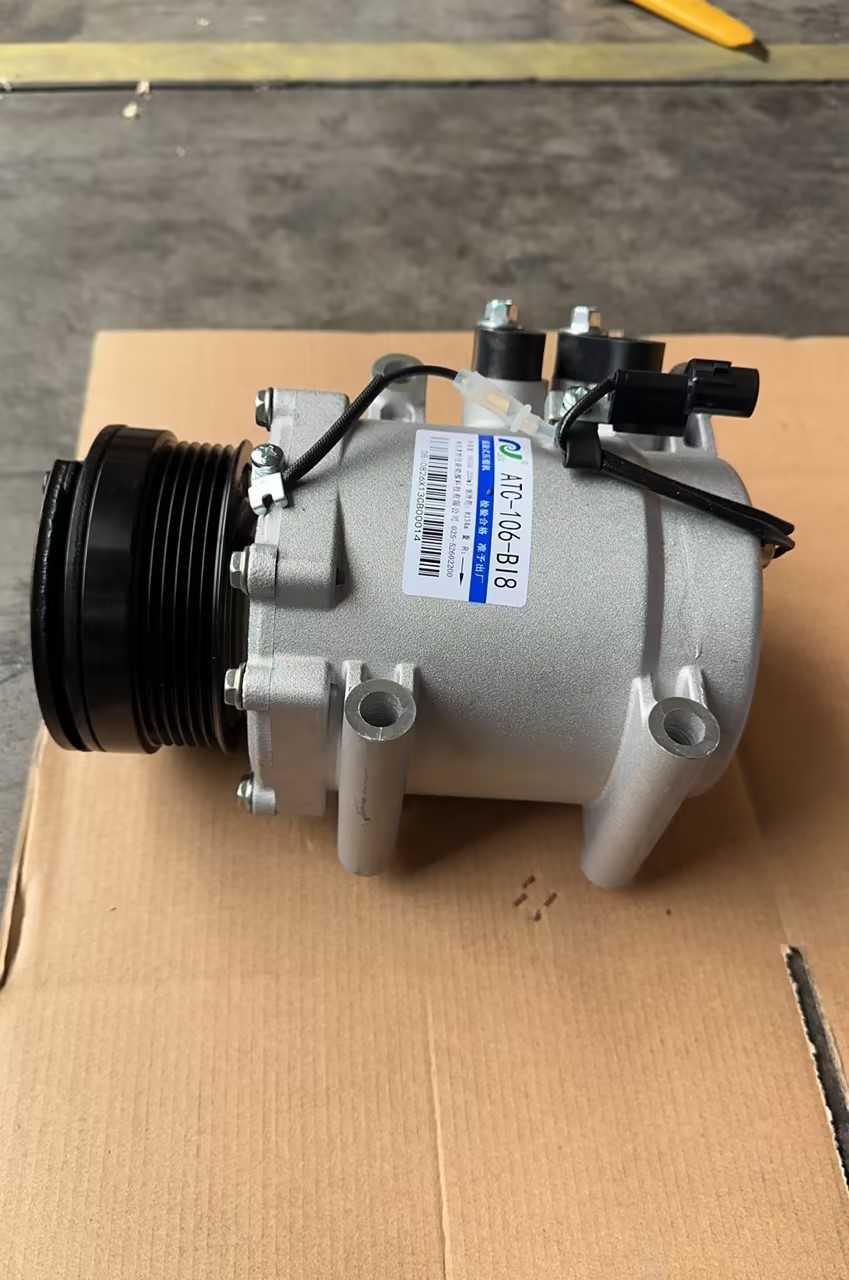
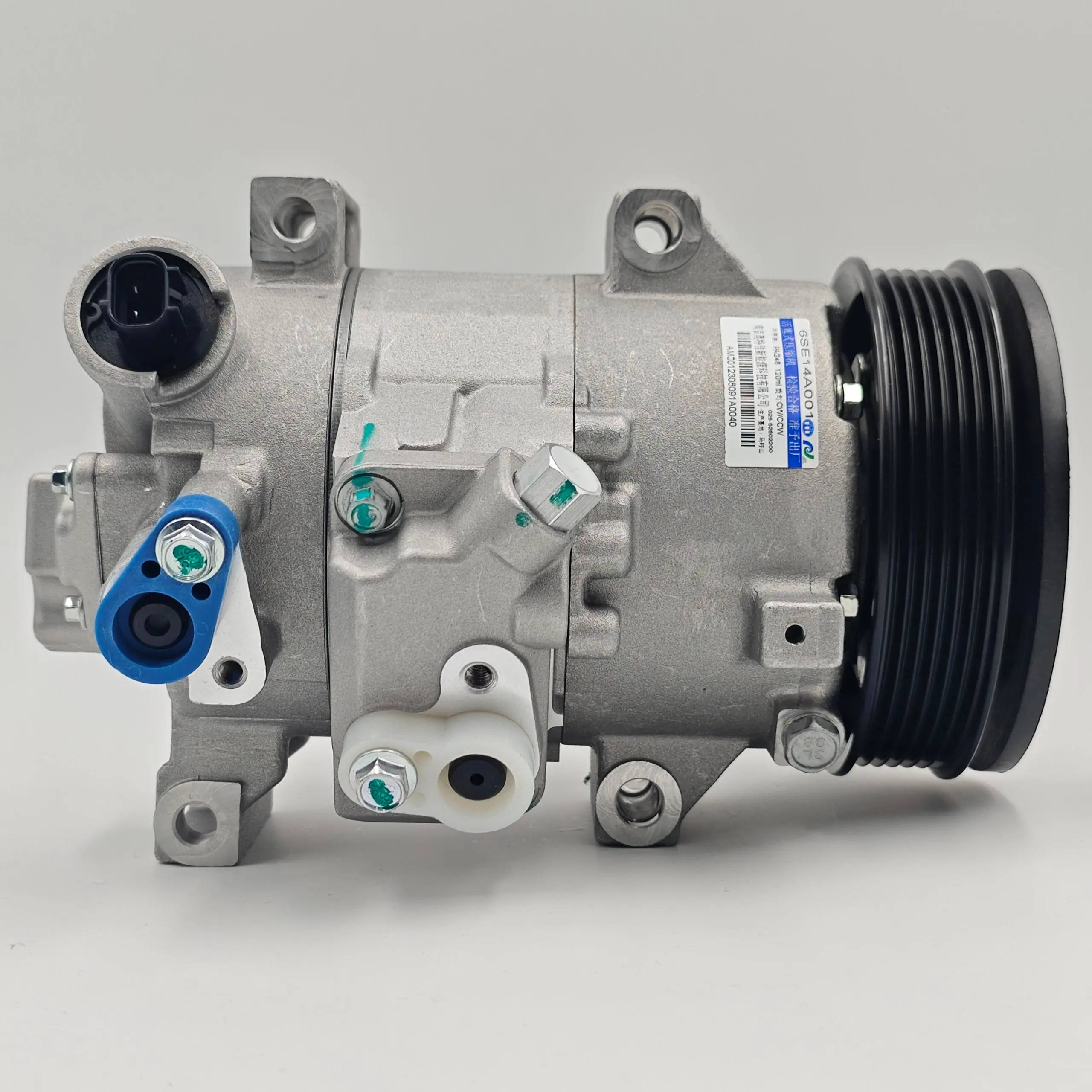
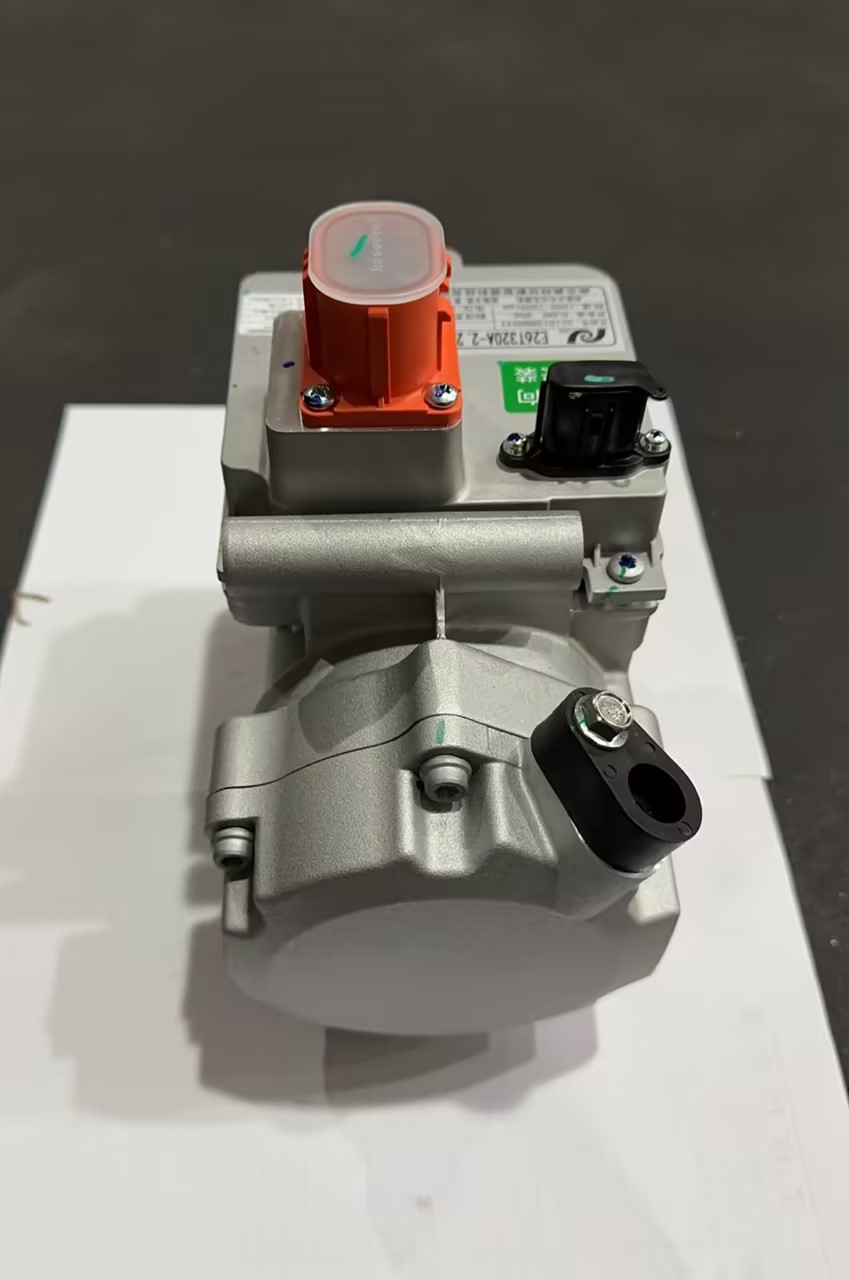
No, screw compressors and scroll compressors are not the same. Although both are positive-displacement machines that compress gas by reducing its volume, they have different mechanical characteristics, capacity ranges, and application requirements. A scroll compressor uses two intermeshing, spiral-shaped scrolls (one stationary and one orbiting), while a screw compressor uses rotating, helical rotors to continuously trap and compress gas. According to the ASHRAE Handbook: HVAC Systems and Equipment, these are distinct compressor designs with different mechanical characteristics, capacity ranges, and application requirements.
The main difference is not simply the shape of the compression components; it affects airflow, refrigerant capacity, noise levels, maintenance requirements, control flexibility, installation space, and operating costs. Understanding how scroll and screw compressors work makes it easier to choose the right technology for HVAC systems, refrigeration equipment, and industrial compressed-air applications.
What Is the Difference Between Screw and Scroll Compressors?
Screw and scroll compressors belong to the positive-displacement compressor family, but they use different mechanisms to compress gas. In a scroll compressor, two precision-machined spiral elements fit together to form enclosed pockets. One scroll remains stationary while the other moves in an orbital path, progressively reducing the pockets’ volume and pushing the compressed gas toward the discharge port. In a screw compressor, one or more helical rotors rotate inside a housing, trapping gas between the rotor lobes, grooves, and casing before progressively reducing the available volume and delivering the gas through the discharge port.
These mechanical differences influence where each technology performs best. Scroll compressors are widely used in residential and commercial air conditioning, heat pumps and refrigeration equipment, where compact construction, low sound levels and relatively smooth compression are valuable. Rotary screw compressors are common in industrial compressed-air installations and larger refrigeration systems, particularly where demand is substantial or continuous, and the equipment must support production processes over long operating periods. Neither design is universally more efficient: the correct choice depends on the working fluid, pressure ratio, load profile, required capacity, control strategy, and operating environment.
| Comparison factor | Scroll compressor | Screw compressor |
| Compression mechanism | Two intermeshing spiral scrolls; one orbits around the other | Helical rotor or rotors rotate within a housing |
| Common configuration | Usually a single scroll set per compressor | Single-screw or twin-screw designs |
| Typical applications | Residential and commercial HVAC, heat pumps, refrigeration, smaller compressed-air systems | Industrial compressed air, process refrigeration, larger HVAC and industrial cooling |
| Capacity range | Commonly suited to small and medium system capacities, with larger systems using multiple units. | Available across a broad range, including high-capacity industrial applications |
| Sound and vibration | Generally low due to smooth compression and relatively few moving components | Depends on rotor design, speed, enclosure, lubrication and installation |
| Capacity control | On/off cycling, variable speed, digital or other model-specific methods | Variable-speed drives, slide valves and other unloading or modulation methods |
| Maintenance | Often limited for hermetic HVAC models; repairs may require replacing the compressor assembly. | Requires maintenance appropriate to the design, including lubrication and rotor-system checks where applicable |
| Initial investment | Often attractive for smaller standalone systems | May be more suitable economically when greater or continuous demand justifies the investment |
| Key selection factor | Compactness, sound, operating conditions and part-load performance | Required flow, duty cycle, pressure, modulation and total operating cost |
How Does a Scroll Compressor Work?
A scroll compressor creates compression through the orbital movement of two carefully matched spiral elements. As low-pressure gas enters the outer part of the scroll set, spaces between the spirals trap pockets of gas. The orbiting scroll then moves these pockets of gas inwards, progressively reducing their volume until they reach the central discharge region at a higher pressure. As several pockets are compressed simultaneously at different stages, the process is relatively continuous. This helps to reduce pressure pulsation and operating noise compared with other compressor mechanisms.
The design depends on precision. The scroll profiles must maintain the correct clearances and sealing relationships to minimise internal leakage. In many designs, axial and radial compliance mechanisms help to maintain effective sealing as operating pressures change. These requirements explain why scroll compressors are manufactured with closely controlled geometries, and why contamination, liquid refrigerant ingestion, lubrication problems, or operation outside the specified parameters can compromise performance. Although a scroll compressor is mechanically compact, its reliability still depends on correct system design, refrigerant management, and operating conditions.
How Does a Screw Compressor Work?
A twin-screw compressor uses a pair of intermeshing helical rotors, commonly described as male and female rotors, housed inside a close-fitting casing. Gas enters through the inlet and occupies spaces between the rotor grooves and housing. As the rotors turn, these spaces close and move toward the discharge side, where their available volume decreases and gas pressure rises. The rotor geometry, clearances, rotational speed, internal volume ratio, and discharge pressure all influence the machine’s performance.
Screw compressors are available in oil-injected and oil-free configurations, depending on the application and equipment design. In oil-injected models, oil can help seal internal clearances, remove heat, and lubricate moving components; the system may therefore require oil separation and appropriate oil management. Oil-free screw compressors use a different arrangement to avoid injecting oil into the compression chamber, although other parts of the machine may still require lubrication. Buyers should verify the actual compressor specification rather than assume all screw compressors share the same lubrication system or produce the same air quality.
Which Compressor Is More Efficient?
Whether a screw compressor or a scroll compressor is more efficient is not a question with a reliable, universal answer. Efficiency depends on the operating conditions, including suction and discharge pressures, gas or refrigerant properties, ambient temperature, motor efficiency, compressor size, cooling requirements, and the degree to which the equipment matches demand. The ASHRAE Handbook states that compressor selection involves balancing performance, capacity, sound, cost, and operating conditions, and explains that compressor efficiency varies according to the pressure conditions under which a machine operates.
For a small HVAC system operating near its design conditions, a scroll compressor may offer an appealing blend of efficiency, compactness and quiet operation. In a factory with a sustained demand for compressed air, a properly sized screw compressor may offer better overall economics, especially when its capacity control system matches changing demand. However, the expected savings of either design can be undermined by oversized equipment, frequent cycling, poor pressure management, or extended operation at inefficient part-load conditions. Rather than selecting a compressor based on a single headline efficiency figure, buyers should compare performance data at equivalent conditions and examine seasonal or load-profile performance.
What Are the Differences in Capacity and Applications?
Scroll compressors are widely associated with residential and commercial air conditioning, heat pumps, refrigeration equipment, and compact compressed-air systems. Their design can be useful where space, sound, and relatively smooth operation are important. Multiple scroll compressors can also be arranged in a system to provide staged capacity, redundancy or improved load matching, depending on the system architecture and control strategy. ASHRAE identifies scroll compressors across air-conditioning, refrigeration and heat-pump applications, while also noting their use in some emerging applications involving gases such as carbon dioxide and helium.
Screw compressors are often selected for industrial applications where demand is continuous, flow requirements are substantial, or the system must accommodate variable production loads. In manufacturing plants, for example, compressed air may be required throughout multiple shifts to operate pneumatic tools, actuators, packaging equipment, and production machinery. In industrial refrigeration, screw compressors are also widely used because their capacity and operating characteristics can suit demanding cooling loads. The appropriate dividing line is not a fixed capacity threshold: available models overlap, and final selection must be based on required flow or cooling capacity, operating pressure, redundancy, and the equipment manufacturer’s performance maps.
Noise, Maintenance and Service Life
Noise is often a practical consideration when choosing a scroll compressor, particularly if the equipment is to be installed near occupied areas. Scroll mechanisms generally have low pressure pulsation and few moving parts in the compression mechanism, which helps to reduce sound and vibration. However, actual sound levels depend on factors such as motor speed, mounting, refrigerant piping, enclosure design, fans, and the surrounding installation. Therefore, buyers should compare published sound data under comparable test conditions rather than relying on broad claims that one technology is always quieter.
Maintenance requirements depend heavily on compressor construction. Many hermetic scroll compressors used in HVAC systems have sealed assemblies and require limited routine internal servicing. When a major internal failure occurs, it may be more practical to replace the compressor than to dismantle it. Industrial screw compressors generally require a planned maintenance programme, which may include checking the condition and level of the oil, as well as the filters, separators, cooling systems, drive components, vibration and operating temperatures. Oil-free screw models have different servicing requirements to oil-injected versions. Neither technology alone guarantees a longer service life: correct sizing, clean operating conditions, proper lubrication where required, effective cooling, and maintenance in accordance with the manufacturer’s instructions are all decisive factors.
How Do Their Capacity-Control Systems Compare?
Capacity control matters because compressor demand rarely remains constant throughout the day. A residential heat pump may experience changing loads as outdoor temperatures and indoor set points change. At the same time, a factory’s compressed-air demand may fluctuate as different production lines start and stop. If the compressor cannot follow these changes effectively, it may cycle excessively, consume unnecessary energy, or cause pressure and temperature instability.
Scroll systems may use on/off control, variable-speed drives, digital scroll mechanisms, or combinations of compressors, depending on the model. Screw compressors may use variable-speed drives, slide valves, or other unloading arrangements to adjust output. ASHRAE describes several capacity-control methods for screw and scroll refrigeration systems, including variable-speed control and unloading approaches. The best solution depends on the range and speed of demand changes, minimum stable capacity, control response, and the energy penalty associated with unloading or cycling.
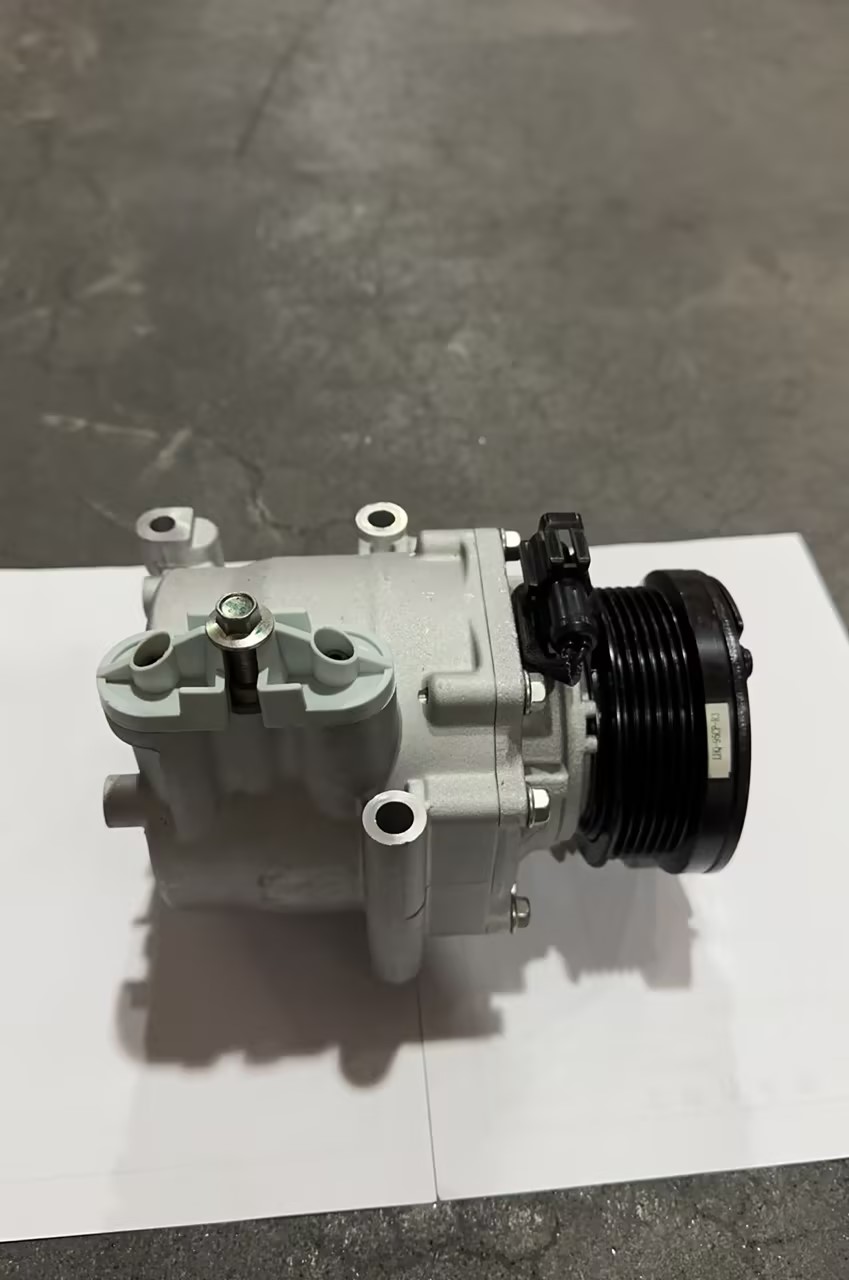
How Should You Choose Between a Screw Compressor and a Scroll Compressor?
The most effective selection process starts with the system’s actual duty rather than the compressor’s name or a general claim about superiority. For HVAC or refrigeration, establish the required cooling or heating capacity, refrigerant, design and operating pressures, ambient conditions, expected seasonal load, and allowable sound level. For compressed-air applications, identify required flow at working pressure, air-quality class, daily demand profile, acceptable pressure fluctuation, installation environment, and the cost of an interruption to production.
Use the following decision framework as an initial screening tool, then verify the choice against manufacturer data and a lifecycle-cost assessment.
| Selection question | Scroll compressor may be a good fit when… | Screw compressor may be a good fit when… |
| What is the application? | The system is a residential or commercial HVAC unit, heat pump, or compact refrigeration system. | The system supplies industrial compressed air or serves a larger process-cooling duty. |
| How much capacity is required? | The load suits an available scroll model or a modular arrangement | Required flow or cooling capacity suits an industrial screw package |
| How does demand vary? | On/off, variable-speed or staged-scroll control matches the load | Variable-speed or unloading control can efficiently track sustained or fluctuating demand |
| How important is sound? | Low sound and compact installation are major priorities | Noise can be managed through package design, enclosure and plant layout |
| What maintenance can the site support? | A sealed compressor assembly and model-specific service approach suit the facility. | The site can maintain the lubrication, filtration, cooling and monitoring systems required by the selected design. |
| What is the lowest-cost option over time? | Purchase cost, sound, serviceability, and operating hours favor the scroll solution. | Higher utilization or industrial duty makes the screw package economical over its life. |
Before purchasing, request performance data at the intended operating conditions, including power input, delivered flow or cooling capacity, part-load behavior, and any specified sound measurements. A useful lifecycle-cost comparison includes purchase price, installation, electricity, maintenance, consumables, downtime risk, and expected service life. In compressed-air plants, also assess leakage and system pressure because improvements in distribution and controls can sometimes save more energy than changing compressor type alone.
Common Mistakes When Comparing Screw and Scroll Compressors
A common mistake is to compare compressors designed for different applications as though they were direct substitutes. For example, a scroll compressor specified for a heat pump cannot be meaningfully compared with an industrial screw compressor based solely on motor power, since their working fluids, pressure conditions, capacity ratings, and system boundaries may differ. Even when both machines use the same gas, the comparison should take into account delivered capacity, operating pressure, control method, auxiliary equipment, and the actual load profile.
Another common error is assuming that fewer moving components automatically equate to lower lifetime costs, or that larger equipment automatically delivers greater efficiency. While a scroll compressor can be an economical solution for a compact system, replacing an industrial screw compressor with several small units may introduce additional connections, controls, and maintenance points. Conversely, a large screw compressor serving a small, intermittent load may spend too much time operating inefficiently. The most reliable decision is based on a combination of manufacturer performance data, a realistic demand assessment, and a total cost of ownership calculation.
Screw vs. Scroll Compressor FAQs
- Are screw and scroll compressors the same?
No, screw compressors use rotating helical rotors, whereas scroll compressors use two intermeshing spiral elements, one of which orbits around the other. Both compress gas by reducing its volume, but their mechanical designs and typical applications differ.
- Which is better, a screw compressor or a scroll compressor?
Neither is universally better because the right choice depends on required capacity, operating conditions, noise limits, energy efficiency, and maintenance requirements. Scroll compressors are common in HVAC and compact systems, while screw compressors are widely used for industrial compressed air and process refrigeration.
- Is a scroll compressor quieter than a screw compressor?
Scroll compressors generally have low pressure pulsation and can operate quietly, making them suitable for many noise-sensitive installations. Actual sound levels depend on the model, motor speed, enclosure, cooling fans, and installation conditions.
- Which compressor is more energy-efficient?
Energy efficiency depends on the operating pressure, load profile, compressor size, control strategy, and system design rather than the compression mechanism alone. Compare manufacturer performance data at equivalent operating conditions and include part-load performance in the assessment.
- Do scroll compressors require less maintenance than screw compressors?
Many hermetic scroll compressors have limited routine internal servicing, although they still require proper system operation and maintenance. Screw compressors often require more extensive scheduled service for lubrication, filtration, cooling, and related components, depending on whether they are oil-injected or oil-free.
- Can a scroll compressor replace a screw compressor?
A scroll compressor can replace a screw compressor only when its capacity, pressure range, working fluid, controls, and duty cycle meet the application’s requirements. For high-demand industrial systems, engineers should evaluate multiple scroll units against an appropriately sized screw package before making a substitution.
Conclusion
Although screw and scroll compressors perform the same fundamental task of compressing gas, their different mechanisms make them suitable for different operating conditions and system requirements. Scroll compressors are often used in HVAC systems, heat pumps, and compact refrigeration systems, where low noise levels, compact construction, and smooth operation are important. Screw compressors, on the other hand, are frequently used in industrial compressed air supply systems and demanding refrigeration applications requiring substantial or sustained capacity.
The most reliable selection considers more than just the compressor itself; operating pressure, actual demand, part-load efficiency, maintenance, installation conditions, and total lifecycle cost all affect the final result. By matching compressor technology to measurable application requirements and verified manufacturer data, equipment buyers can make more informed decisions and avoid paying for unnecessary capacity or features.