
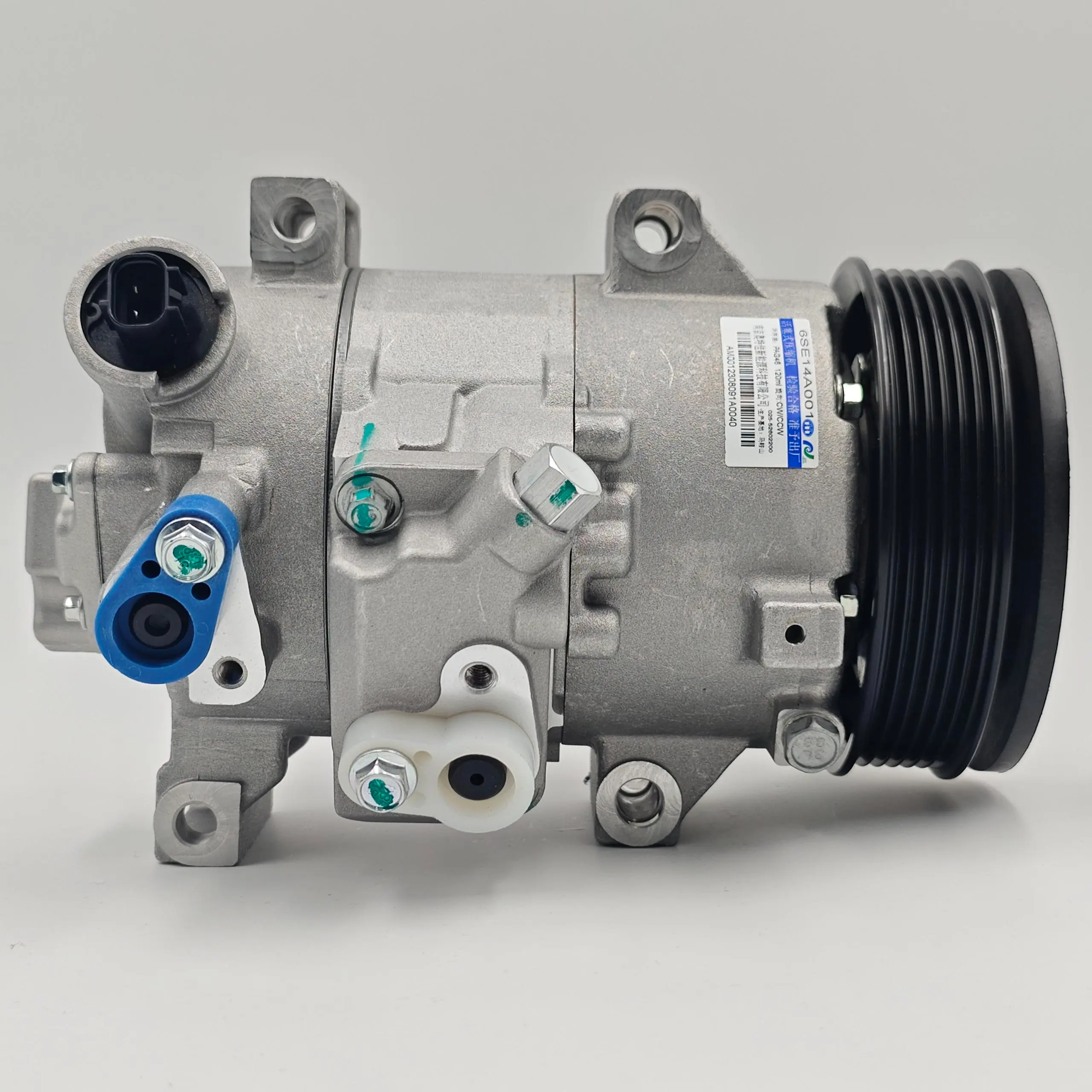
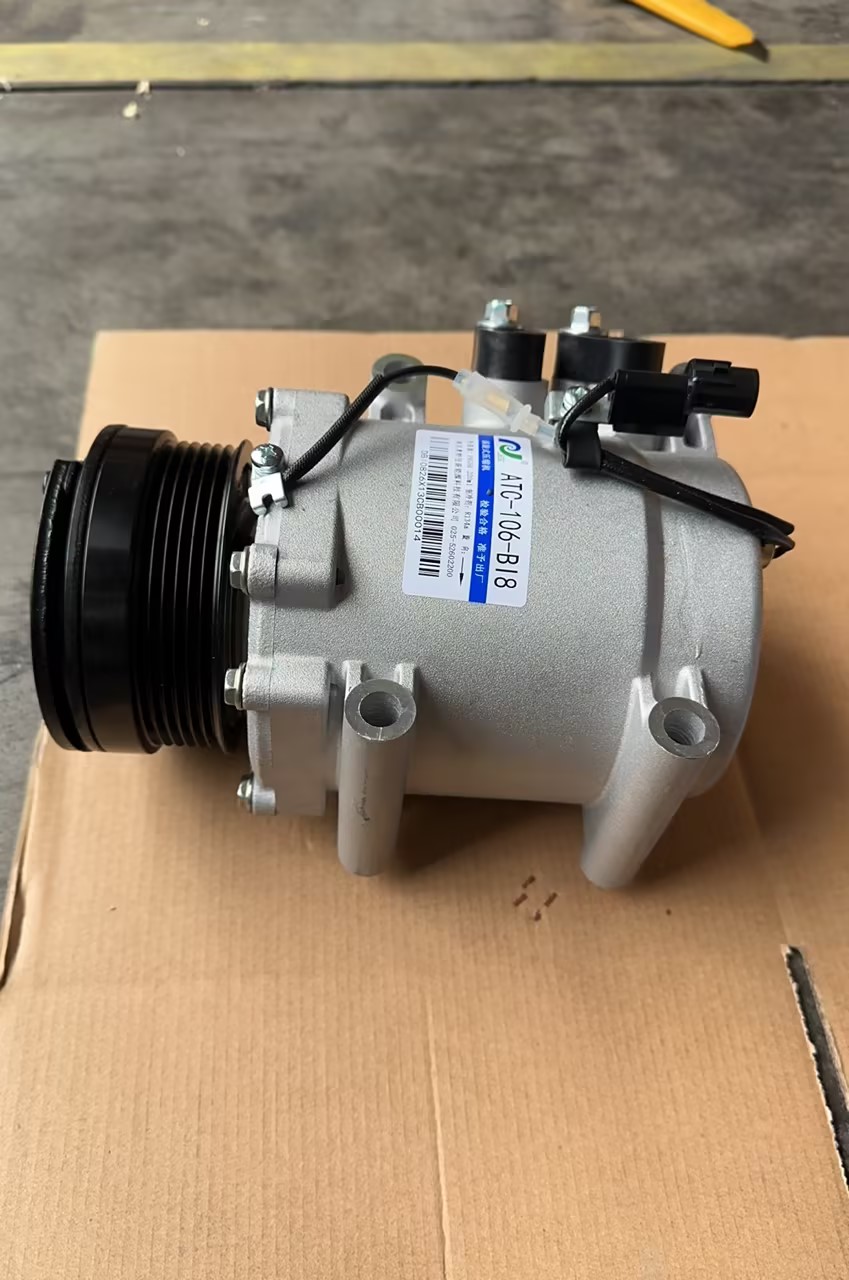
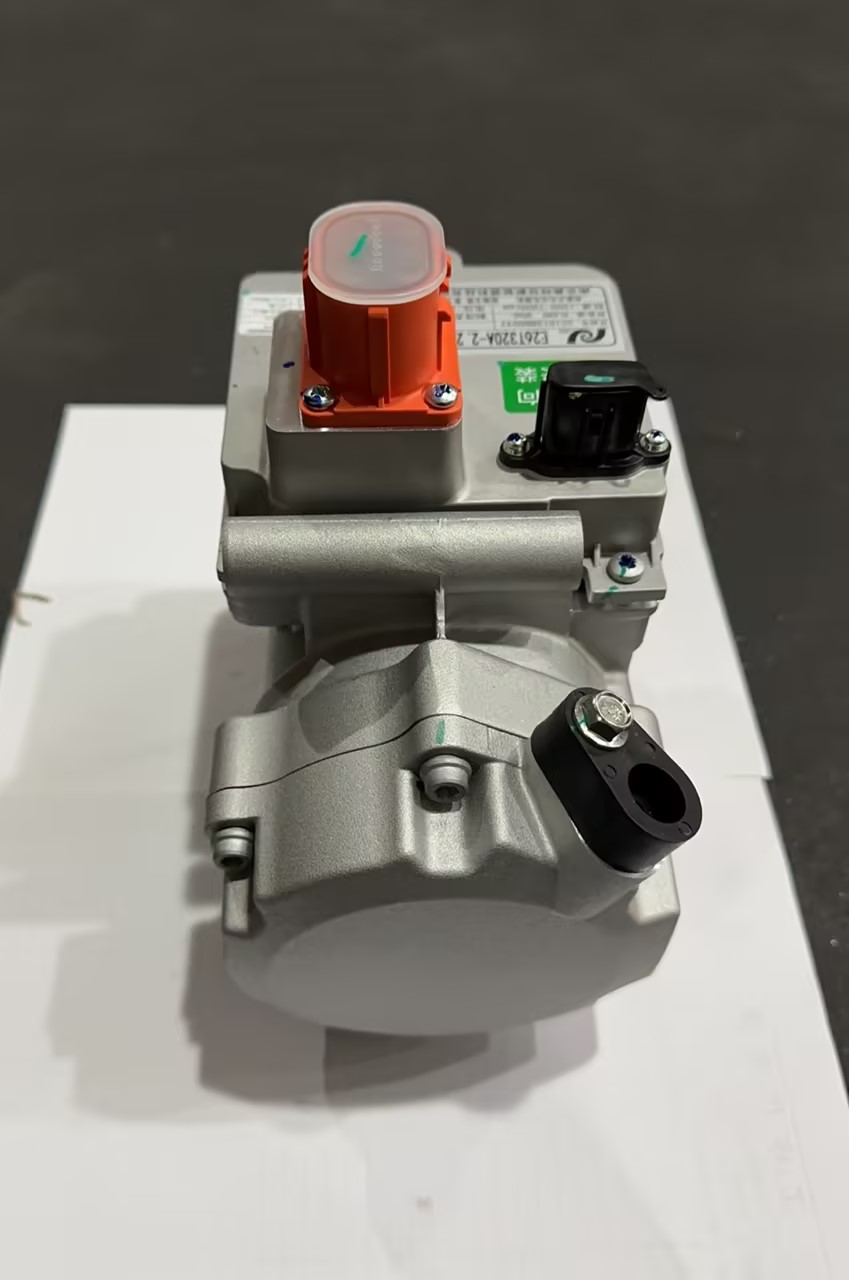
An electric compressor is a type of compressor that is driven by an electric motor to increase the pressure of gases, such as refrigerants or compressed air. The main types are electric scroll, reciprocating, screw, rotary, and centrifugal compressors. Each type is designed for different capacities, efficiency, and application requirements. According to the ASHRAE Handbook: HVAC Systems and Equipment, the selection of a compressor depends on factors including operating pressure, cooling capacity, energy efficiency, reliability, and system design requirements.
Unlike traditional mechanically driven compressors, electric compressors offer independent operation, improved control accuracy, and compatibility with modern, energy-efficient systems — especially in electric vehicles, HVAC equipment, refrigeration systems, and industrial applications.
What Is an Electric Compressor?
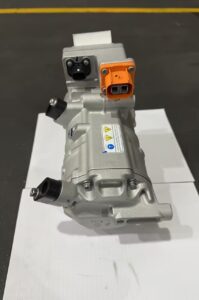
An electric compressor is a mechanical device that uses electricity to power a motor that compresses gas by reducing its volume and increasing its pressure. This compressed gas can then be used in applications such as refrigeration cycles, air conditioning systems, pneumatic equipment, and industrial processes.
Unlike engine-driven compressors, which rely on combustion engines or external mechanical power sources, electric compressors operate via an integrated electric motor. This design enables more precise speed control, greater efficiency under variable operating conditions, and easier integration with automated systems.
Modern electric compressors have become increasingly important due to the growth in:
- Electric vehicles (EVs);
- Heat pump systems;
- Energy-efficient HVAC equipment;
- Industrial automation;
- renewable energy applications.
The development of advanced motor technology and inverter control systems has significantly improved the performance of electric compressors, enabling them to adjust their output in real time rather than operating at fixed speeds.
According to Cengel and Boles’s Thermodynamics: An Engineering Approach, compressor efficiency is strongly influenced by compression method, operating conditions, and energy conversion losses. Therefore, selecting the appropriate compressor type is crucial for optimising system efficiency.
How Does an Electric Compressor Work?
The basic working principle of an electric compressor is to convert electrical energy into mechanical energy.
This process generally includes four stages:
-
Electrical energy conversion
The electric motor receives power from an electrical source and converts it into rotational or linear mechanical motion.
Modern electric compressors often use one of the following technologies:
- Brushless DC motors
- Permanent magnet synchronous motors
- Variable frequency drives (VFDs)
These technologies improve efficiency and allow for precise speed adjustment.
-
Gas intake
Low-pressure gas enters the compressor chamber through an inlet valve or suction port.
The design of this stage affects:
- Gas flow stability;
- Noise level;
- Compressor efficiency.
-
Compression process
The compressor mechanism reduces the volume of the gas, thereby increasing its pressure and temperature.
Different compressor designs achieve compression through different methods:
- Reciprocating piston movement
- Rotating screws
- Spiral orbiting scrolls
- Centrifugal impellers
-
Discharge and system circulation
After compression, the high-pressure gas exits the compressor and enters the next stage of the system.
In refrigeration applications, the compressed refrigerant flows through:
- Condenser
- Expansion valve
- 증발기
before returning to the compressor.
Main Types of Electric Compressors
Electric compressors can be classified according to their compression mechanism. Each type has specific advantages and limitations.
-
Electric Scroll Compressor
The electric scroll compressor is one of the most widely used compressor technologies in modern HVAC and electric vehicle applications.
It uses two spiral-shaped scroll components:
- One fixed scroll
- One orbiting scroll
The orbiting scroll moves in a circular motion, trapping and compressing gas between the spirals.
Because there is no piston movement, scroll compressors have fewer vibration issues and operate more quietly.
Advantages of Electric Scroll Compressors
- High energy efficiency
- Low vibration
- Quiet operation
- Compact design
- Reliable continuous operation
Common applications include:
- Residential air conditioners
- Heat pumps
- Electric vehicle thermal management systems
- Commercial refrigeration
Electric scroll compressors are especially suitable where space, noise, and efficiency are important considerations.
-
Electric Reciprocating Compressor
Electric reciprocating compressors use pistons moving inside cylinders to compress gas.
The piston moves back and forth through a crank mechanism, creating suction and compression cycles.
This design has been used for decades because of its simple structure and ability to achieve high pressure ratios.
장점
- High compression capability
- Suitable for high-pressure applications
- Simple maintenance
- Wide operating range
However, reciprocating compressors typically generate more vibration and noise compared with scroll designs because of the mechanical movement of pistons.
Common applications include:
- Small refrigeration systems
- Air compressors
- Industrial gas compression
-
Electric Screw Compressor
An electric screw compressor uses two rotating screw rotors to compress gas continuously.
As the rotors rotate, gas becomes trapped between the screw threads and gradually compressed.
Unlike reciprocating compressors, screw compressors provide continuous compression instead of repeated suction and discharge cycles.
Advantages of Electric Screw Compressors
- High airflow capacity
- Continuous operation
- Excellent durability
- Suitable for industrial environments
Typical applications include:
- Factory compressed air systems
- Manufacturing plants
- Large refrigeration systems
- Chemical processing facilities
Electric screw compressors are particularly valuable in industries where uninterrupted operation is required.
Comparison of Different Electric Compressor Types
| 컴프레서 유형 | Compression Method | Main Advantages | Typical Applications |
| Electric Scroll Compressor | Spiral orbiting motion | Quiet, efficient, compact | HVAC, EV cooling, heat pumps |
| Electric Reciprocating Compressor | Piston movement | High-pressure capability | Refrigeration, industrial gases |
| Electric Screw Compressor | Rotating screw rotors | Continuous operation, durable | Industrial air systems |
| Electric Rotary Compressor | Rotating mechanism | Compact size, low cost | Small cooling systems |
| Electric Centrifugal Compressor | High-speed impeller | Large capacity, efficient at high flow | Large HVAC plants |
-
Electric Rotary Compressor
An electric rotary compressor uses a rotating mechanism to compress gas inside a compact chamber. Unlike reciprocating compressors that rely on piston movement, rotary compressors use continuous rotational motion, which reduces mechanical complexity and improves smooth operation.
There are several rotary compressor designs, including:
- Rotary vane compressors
- Rolling piston compressors
- Rotary screw-based systems
Rotary compressors are widely used where compact size and moderate capacity are required.
Advantages of Electric Rotary Compressors
The main benefits include:
- Compact structure
- Lower vibration compared with piston designs
- Efficient operation at smaller capacities
- Cost-effective manufacturing
Common applications include:
- Residential air conditioners
- Refrigerators
- Small heat pump systems
- Portable cooling equipment
Because of their compact design, rotary compressors are particularly suitable for applications where installation space is limited.
However, compared with screw or centrifugal compressors, rotary compressors generally have lower capacity ranges and are not usually selected for large industrial systems.
-
Electric Centrifugal Compressor
An electric centrifugal compressor operates using a high-speed rotating impeller to increase gas velocity. The kinetic energy generated by the impeller is converted into pressure energy through a diffuser.
Unlike positive displacement compressors, centrifugal compressors use dynamic compression principles.
They are mainly designed for large-scale applications requiring high gas flow rates.
Advantages of Electric Centrifugal Compressors
Key advantages include:
- Extremely high capacity
- High efficiency at large operating conditions
- Low mechanical wear
- Continuous operation capability
Typical applications include:
- Large commercial HVAC systems
- District cooling systems
- Industrial refrigeration plants
- Large process industries
Because centrifugal compressors operate most efficiently at high capacities, they are generally not suitable for small systems.
Electric Compressor Selection Guide by Application
| 응용 분야 | Recommended Electric Compressor Type | Main Reason |
| Residential air conditioning | Scroll / Rotary compressor | Compact, quiet, efficient |
| Electric vehicle cooling | Scroll compressor | Lightweight and variable-speed control |
| Factory compressed air | Screw compressor | Continuous operation and reliability |
| Large HVAC systems | Centrifugal compressor | High capacity efficiency |
| Small refrigeration units | Reciprocating / Rotary compressor | Simple structure and affordable cost |
| Industrial refrigeration | Screw / Centrifugal compressor | High performance and durability |
Advantages of Using Electric Compressors
The increasing adoption of electric compressors is closely related to their energy efficiency, controllability, and compatibility with modern systems.
-
Higher Energy Efficiency
One of the biggest advantages of an electric compressor is improved energy management.
Traditional fixed-speed compressors often operate at maximum output regardless of actual demand. This can result in unnecessary energy consumption.
Modern electric compressors equipped with inverter technology can adjust motor speed according to system requirements.
Benefits include:
- Reduced electricity consumption
- Lower operating costs
- Improved seasonal efficiency
- More stable temperature control
This is especially important in HVAC and refrigeration systems, where compressors often represent the largest energy-consuming component.
-
Precise Variable-Speed Control
Many modern electric compressors use variable-speed motors that allow accurate capacity adjustment.
For example:
A cooling system does not always require maximum cooling capacity. During mild conditions, the compressor can reduce speed and operate at lower power.
This improves:
- Comfort control
- System stability
- Energy efficiency
- Component lifespan
Variable-speed technology has become a key feature in advanced air conditioning systems and electric vehicle thermal management.
-
Lower Noise and Vibration
Compared with traditional mechanical compressor systems, many electric compressors operate with reduced vibration.
Scroll and rotary designs are especially recognized for quiet operation because they contain fewer reciprocating components.
Lower noise levels are valuable for:
- Residential buildings
- Office environments
- Electric vehicles
- Medical facilities
-
Flexible Installation Options
Electric compressors do not require direct connection to an engine or combustion system.
This provides greater installation flexibility.
They can be integrated into:
- Electric vehicles
- Heat pump systems
- Renewable energy equipment
- Smart HVAC systems
This flexibility is one reason electric compressors have become increasingly important in electrification trends.
Applications of Electric Compressors
Electric compressors are used across many industries because they provide reliable and controllable compression performance.
-
HVAC and Air Conditioning
Heating, ventilation, and air conditioning systems are among the largest users of electric compressors.
Applications include:
- Residential air conditioners
- Commercial HVAC systems
- Heat pumps
- Chillers
Energy efficiency is especially important in HVAC because compressors often operate for thousands of hours annually.
-
Electric Vehicles
Electric vehicles require specialized thermal management systems because they do not have traditional engine-driven compressors.
Electric compressors provide cooling for:
- Passenger cabins
- Battery packs
- Electronic components
Compared with belt-driven compressors, electric compressors can operate independently of vehicle speed.
This improves:
- Driving efficiency
- Passenger comfort
- Battery protection
-
Industrial Manufacturing
Factories depend on compressed air and refrigeration systems for production processes.
Electric screw compressors are commonly used in:
- Automotive manufacturing
- Food processing
- Electronics production
- Chemical industries
Their ability to operate continuously makes them suitable for demanding industrial environments.
Factors to Consider When Choosing an Electric Compressor
To select the correct electric compressor, you need to evaluate several technical factors.
-
Required capacity
The compressor capacity must match the system requirements.
Important parameters include:
- 냉각 용량
- Airflow rate
- Pressure requirements
- Operating conditions
Oversized compressors may waste energy, while undersized units may operate continuously and experience premature wear.
-
Energy efficiency
Efficiency ratings should be carefully considered.
Common evaluation indicators include:
- COP (Coefficient of Performance)
- EER (Energy Efficiency Ratio)
- Seasonal efficiency ratings
Higher efficiency compressors usually provide better long-term operating economics.
-
Operating environment
The working environment affects compressor selection.
Consider:
- Ambient temperature
- Humidity conditions
- Dust exposure
- Continuous operating requirements
For harsh industrial environments, screw compressors are often preferred because of their durability.
-
Maintenance requirements
Different compressor technologies require different maintenance approaches.
For example:
- Scroll compressors usually require minimal maintenance.
- Screw compressors require proper lubrication management.
- Reciprocating compressors require the periodic inspection of their moving components.
It is important to consider maintenance planning during equipment selection.
FAQ: Electric Compressor
- What is an electric compressor used for?
An electric compressor is used to compress gases for applications such as refrigeration, air conditioning, electric vehicle cooling, industrial air systems, and heat pumps. It converts electrical energy into mechanical compression power.
- What are the main types of electric compressors?
The main types include:
- Electric scroll compressors
- Electric reciprocating compressors
- Electric screw compressors
- Electric rotary compressors
- Electric centrifugal compressors
Each type has different advantages depending on capacity, efficiency requirements, and application conditions.
- Is an electric compressor better than a traditional compressor?
Electric compressors provide advantages such as independent operation, better speed control, improved efficiency, and easier integration with modern systems. However, the best choice depends on the specific application.
- Which electric compressor is best for HVAC systems?
For residential HVAC systems, scroll compressors are commonly preferred because they are efficient, quiet, and compact. Large commercial HVAC systems may use centrifugal compressors for higher capacity requirements.
- Why are electric compressors used in electric vehicles?
Electric vehicles use electric compressors because they can operate independently from the vehicle’s engine. This allows continuous cooling of the cabin and battery system even when the vehicle is stopped.
- How long does an electric compressor last?
The service life depends on compressor type, operating conditions, maintenance, and workload. High-quality electric compressors can typically provide many years of reliable operation when properly maintained.
Conclusion: Understanding the Different Types of Electric Compressors
The development of electric compressors has transformed many industries by providing more efficient, flexible, and controllable compression solutions. Different compressor designs serve different performance requirements, from compact residential air conditioners to large industrial refrigeration systems.
Electric scroll compressors are ideal for applications requiring quiet operation and high efficiency, while electric screw compressors are favoured for continuous industrial use. Reciprocating compressors remain valuable for high-pressure applications, while centrifugal compressors are highly efficient in large-scale systems.
There is no single electric compressor that works for every situation. The correct choice depends on capacity requirements, the operating environment, energy efficiency goals, maintenance expectations, and installation conditions.
As electrification and energy-saving technologies continue to advance, electric compressors are set to play an increasingly pivotal role in HVAC systems, transportation, manufacturing, and renewable energy. Their ability to deliver precise control and improved efficiency makes them a vital component of future high-performance equipment.